Yummy
Prompt introduction
Healthy Food Tracker for Kids.
Brief: Getting kids to commit to nutritious choices can lead to a healthier lifestyle. Schools have the opportunity to foster good habits early on. But accommodating picky eaters and dealing with outside influences, such asthe media, family, and peers, can be daunting.
Design an experience where schools can influence students’ food choices.
Immersion
School food landscape in the US
I first wanted to learn about school food in the US, problems, constraints and history of it.
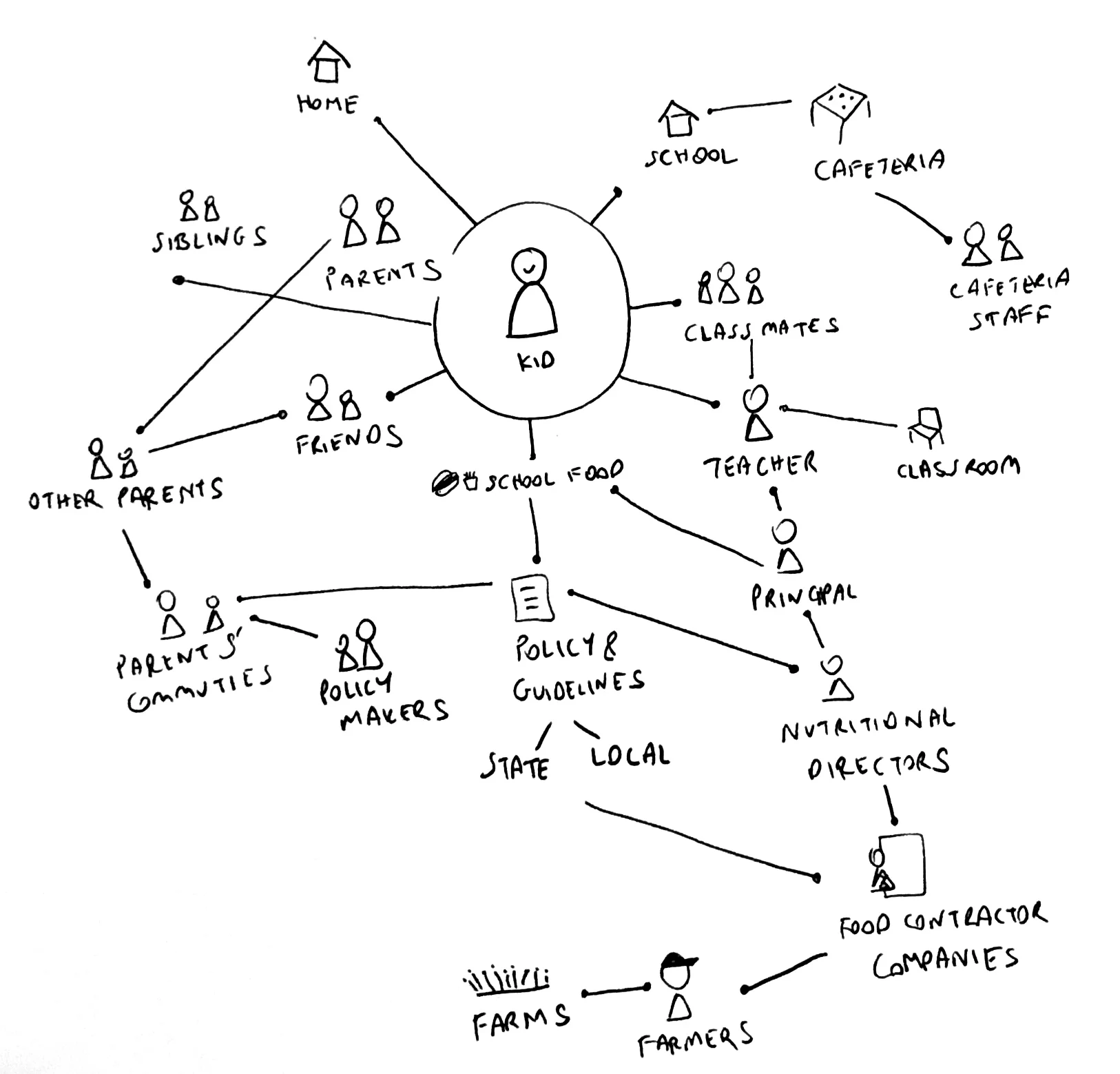
I realized there is a complex ecosystem around school food and kids’ nutrition involving different actors, policies, environments, systems etc. Here is my first take on mapping this ecosystem:
Why does school food, especially lunch matter? Simply put, school lunch matters for better learning and academic performance, for improved behavior and performance, and for the overall health of kids.
“No nation is any healthier than its children or more prosperous than its farmers.”
Harry Truman
History of school lunch: School lunch goes back to President Harry Truman who signed the National School Lunch Act in 1946. His intentions were to provide low cost or free school lunch meals to qualified students through government subsidies and surplus agricultural provisions.
Food quality problems: Since the beginning of the act the food system has been largely dominated by large corporations. These providers achieve economies of scale but they favor less nutritionally dense foods due to ease of production and cost.
A 2009 report by USA Today found that the safety standards of the Agricultural Marketing Service (AMS), a part of the USDA that buys meat for school lunches, were lower than the standards of the average fast food restaurant in the country.
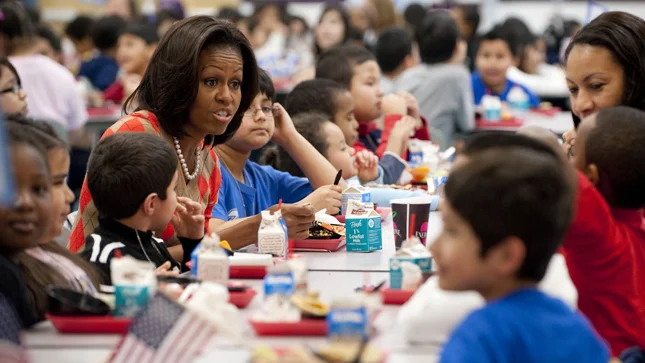
Recent improvements: In 2010 Obama signed the The Healthy, hunger-free kids act. One of the program’s main objectives was to improve nutrition and focus on reducing childhood obesity. Because of stricter guidelines there have been improvements in food quality but these do not seem to be enough. Menus include more whole grains, fruits and vegetable, and less salt. But they also offer factory-farmed animal products and heavily processed foods, like corn dogs, tater tots, and cheese pizza.
Updates to rules in 2017: Recently U.S. Secretary of Agriculture announced that they will relax some of the rules from the 2010 act which will allow schools to make their own decisions. Changes relax some key nutritional guidelines, allowing schools to offer flavored milk, and maintaining the high sodium levels. Additionally, only half of the grains used in menu items now needs to be whole grains, which means more refined white flour. The main reasoning for this change seems to be the increased food waste as students do not favor the less salty, raw foods offered, and there is less participation in meal programs which means even less budget for schools.
In summary, I learned that the biggest problems around school food are deeply rooted in policy and food systems in the US.
What are the existing solutions? Most promising solutions I found were on the local/district level which included school collaborations with local farmers, actively campaigning local committees, and schools encouraging student involvement such as recipe competitions.
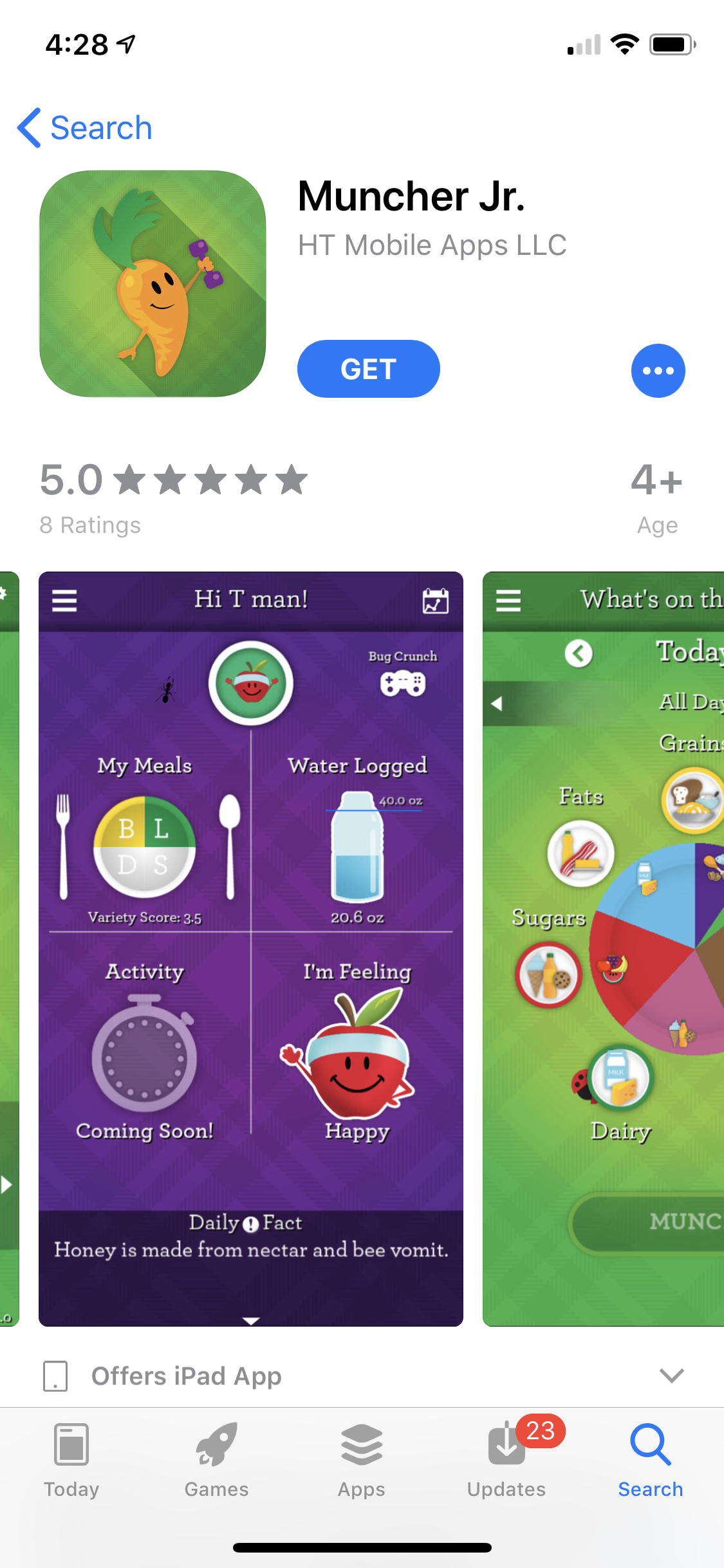
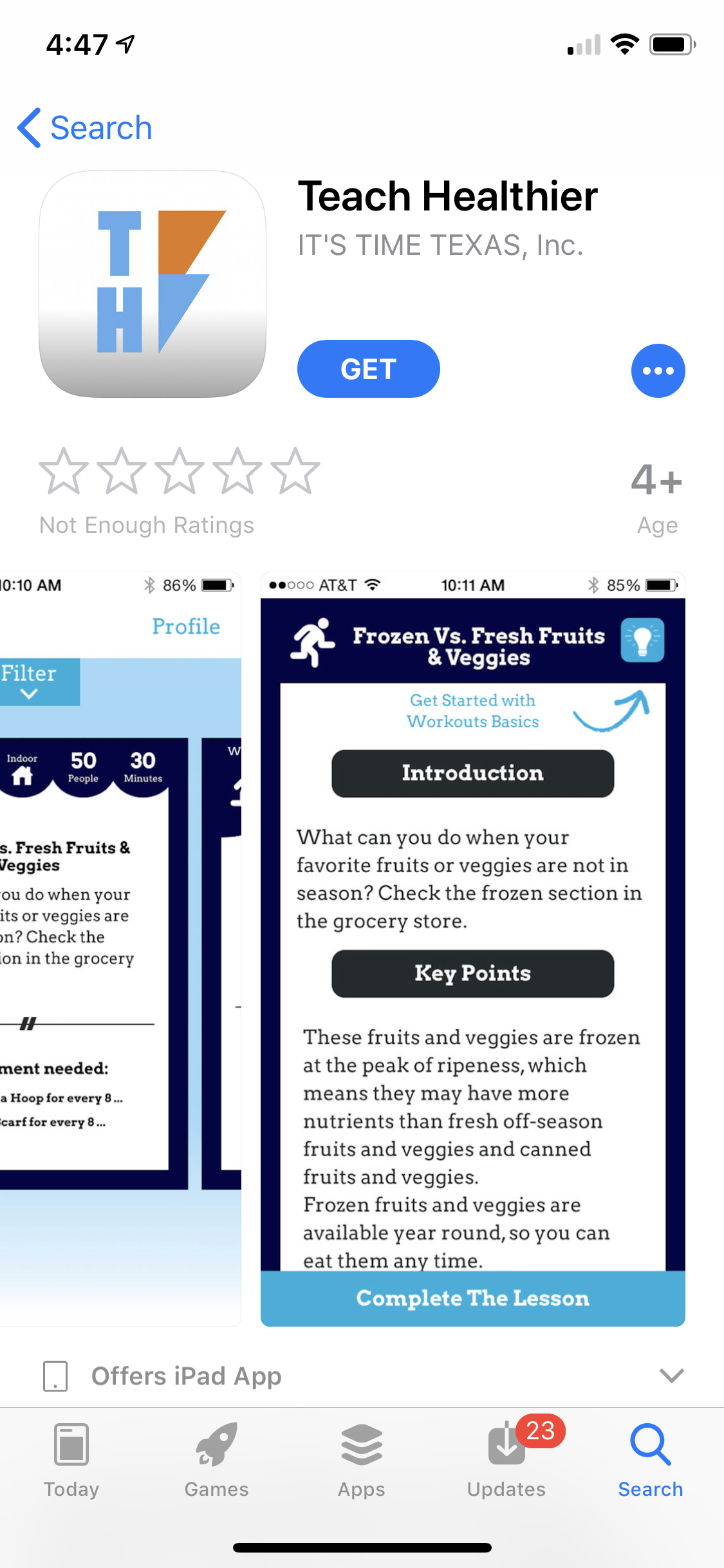
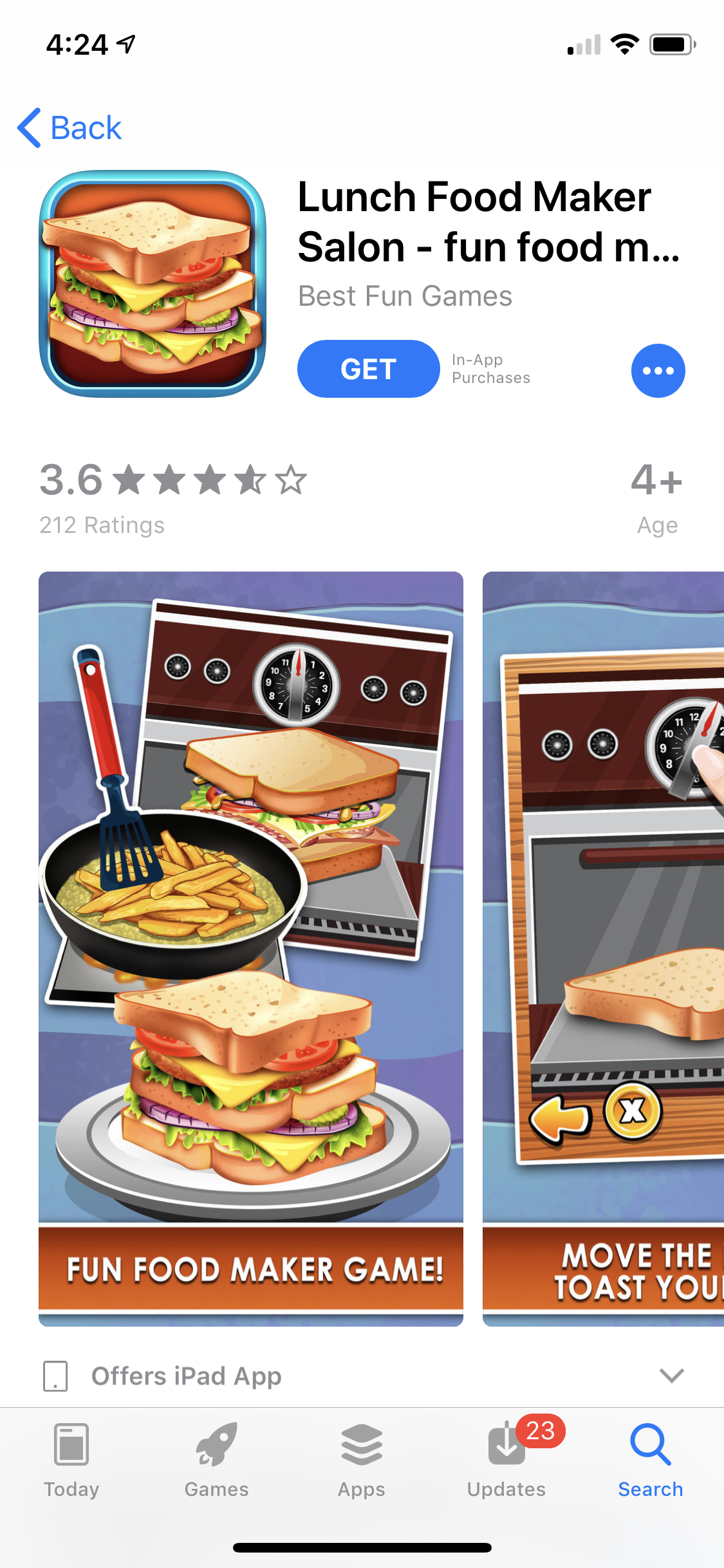
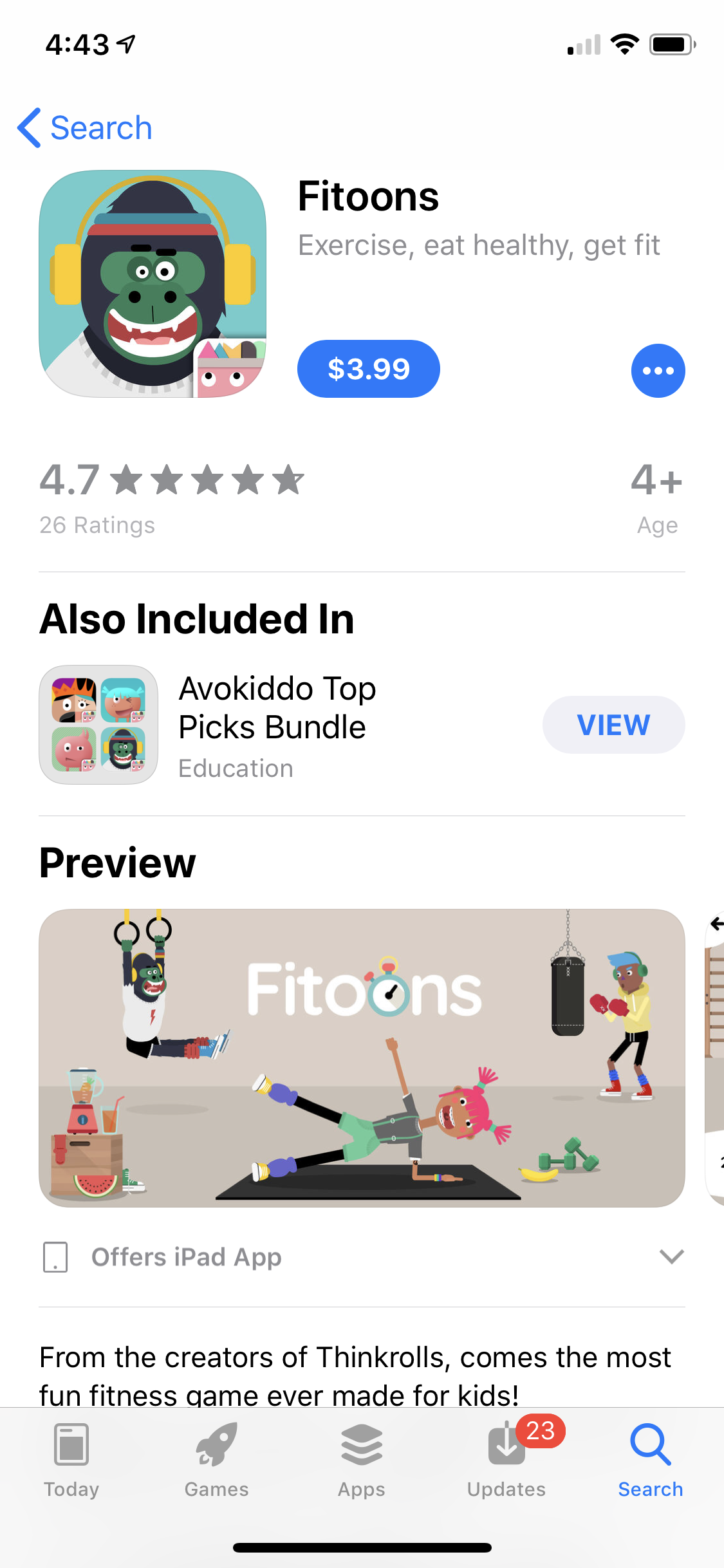
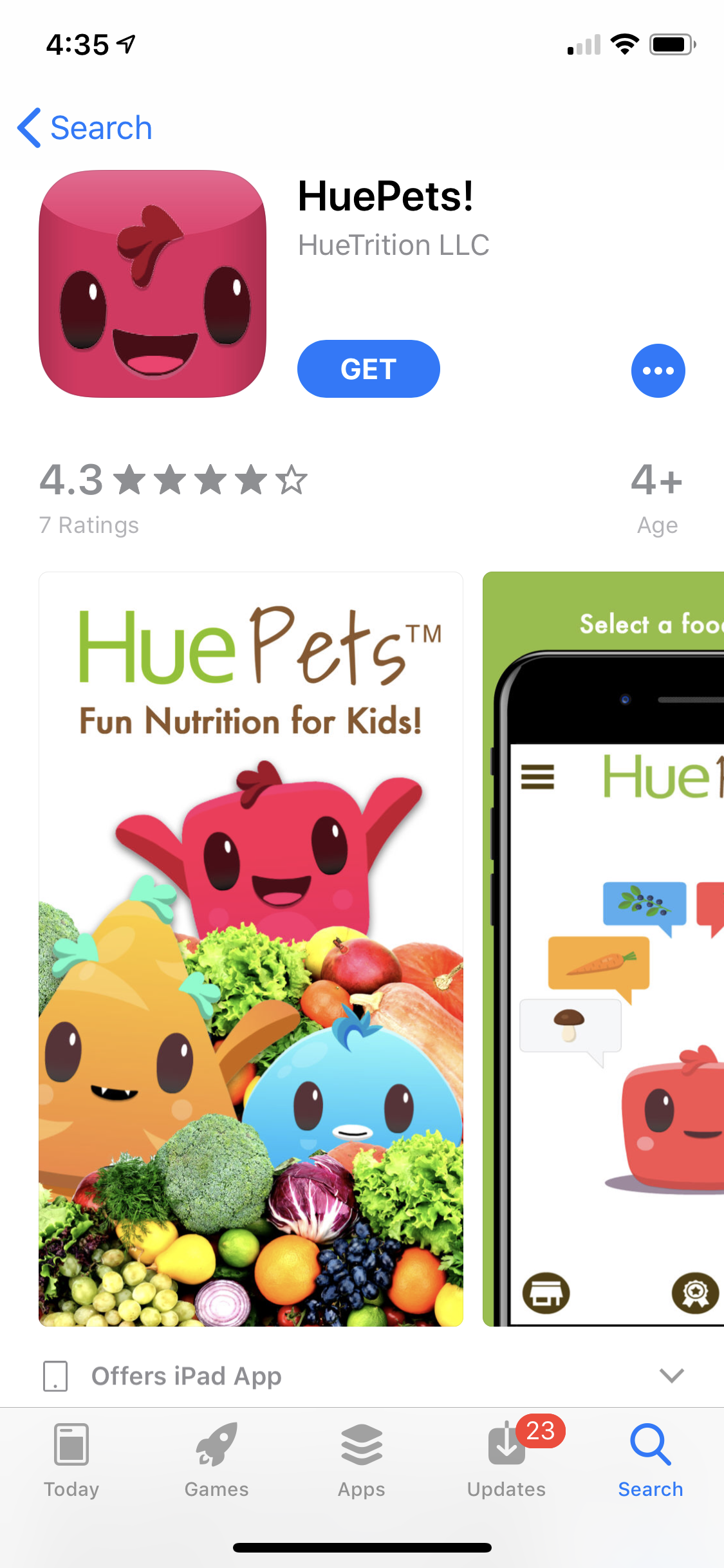
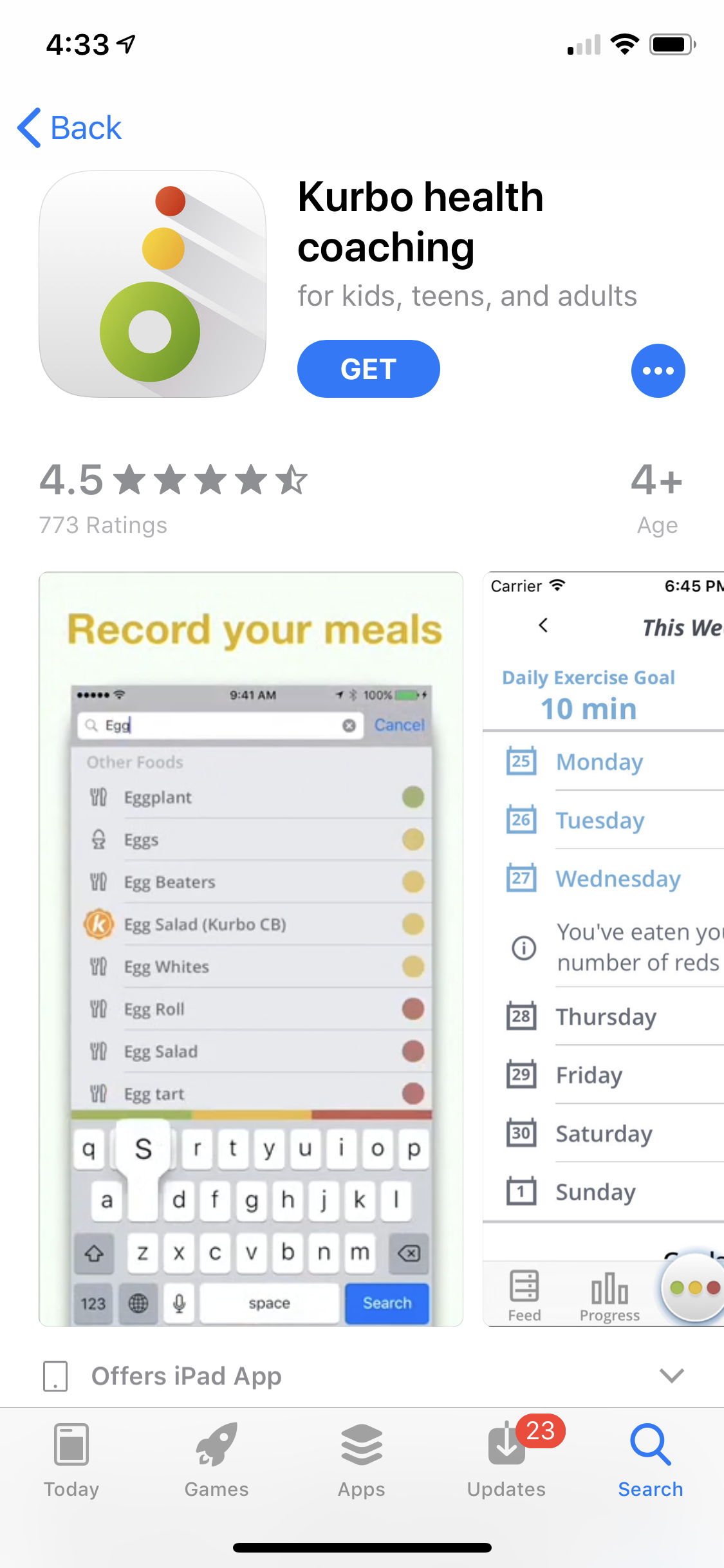
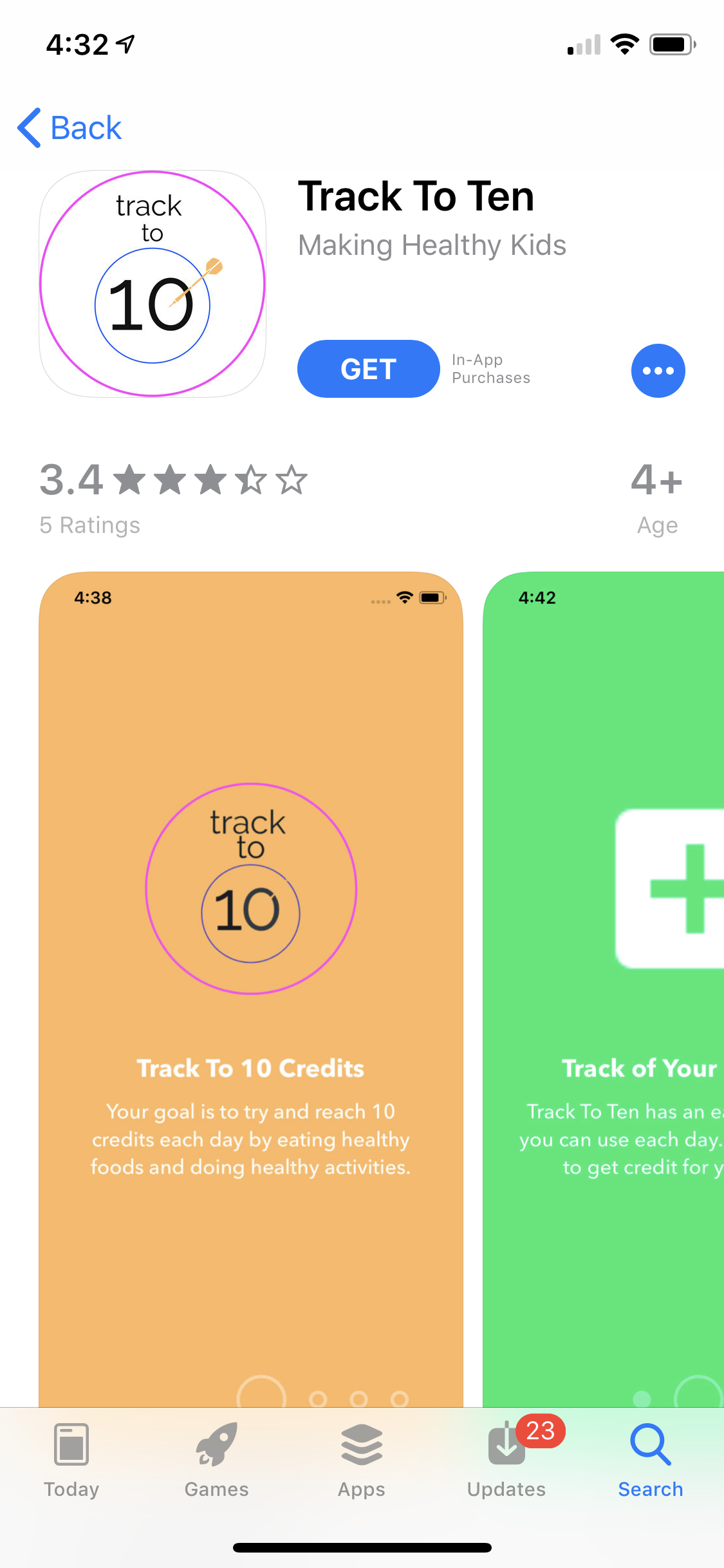
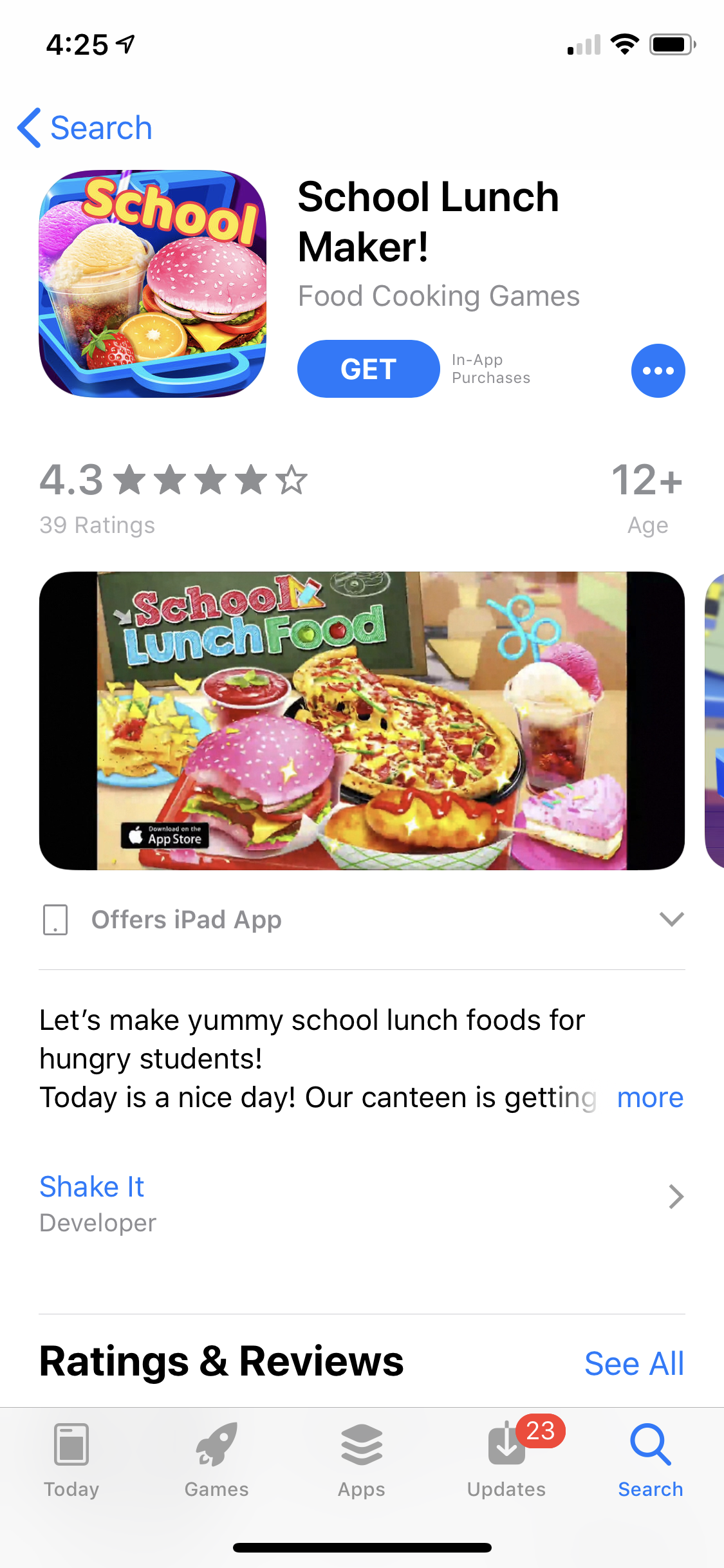
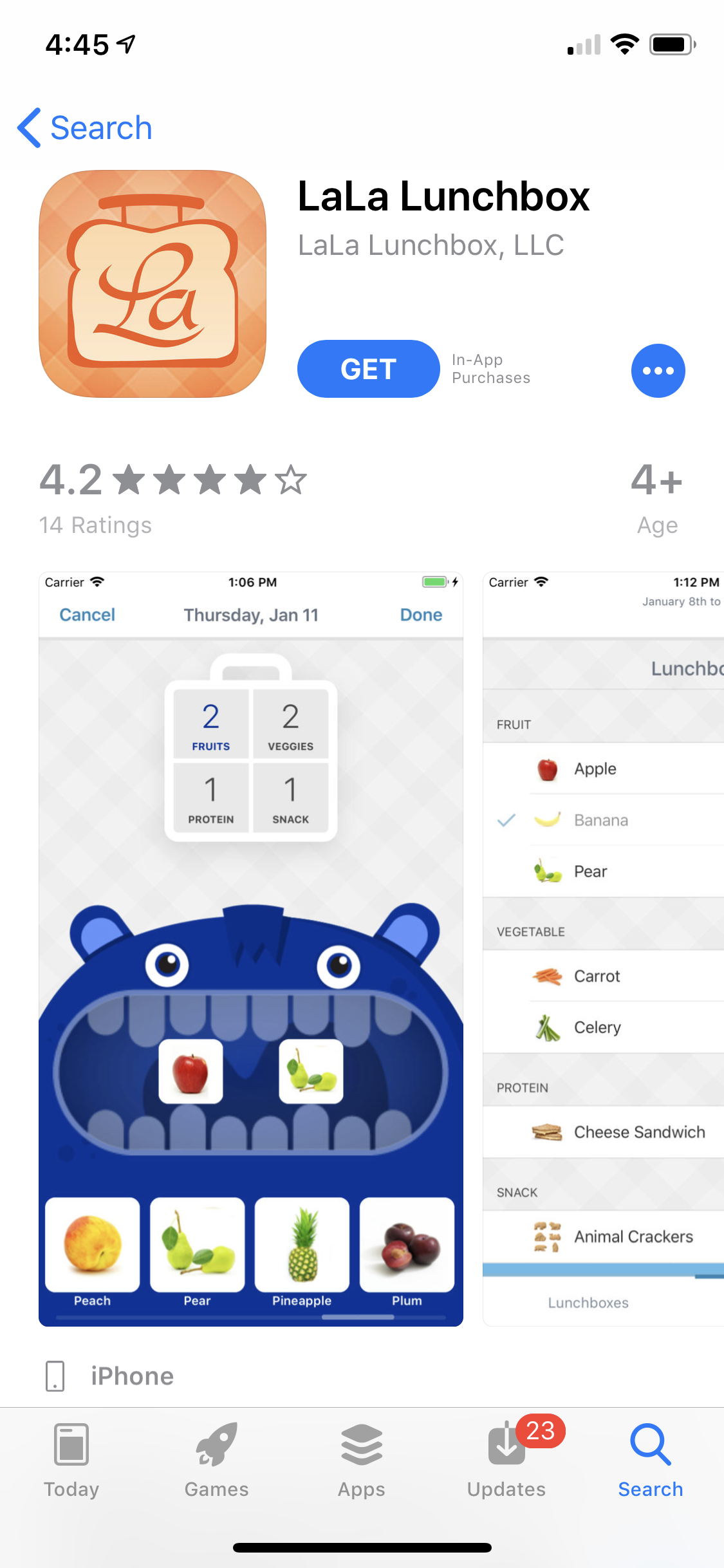
Looking at existing technology-design solutions for kids’ nutrition, I did not find any highly adopted solutions. There are apps for school meal payments and food trackers for children and parents. Some of them seem to have good guidelines but none of them seemed well adopted.
One useful finding is that public school food menus are public, available at least one month ahead. I thought it’d be interesting to use the menu to start talking about food with children before the cafeteria.
Target audience
I decided to target kindergarten and elementary students. This is the stage of their lives when they get more control over what they eat. They pick their own food and eat as much as they want during school lunch. This is also a perfect time to develop good habits around food that might persist rest of their lives.
My primary user target:
Late kindergarten (able to read) and elementary school children (assumption, up to 3rd grade).
They attend public school and have at least one meal a day at the school cafeteria.
They do not have smart phones yet, but they use their own or the shared family tablet for entertainment and game play.
They have one or two full-time working parents, and at least one more sibling at home.
[rapid] user research
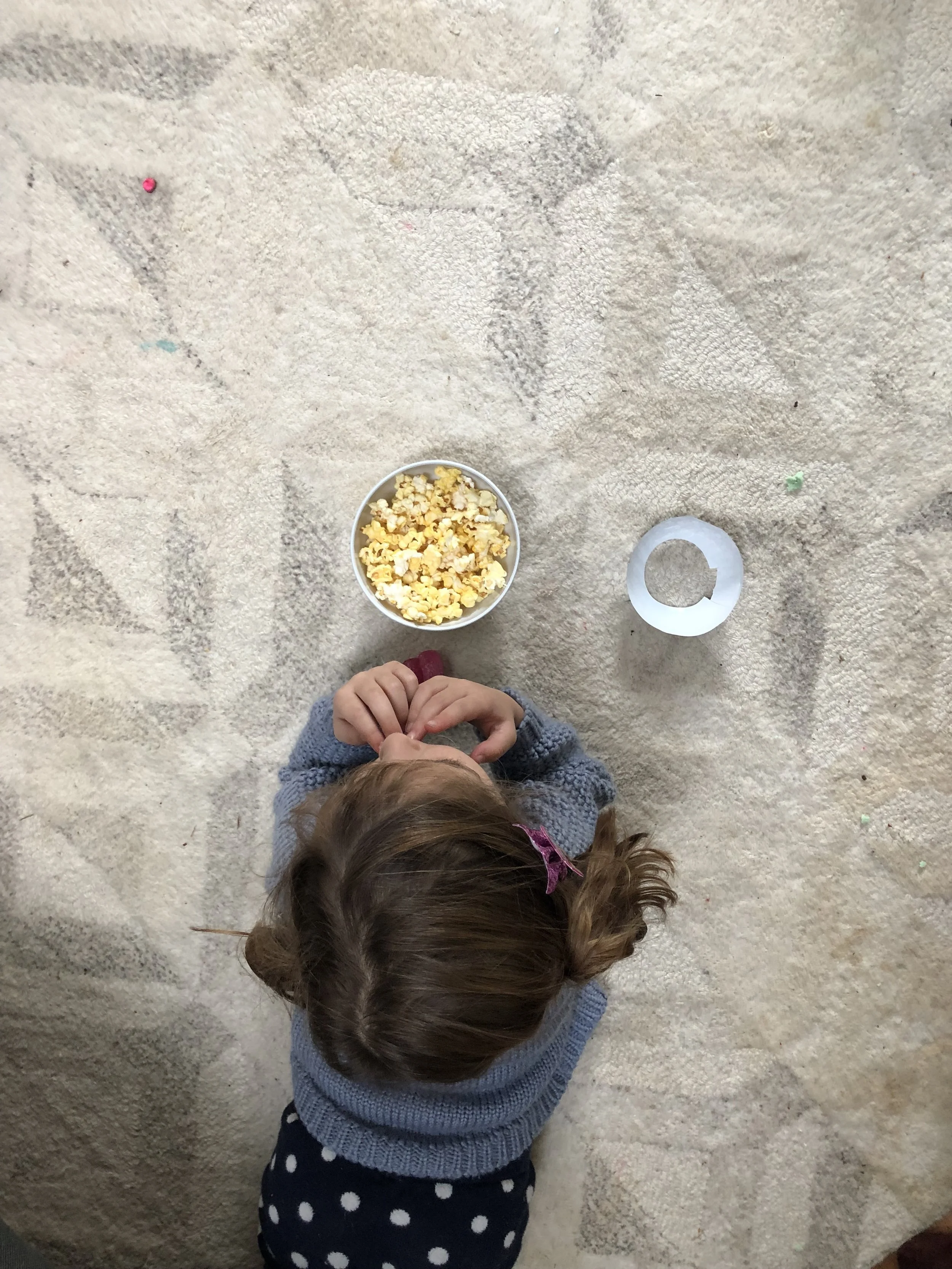
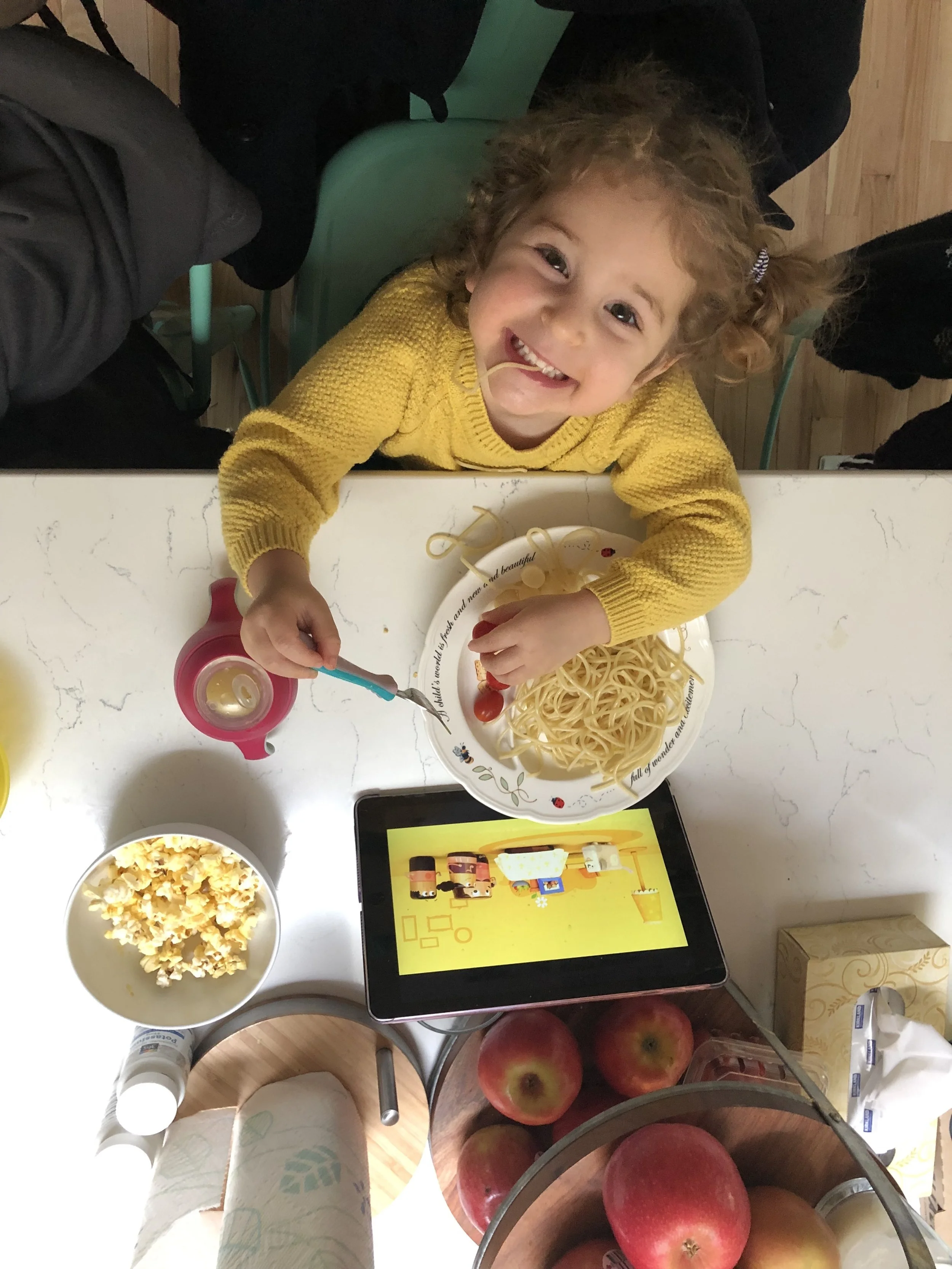
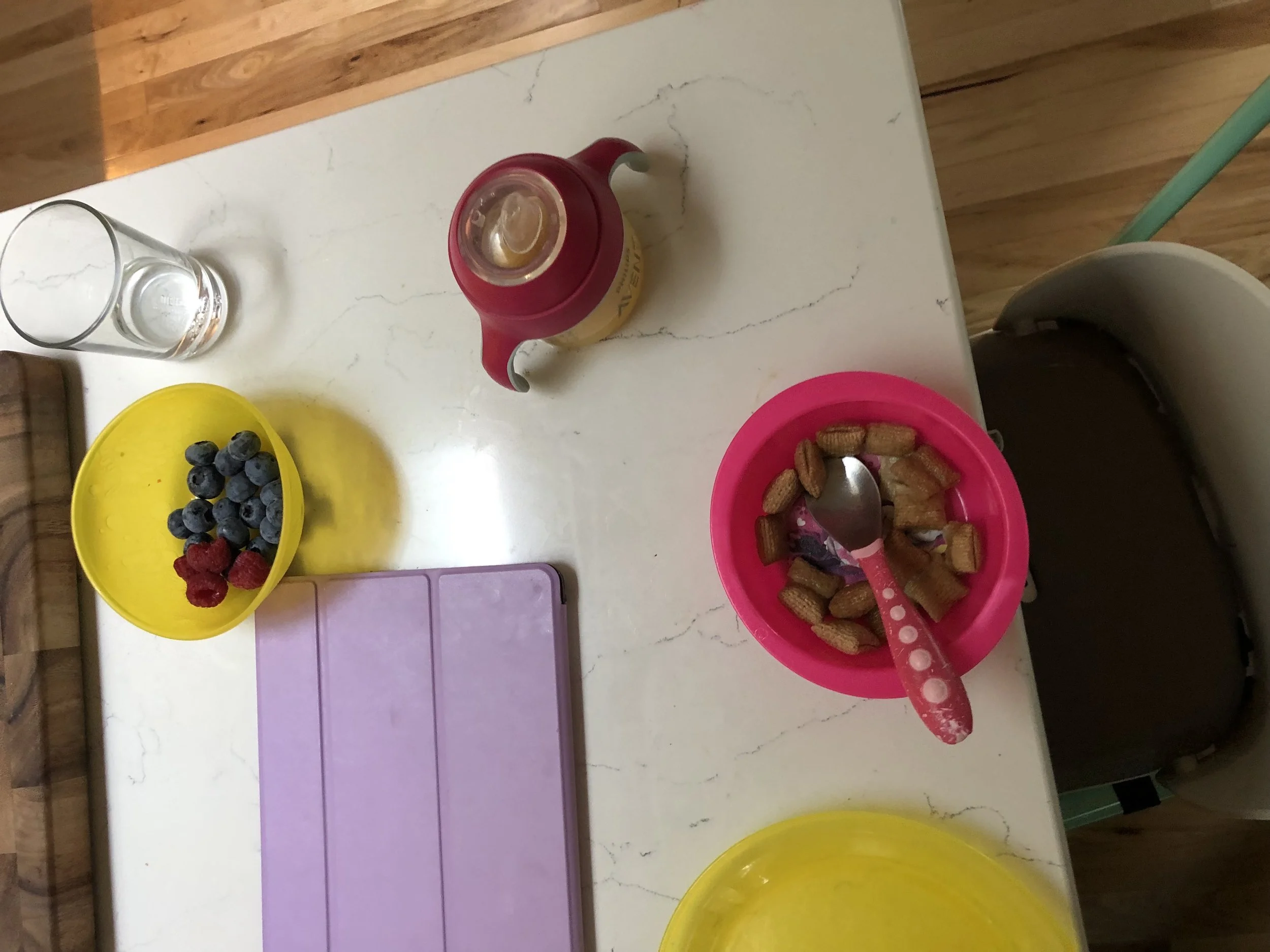
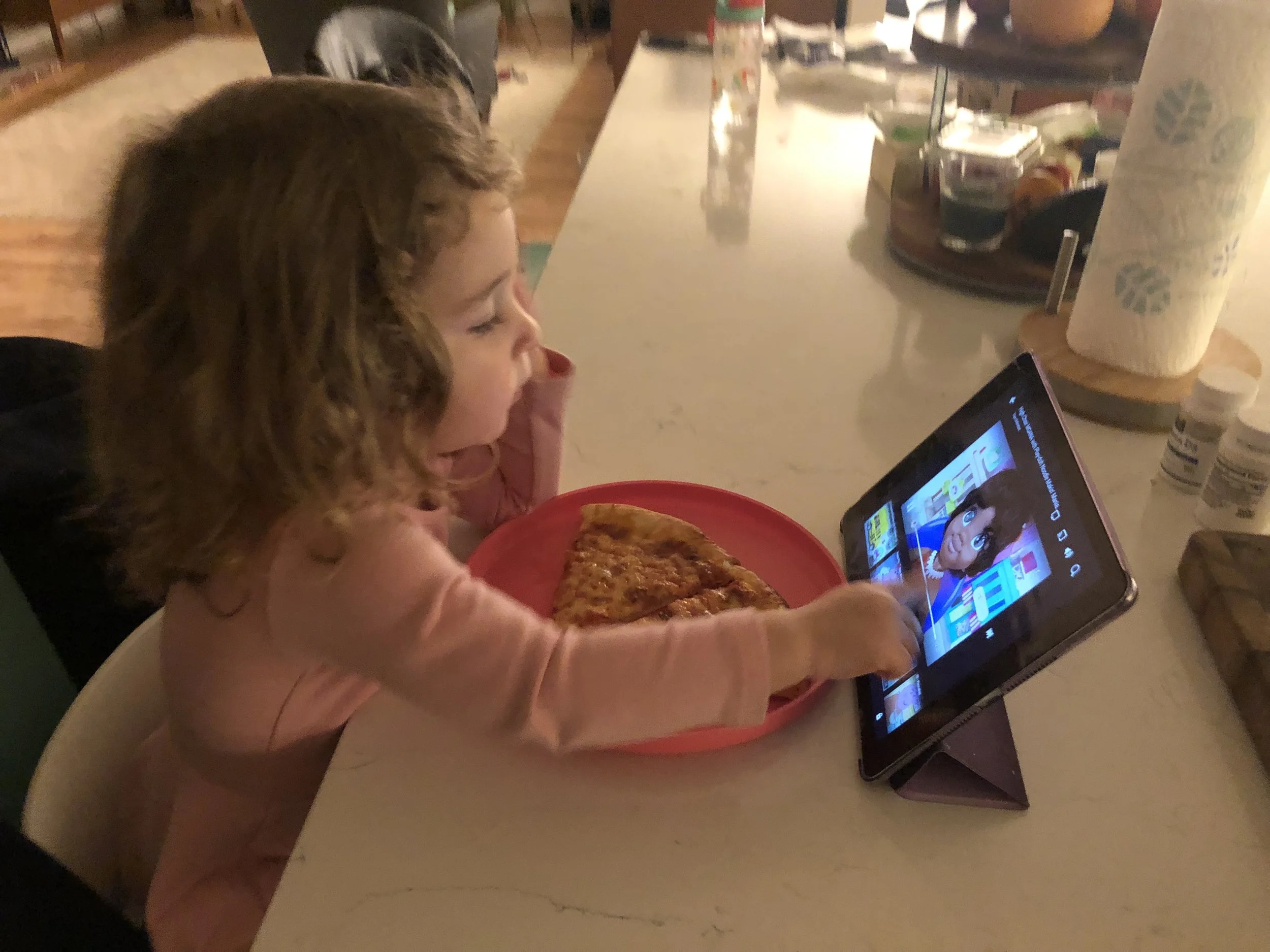
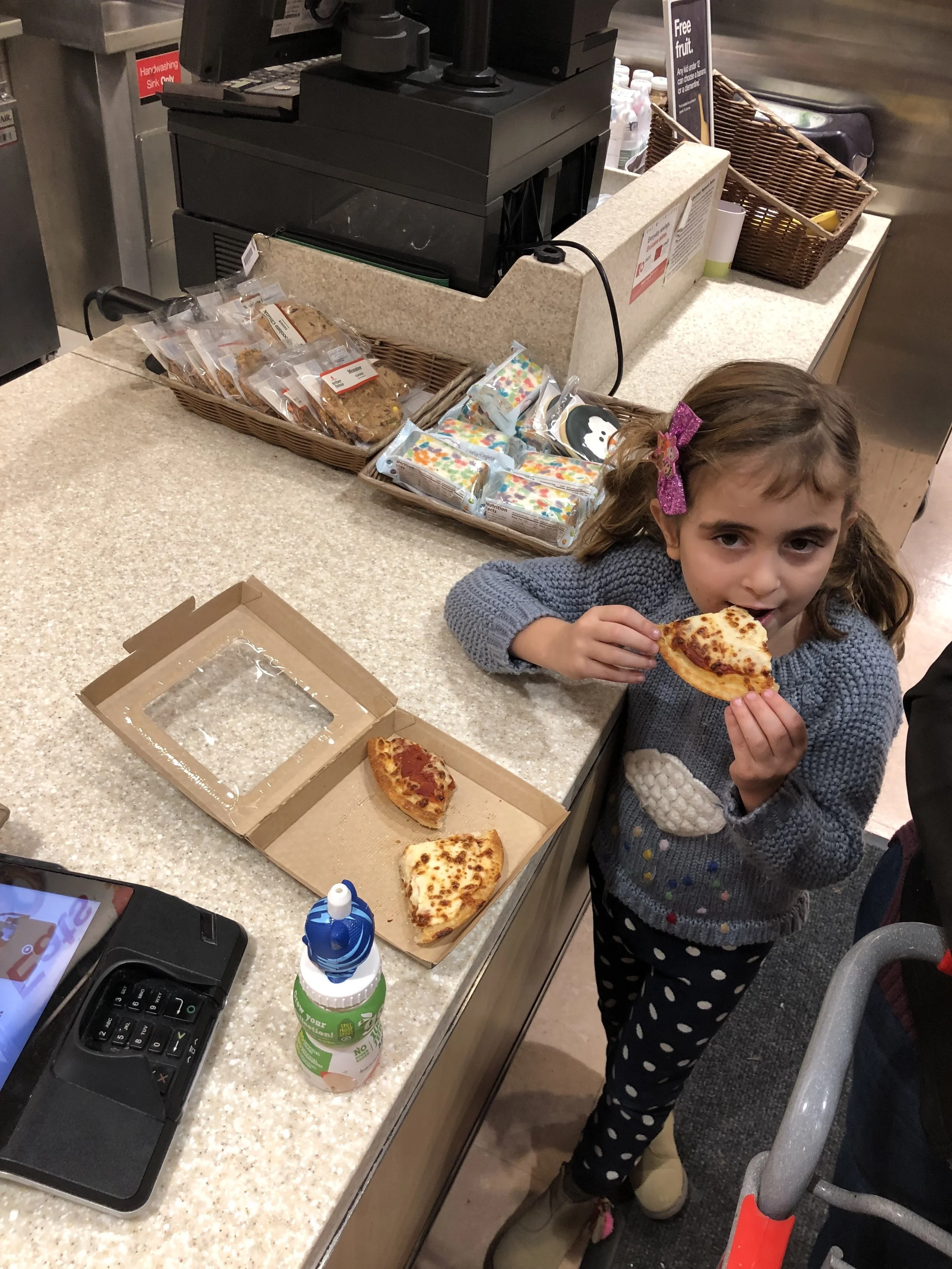
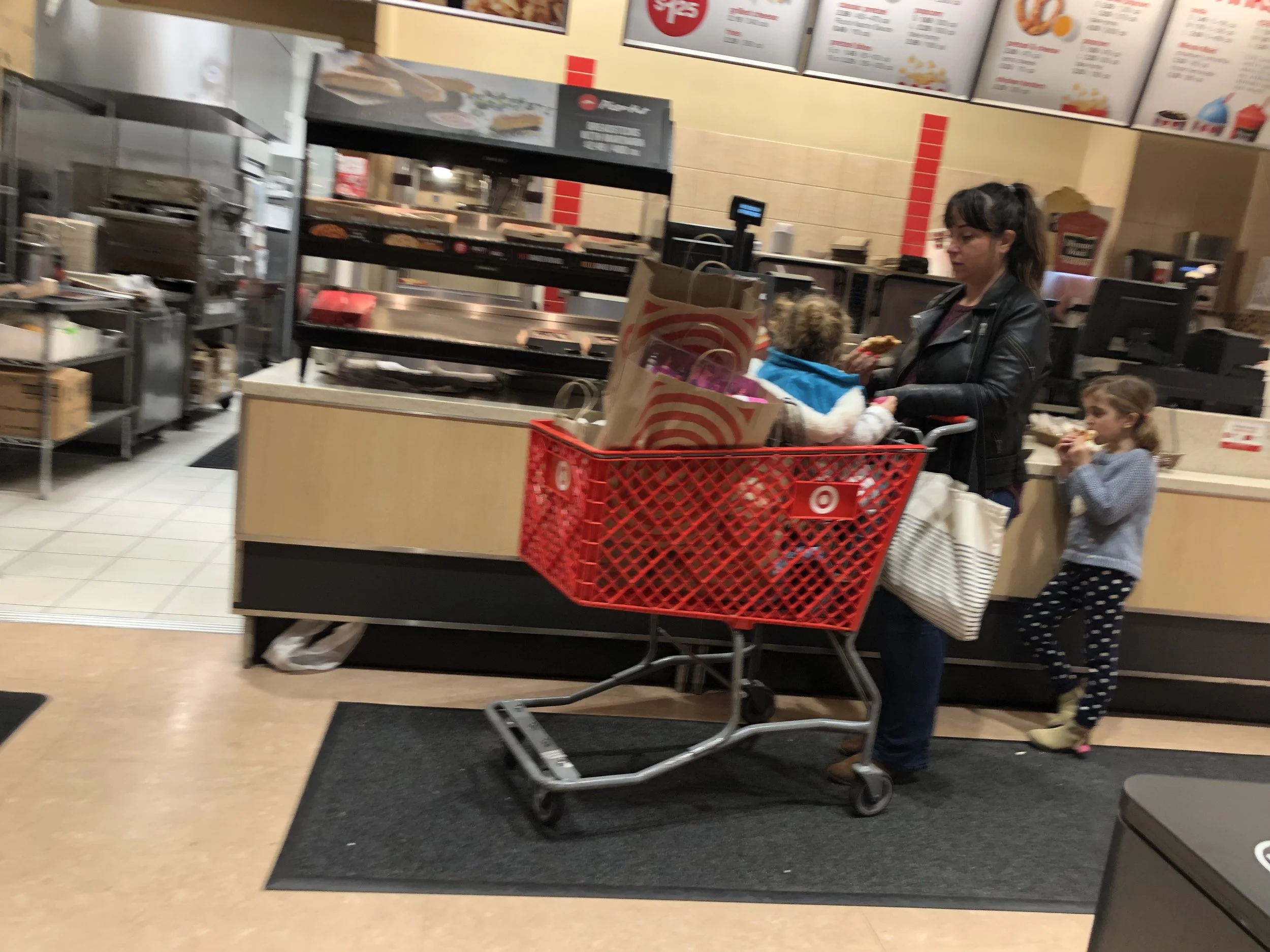
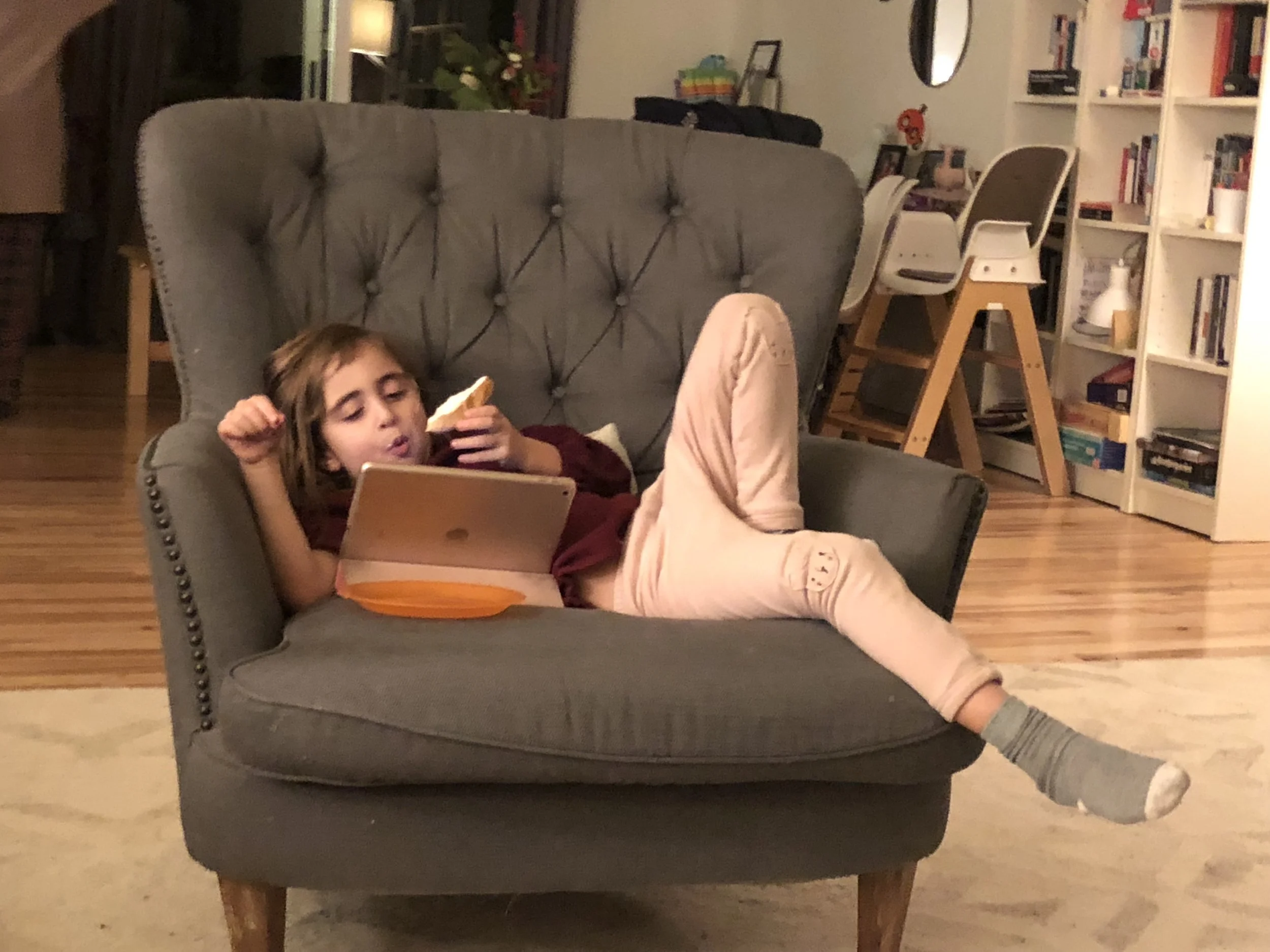
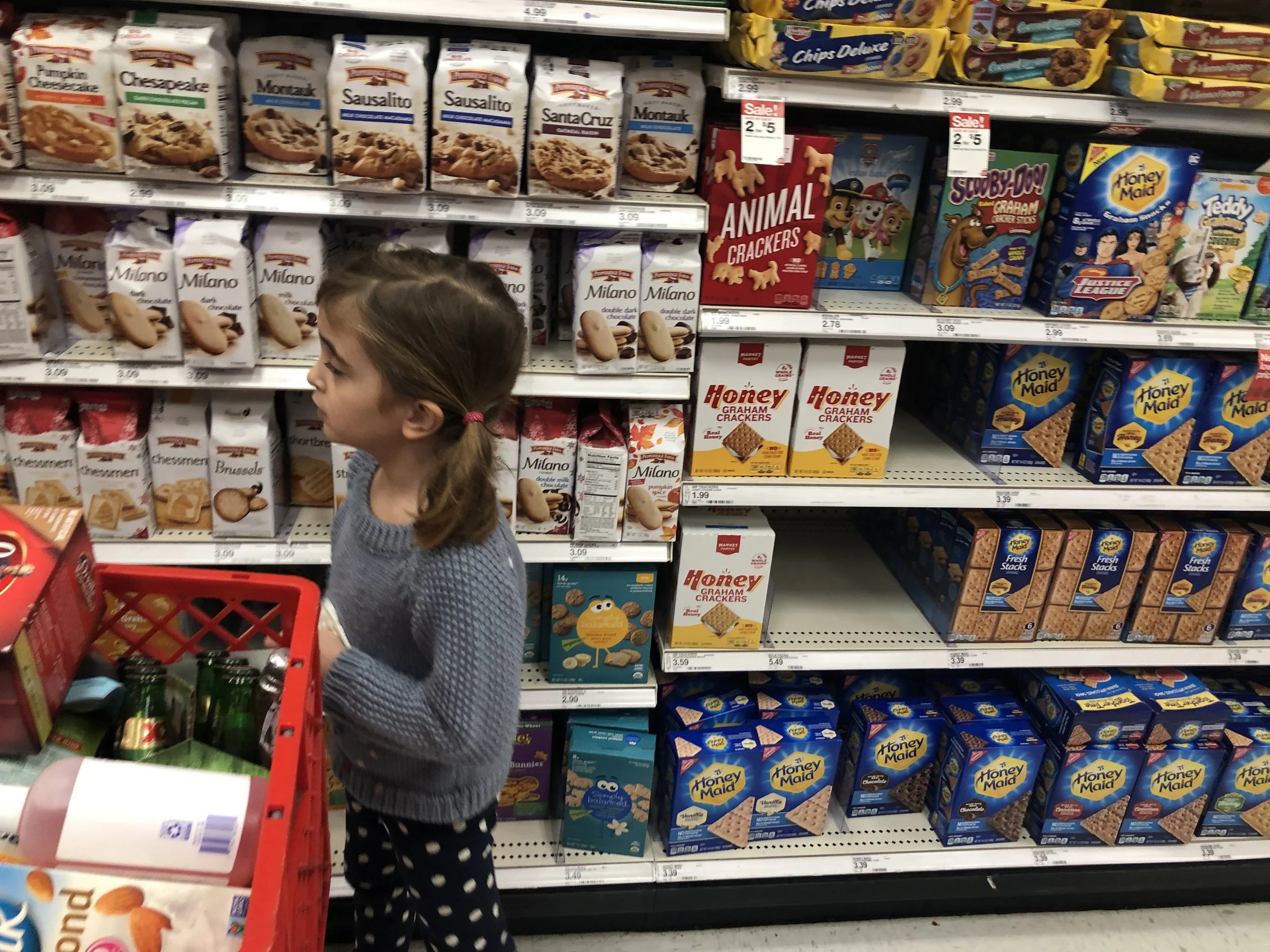
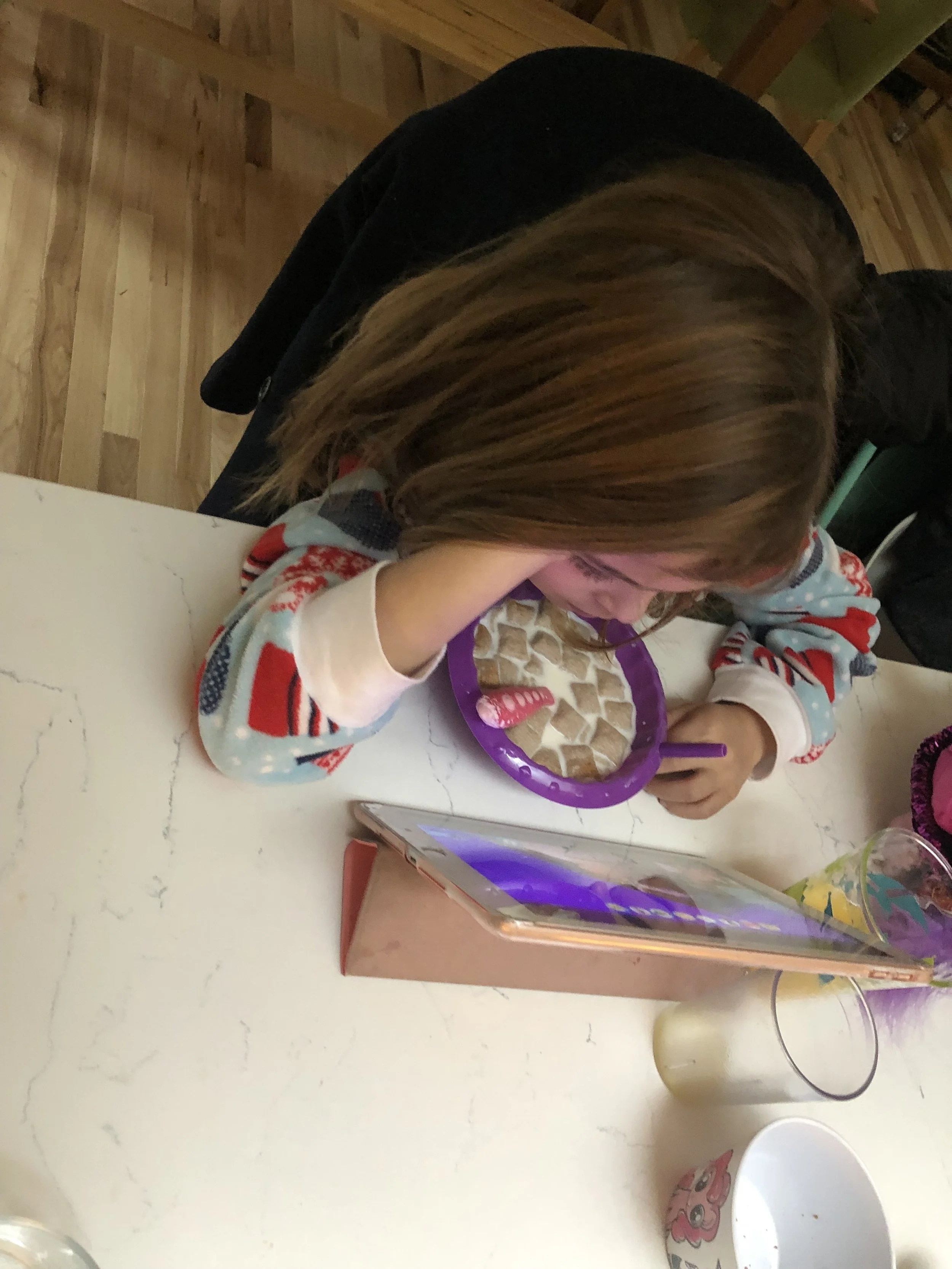
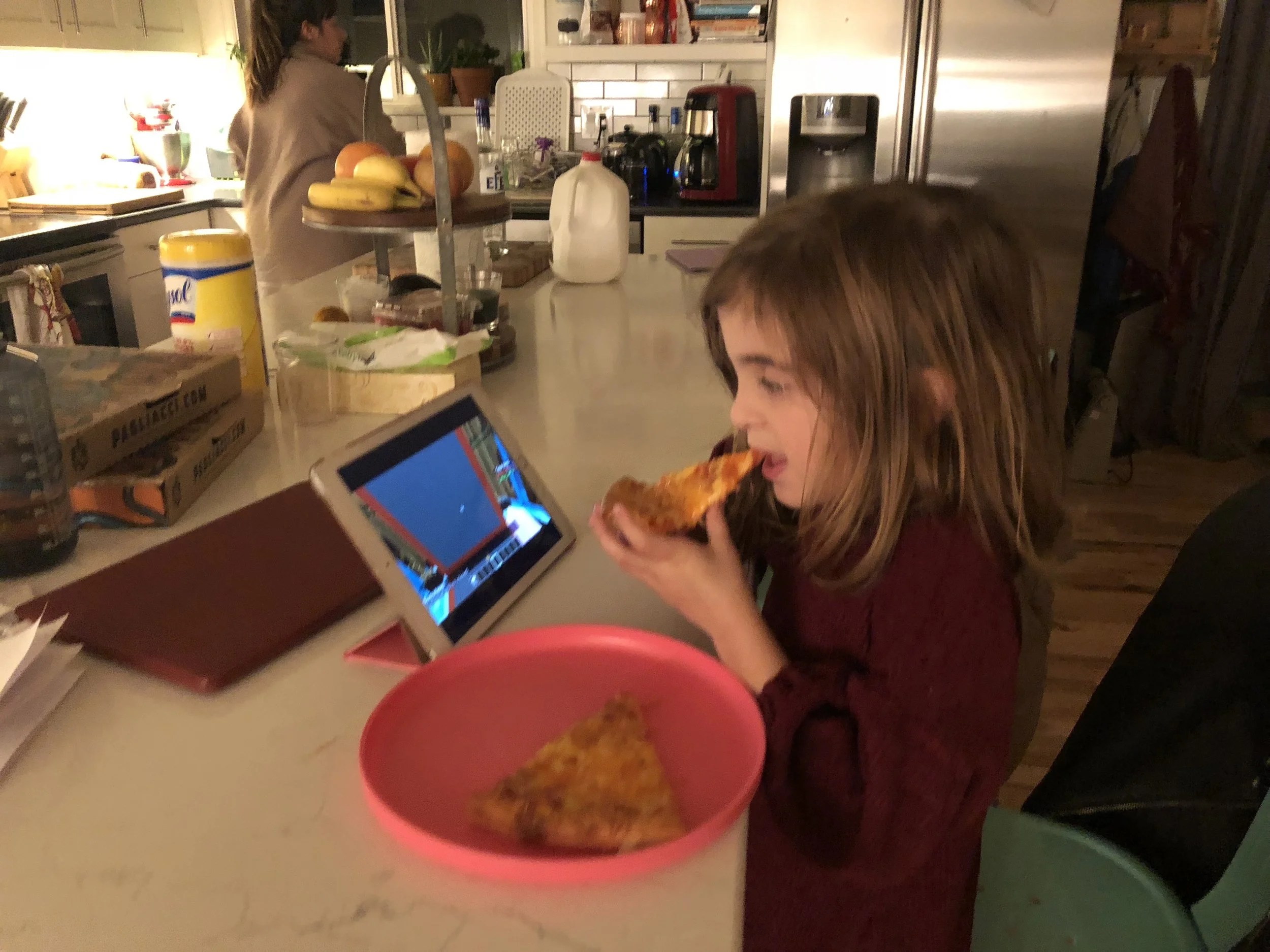
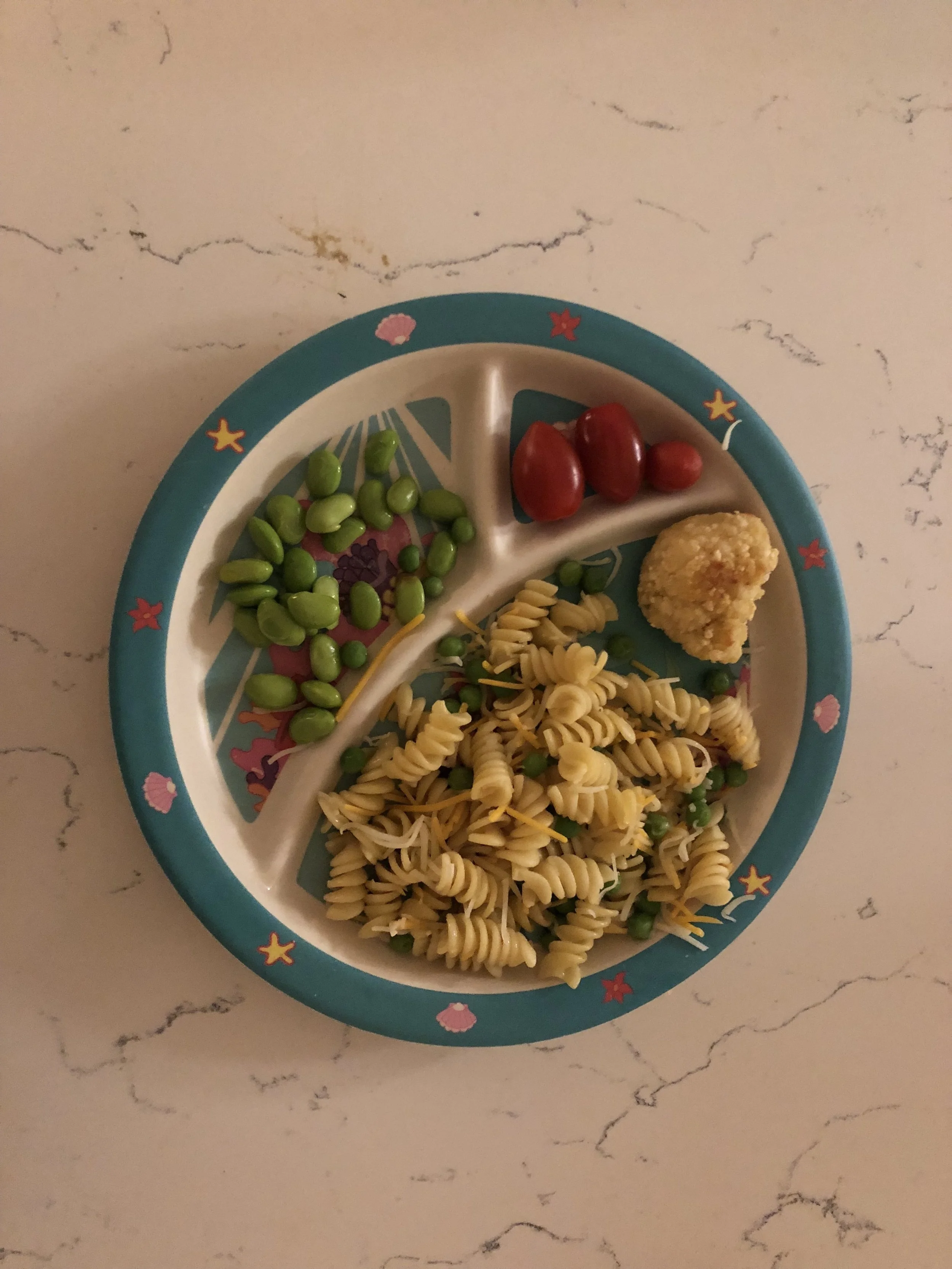
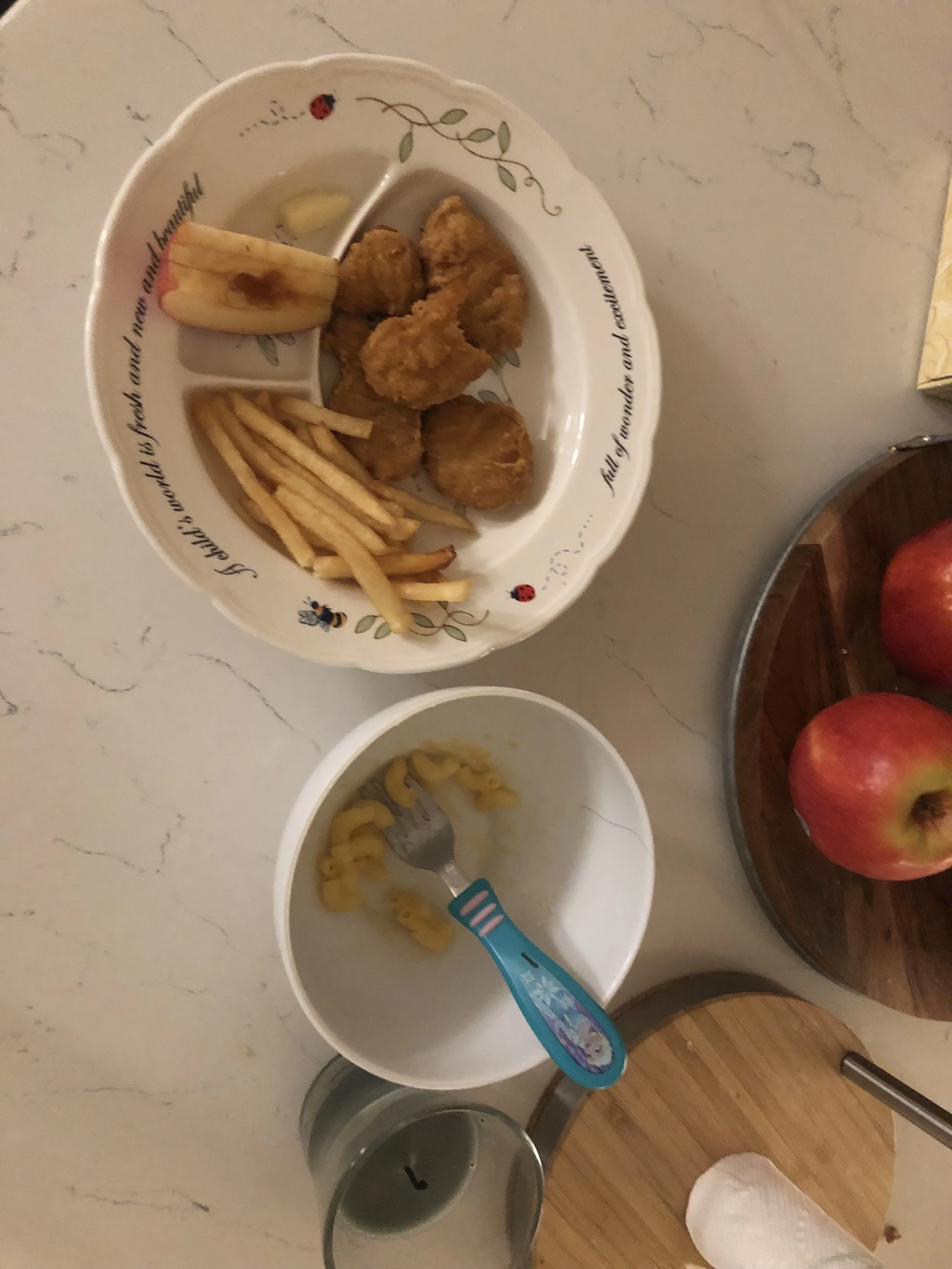
I started talking to friends who have two young children, one 2,5 and one 6,5 year old. Defne, the older one is right about my target age and she started kindergarten at a public school this year. First with parents, we talked about their experience and challenges around feeding the two kids and trying to balance their nutrition. Next, I observed her eating habits and talked to Defne about school and food which was pretty eye opening.
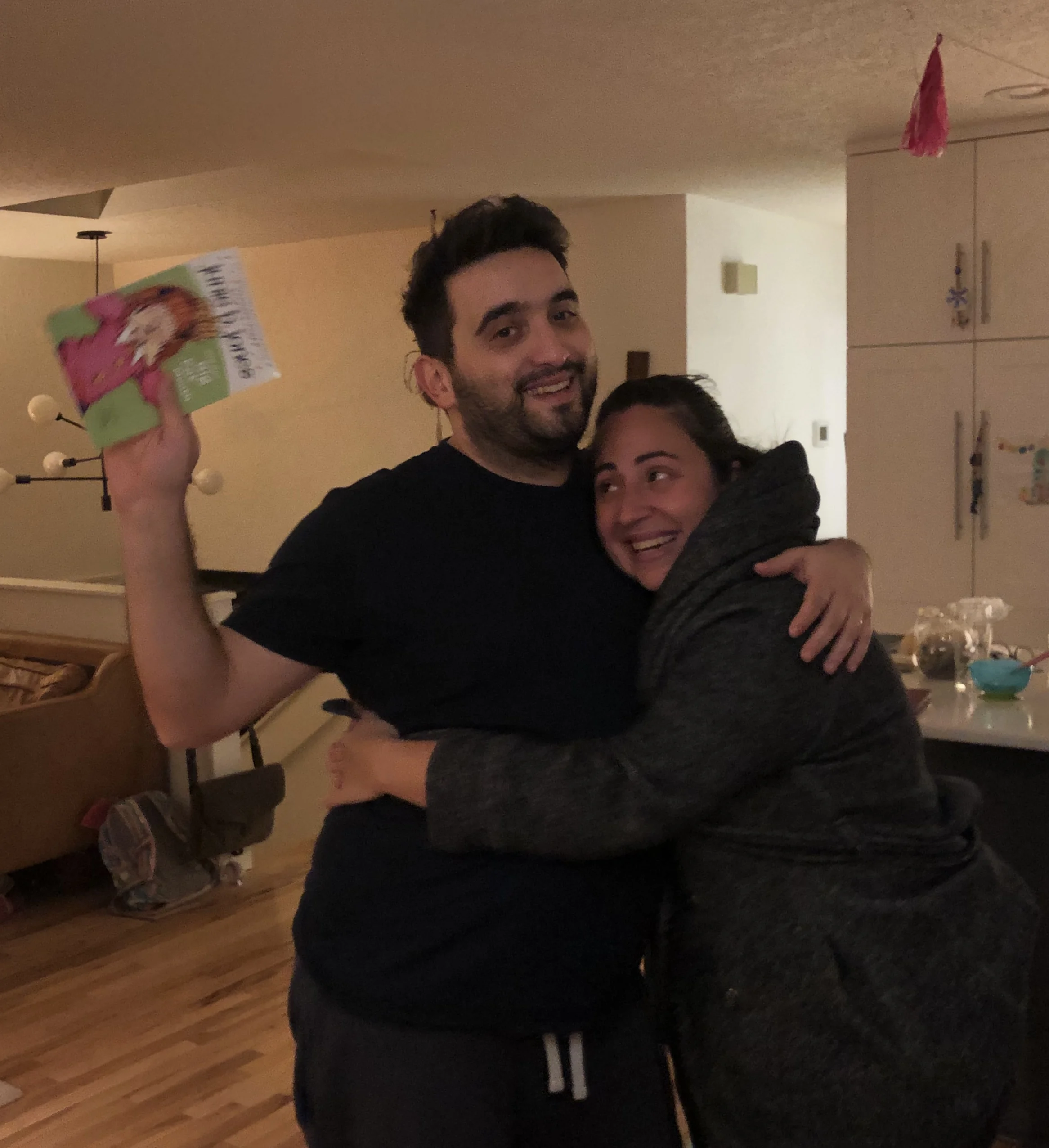
Some insights from the parents:
Kids have unique personalities and taste. Each kid, even a 2 year old, have different taste in food. Ceren and Firat say the little one is an adventurous eater and will dip her finger to every food item around. Defne however can not even stand the smell of food she does not recognize. Some parents force kids to eat as they see fit but Ceren and Firat want to respect them and not force them.
Reality of daily life. Families are busy and life is hectic. Working full-time, having multiple kids to take care of, makes parents not able to always cook the perfectly healthy meal. Or fight their kids to eat those peas when they are screaming not to. Talking to Ceren and Firat, I realized how hard it’d be to introduce a new chore such as tracking kids’ food.
This is emotional territory. Parents carry a lot of guilt around neglecting their kids’ nutrition and overall health. They also worry about forcing kids too much and causing eating disorders. Any solution must take emotions into consideration and help ease the feeling of guilt.
There is way too much and contradicting information. This overwhelms parents and makes them think there are no real solutions…
“Do not google kid & nutrition guidance… You’d be lost in the “wisdom” of the internet. Oh and that parent bragging on their blog their kid eats everything? Right! Let’s be real, they all want pasta :) Maybe we should let them eat all the pasta…”
Firat
“Even in the last 6 years guidance has changed. When Defne was born we were given a list of when certain foods should be incorporated into her diet. With the little one, doctors said she can eat whatever and the sooner we introduce new foods the better… I mean, did Defne become a picky eater because we did not give her variety soon enough?”
Ceren
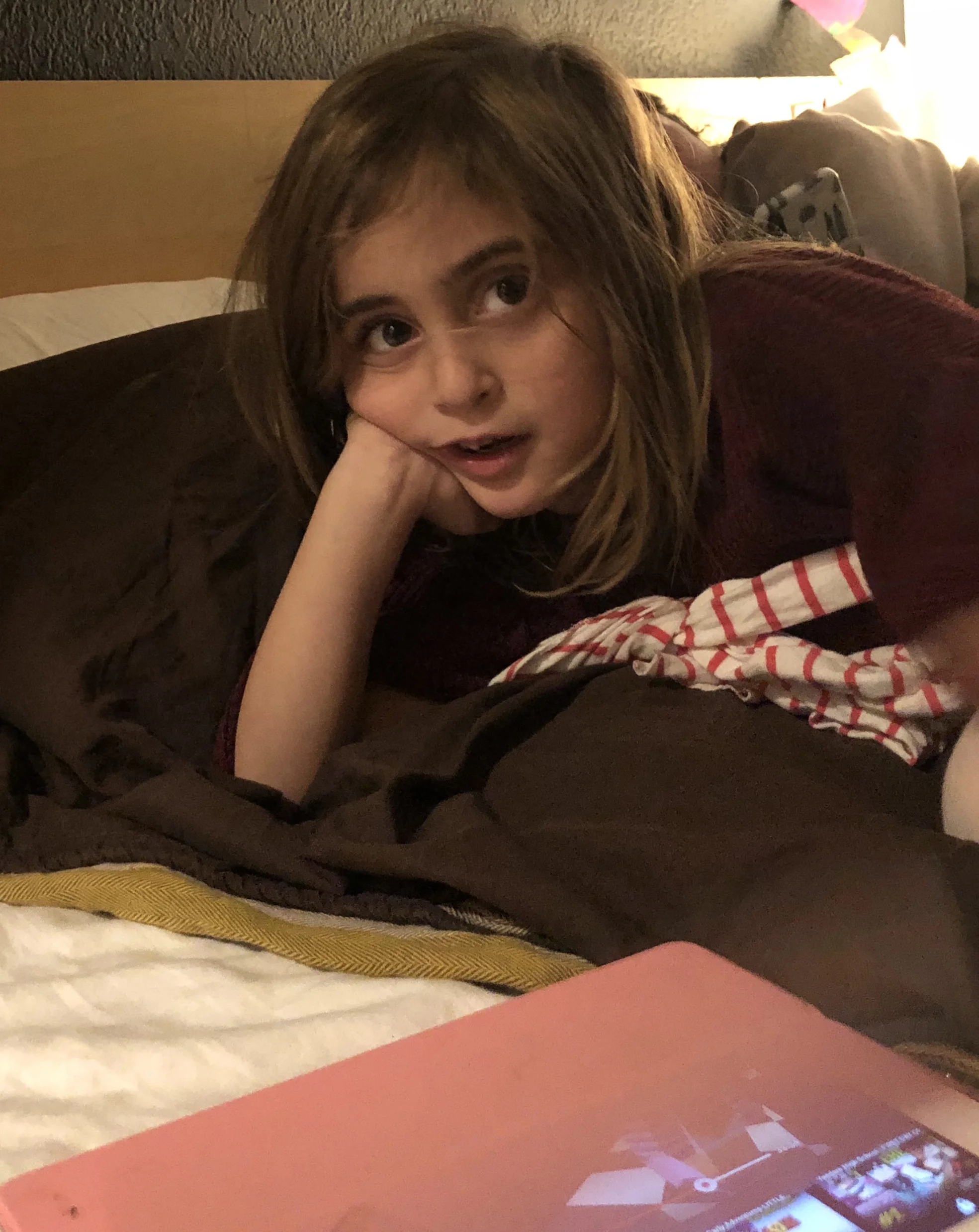
I started talking to Defne by asking her what she did at school and then what she ate for lunch. She said “hot dogs and baby carrots and juice”. Her mom warned me that she probably only ate a bite out of that carrot :)
Some insights from the 6,5 year old:
Children also feel guilty when they know they are not following parents’ advice. They try to be “good” but they seem to not fully comprehend why they should be. So it’s easy to just eat what you want, which might be pasta 3 times a day.
“I chose hot dogs today because it’s healthier and i knew my mom would want me to get something healthy.“
Children have limited experience with food and they get influenced by what other adults or their peers are eating. Some fear new foods which might not be based on any knowledge, but solely based on the fear of the unknown. Solutions should address an engaging way to educate kids around food and nutrition.
“I drink apple juice, because I have to have one fruit.”
Children accept bribery. Defne mentioned how she only eats broccoli when hidden inside her pasta and how her parents then reward her candy for it. But this connection to material rewards, especially sweet addictive treats is not helping them develop good habits. Experiences should encourage habit forming and non-material rewarding systems.
lunch time observations
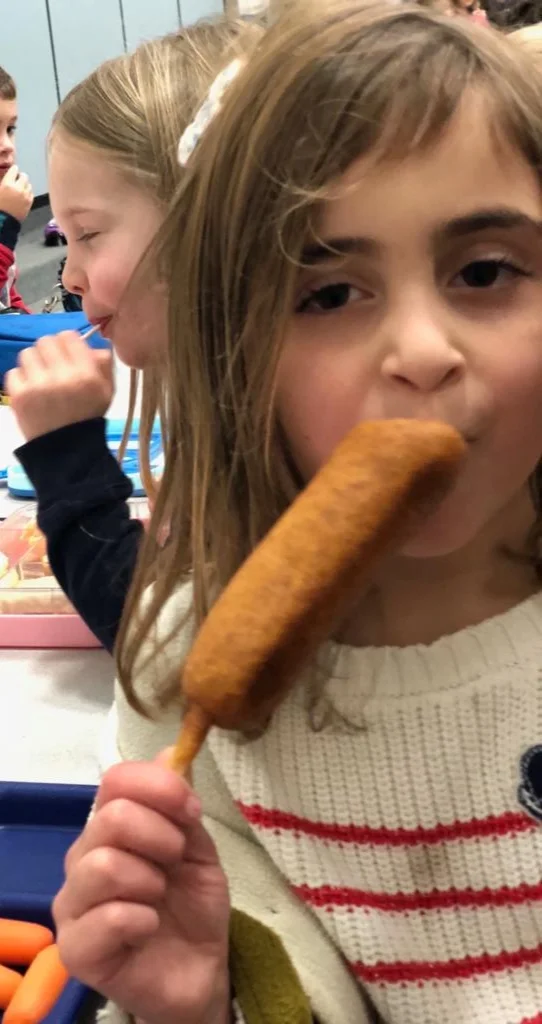
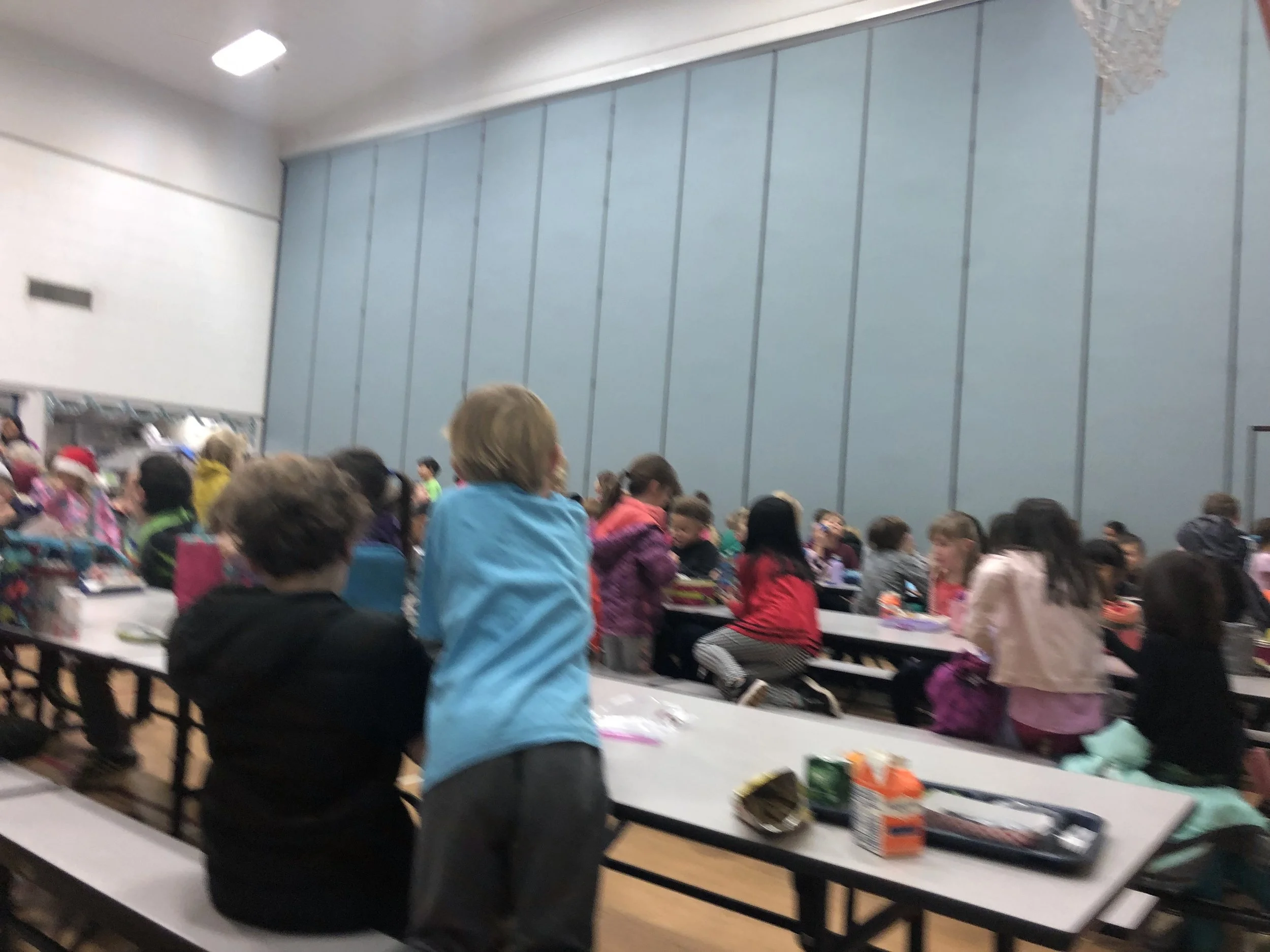
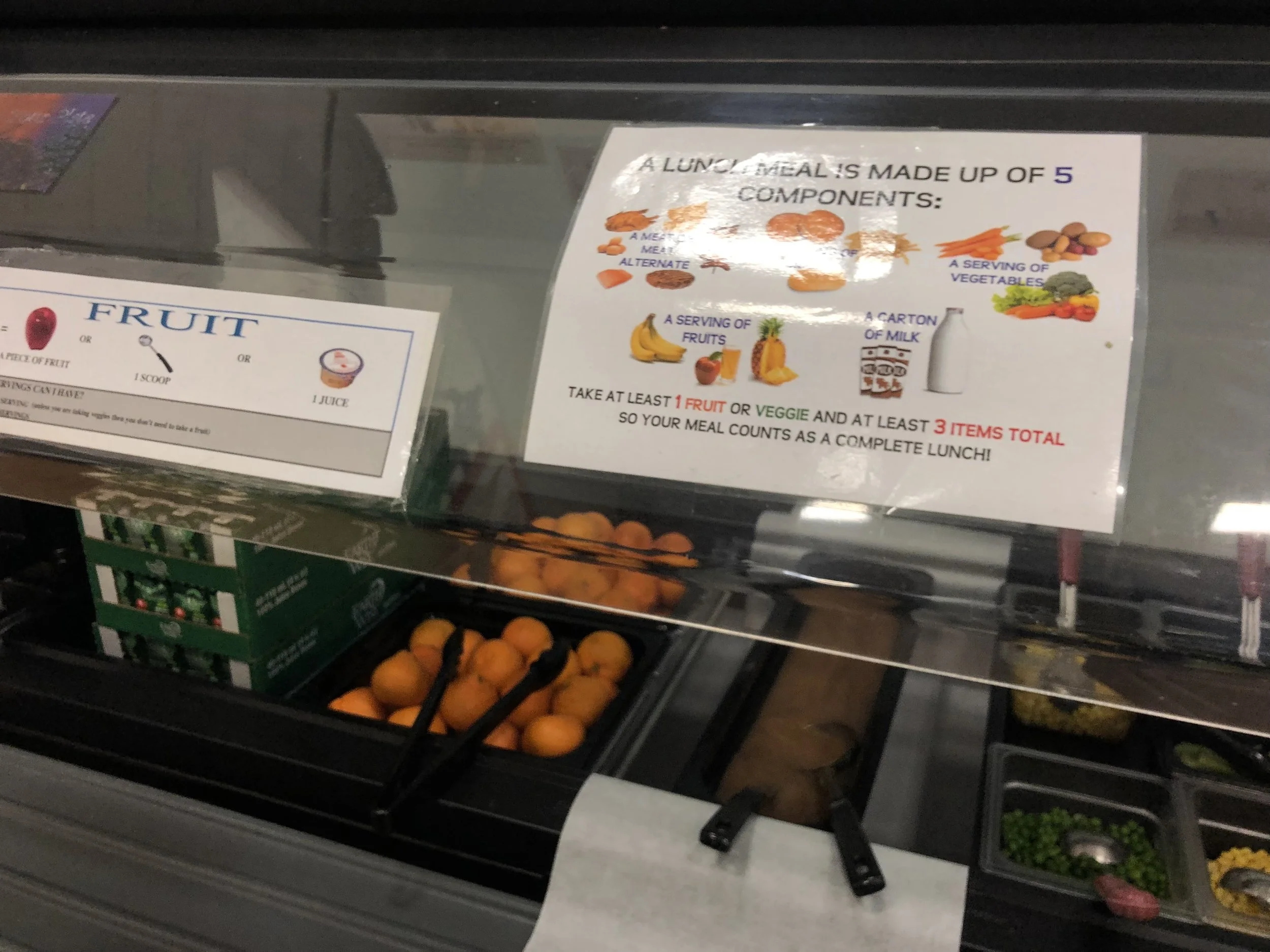
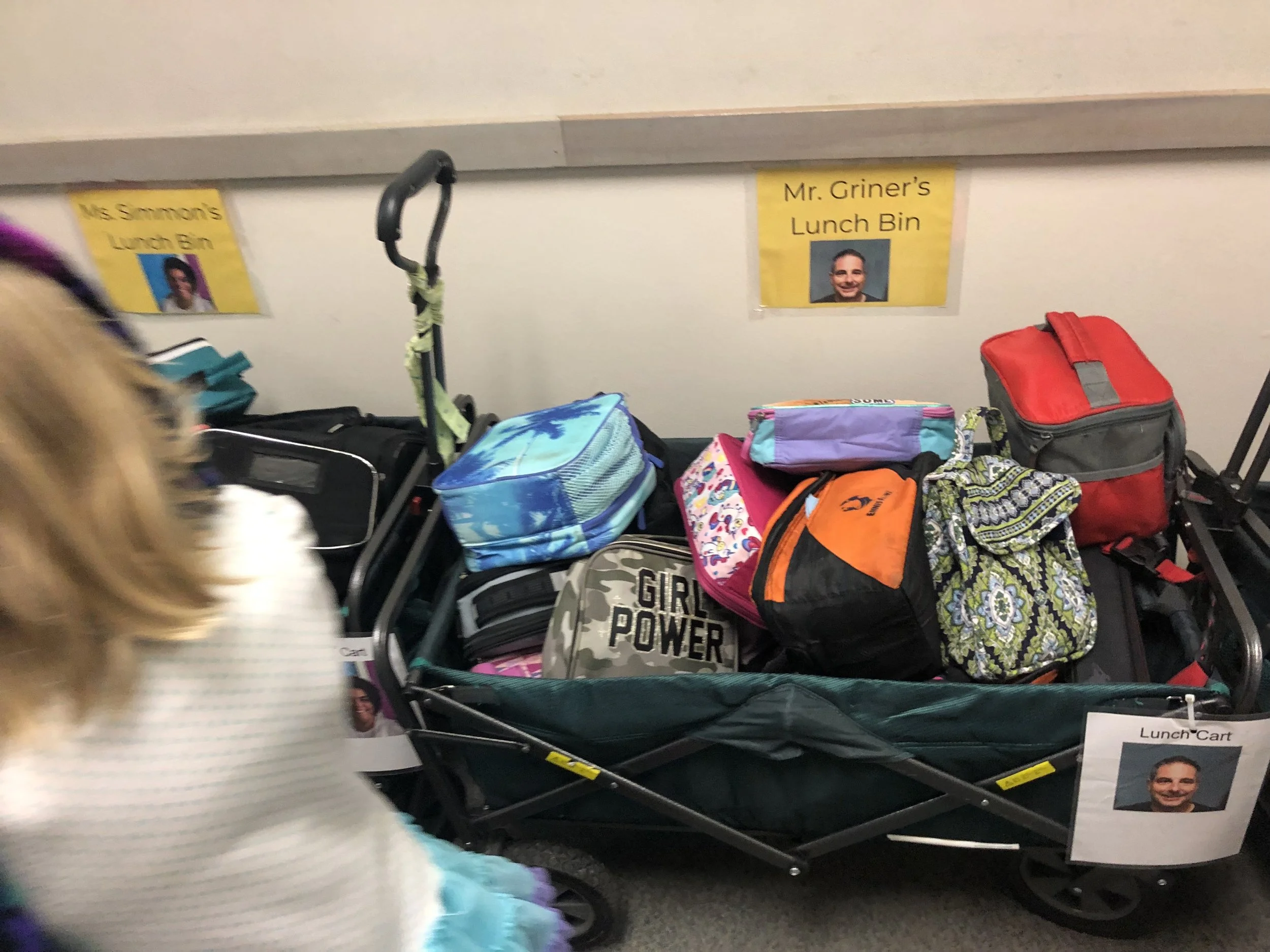
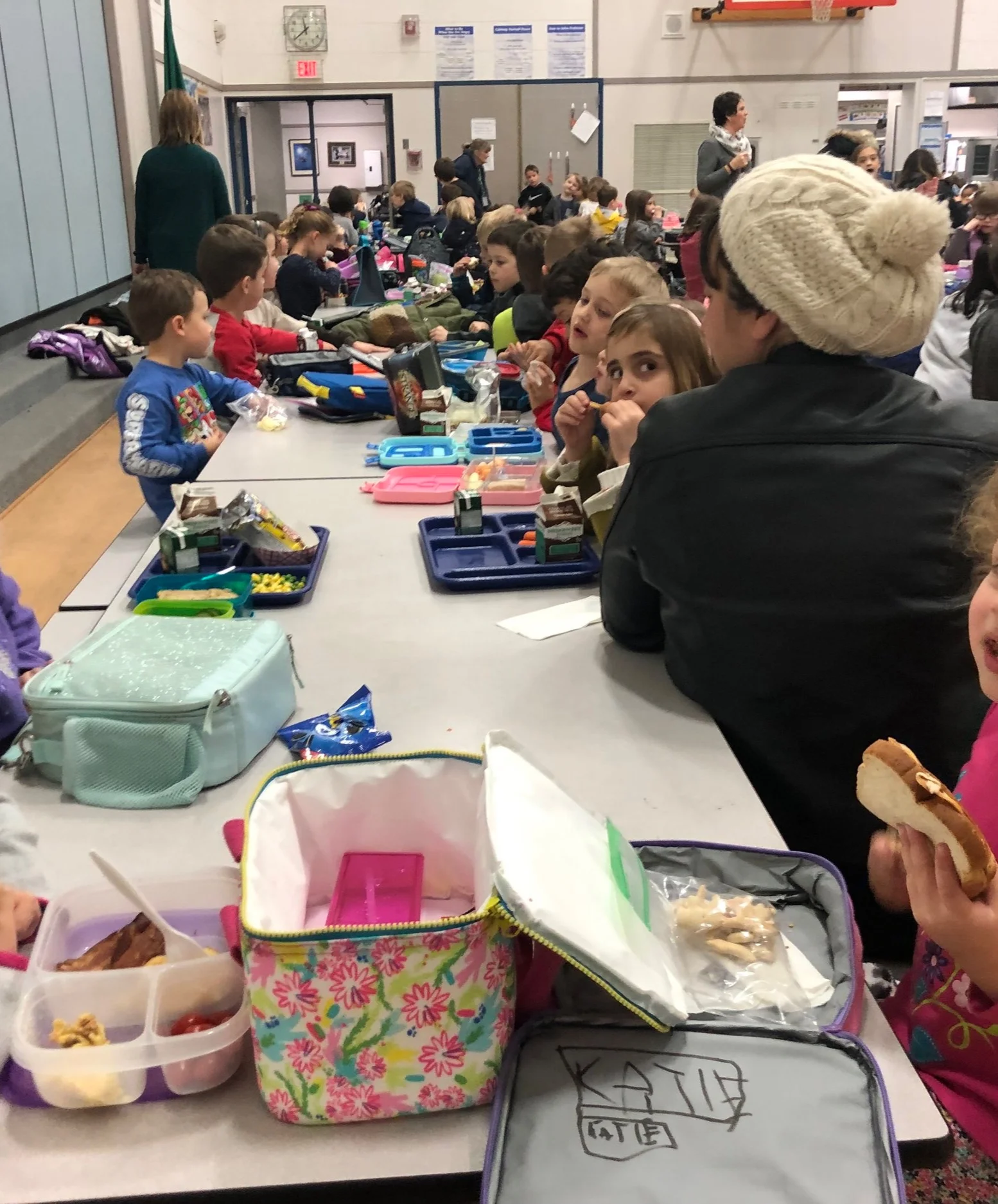
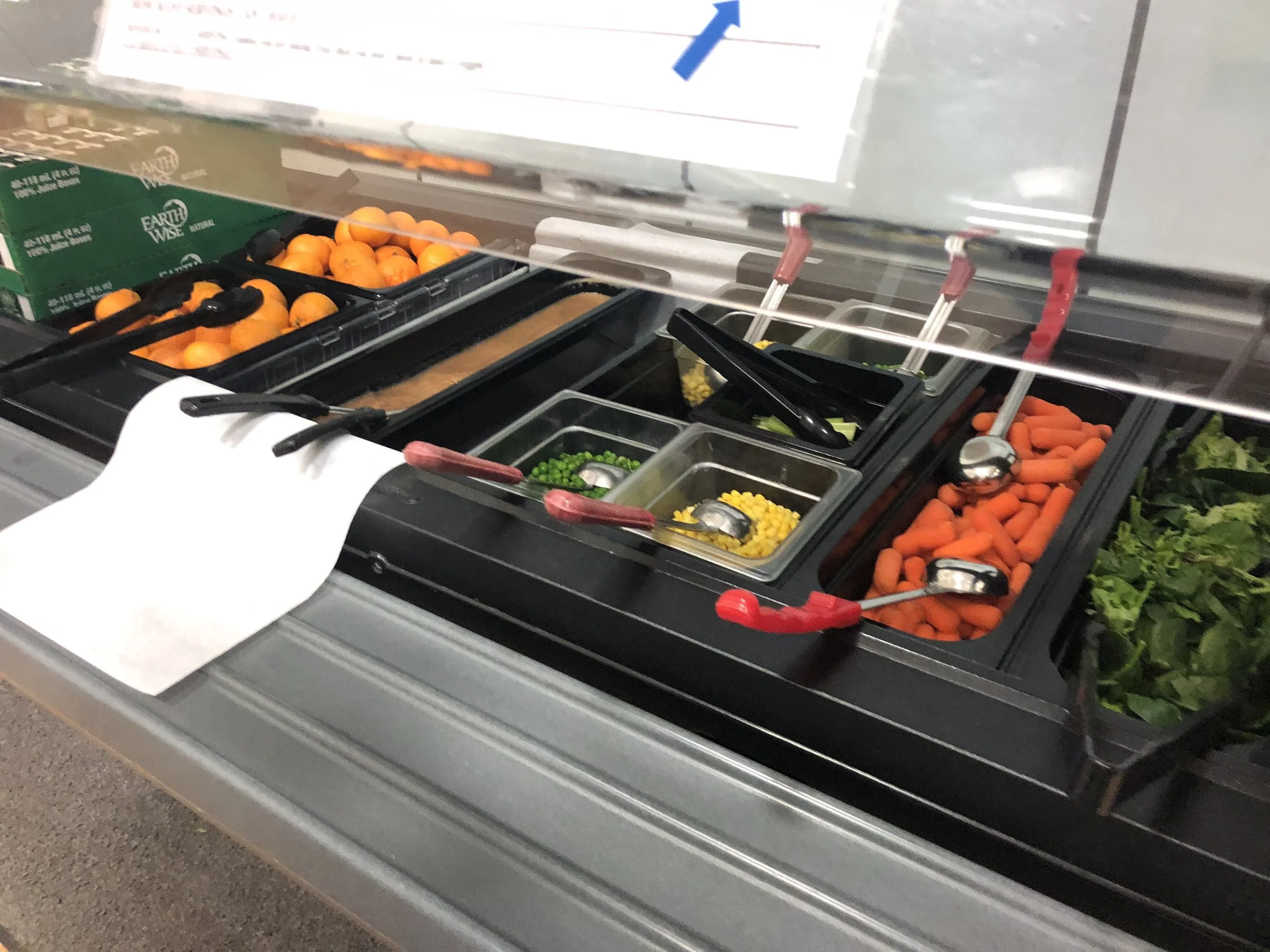
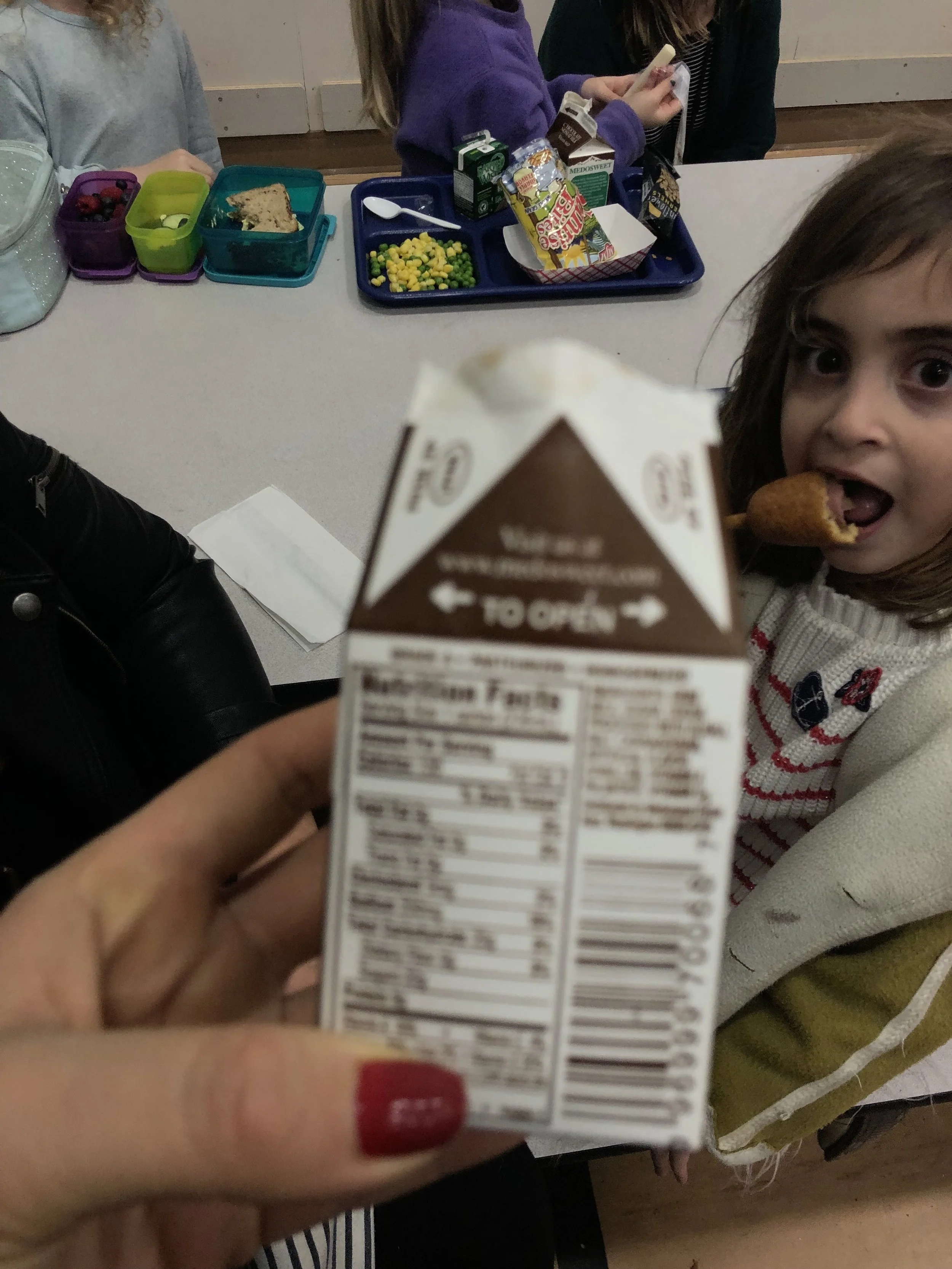
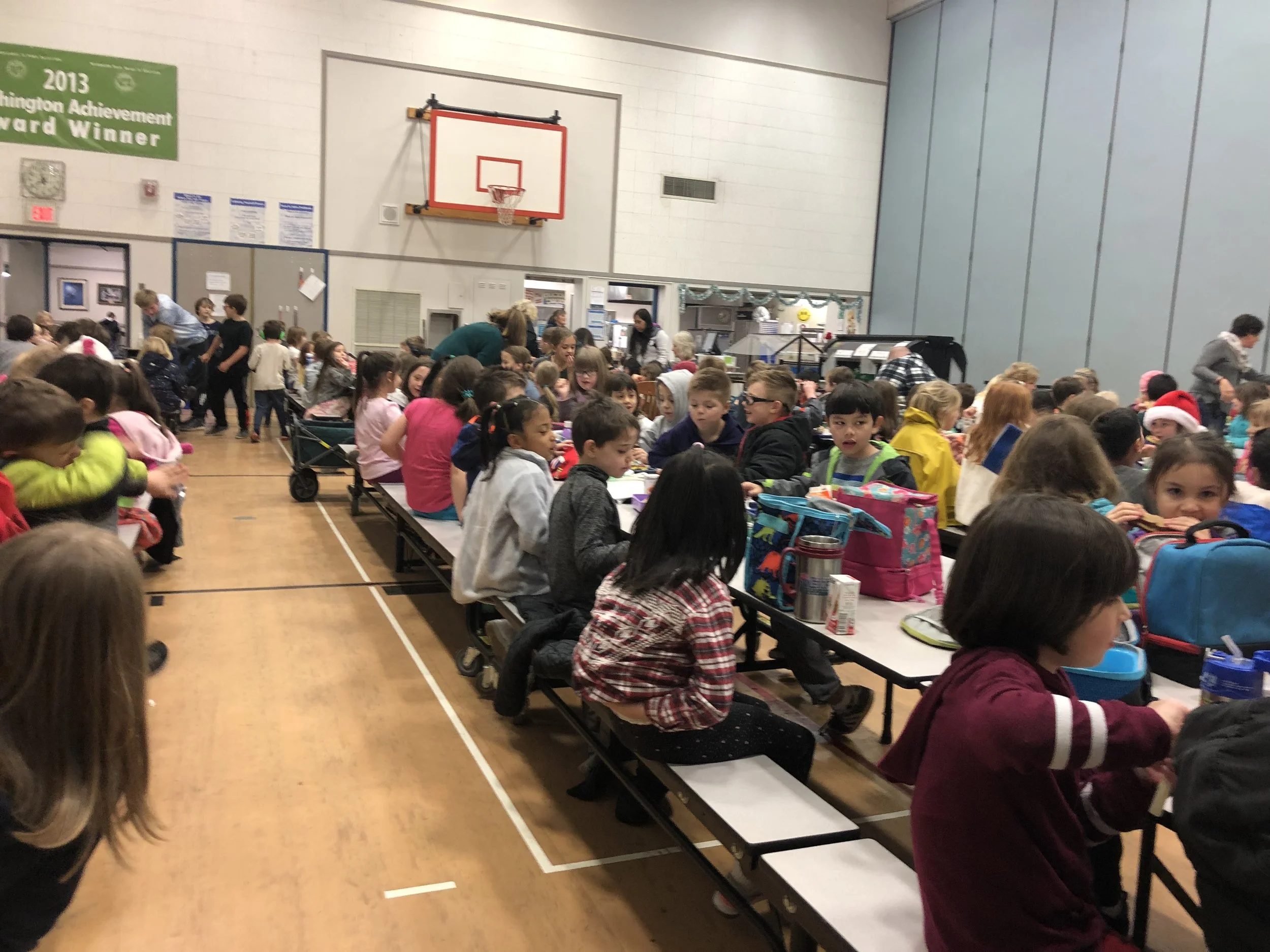
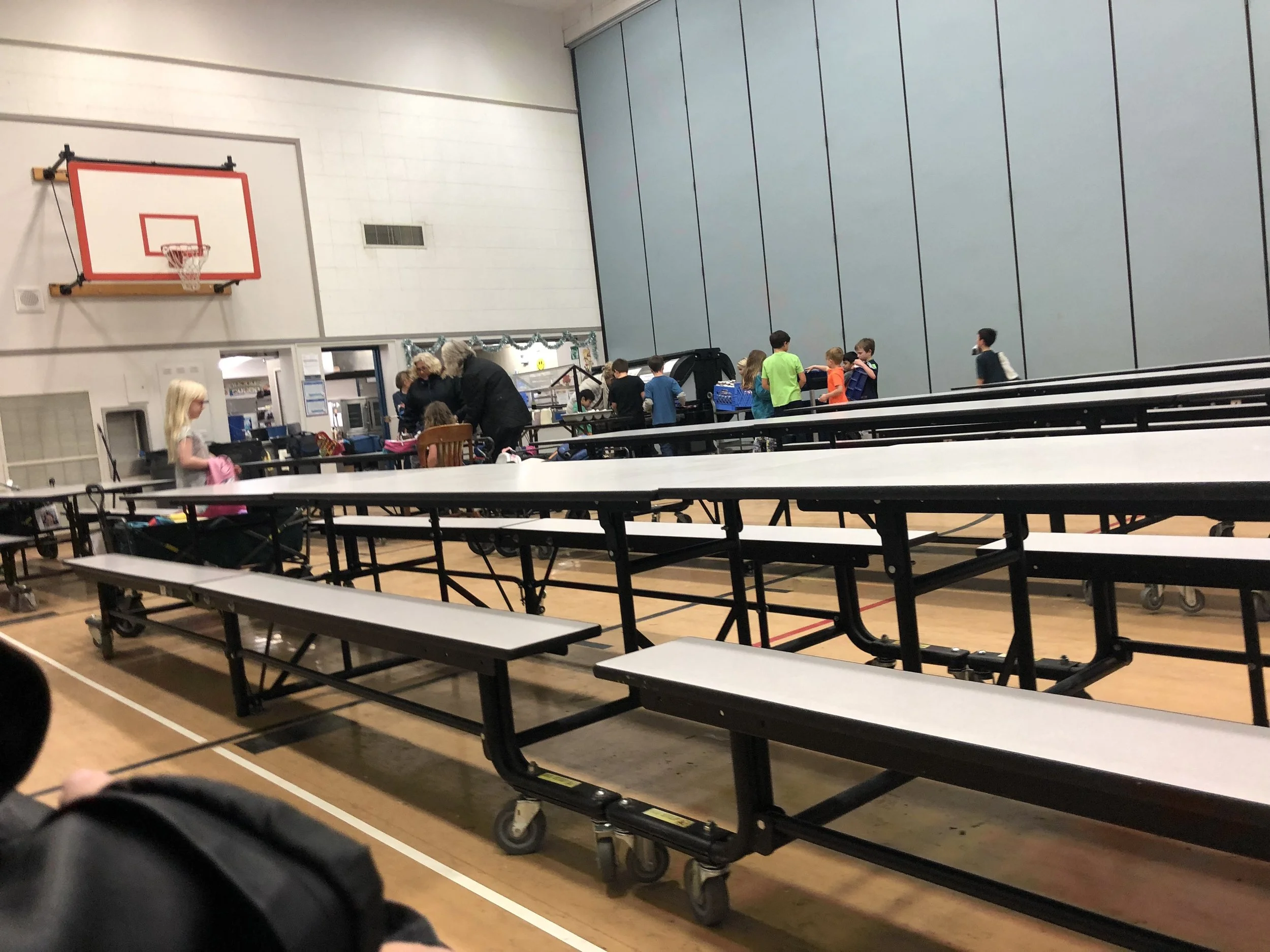
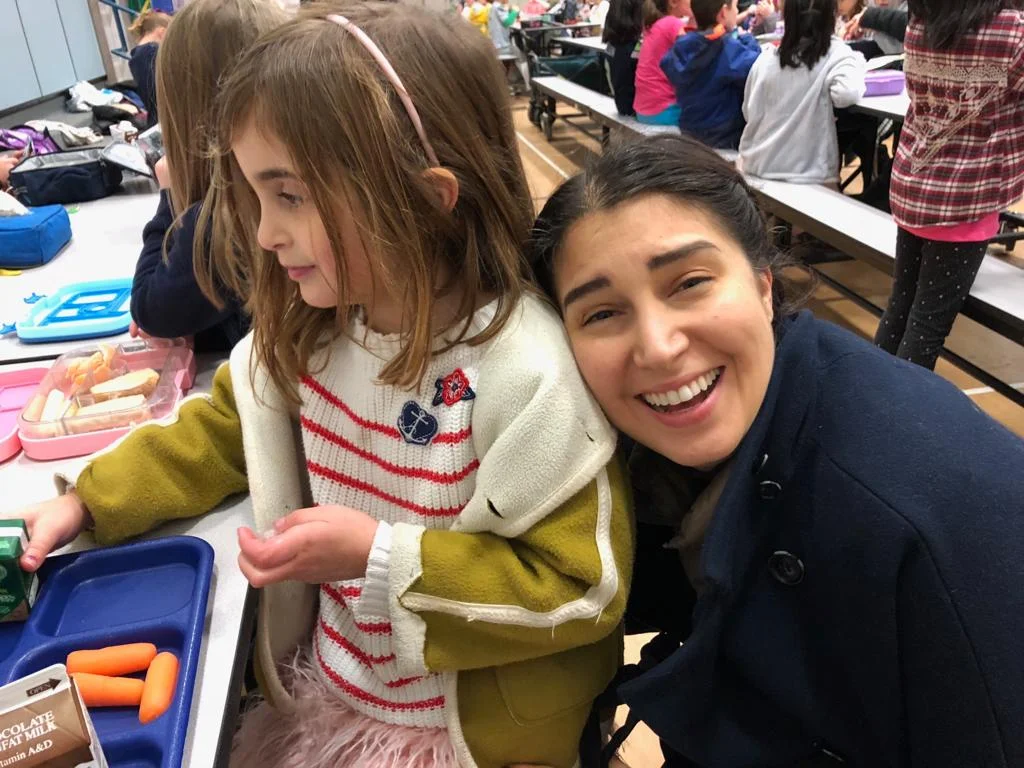
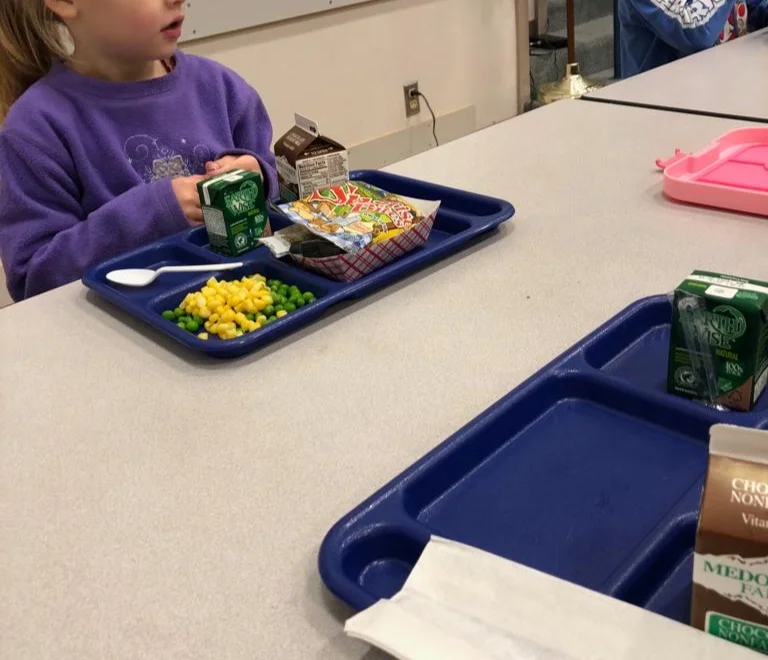
Let’s have lunch! Me and Defne’s mom Ceren went to Highland Terrace public school to have lunch with the kindergarten and elementary school students. NOTE: I could not talk to teachers nor students unfortunately as there are strict rules how to interview in public schools. Observations and pictures were allowed. Some insights and observations:
The timing. My first reaction was observing how little time students had. They get 30 minutes and between getting in line, sitting down and getting out of the cafeteria they have about 20 minutes to eat. Teachers go around tables to tell children to eat quicker.
Kids are distracted. They are busy talking to friends, even leave their tables, cafeteria is very loud and it all feels hectic... This is not the calm and fun environment to be able to enjoy their food.
The way food is served is uninspiring and kids waste food. The lunch salad bar was one of the saddest and most unappetizing salad bars I’ve ever seen. Kids know the rules that they have to get a vegetable or fruit from this section. And they do exactly that! They take the food but from what I observed, there were very few vegetables and fruits being actually eaten. Food kids do not favor mostly go to waste.
The way food is consumed. Kids have full control over how they eat. There are not enough teachers to sit with them, or maybe they want to let kids figure it out as part of their education. But the reality is that kids eat in the order they wish and as much or little food as they wish. I observed most kids start with sweets and treats such as chocolate pudding, M&M’s and crackers instead of their main dish. As they have little time, they either barely touch the main dish or rush to finish some of it before they go back to class.
There is no education about the food they consume. Cafeteria only had 3 sheets taped on the salad bar which were instructions for picking complete meals. There is no information about what they are actually eating or why. When we went back to Defne’s kindergarten class, I noticed the walls were full of drawings, images etc. but none were about food nor nutrition. Solutions should mimic playful aspects of a child’s life and make food education a fun part of the day, during or after lunch.
Overall, the cafeteria environment, the food, the way it was served and consumed made the school lunch feel like a fast food restaurant experience. Problems around healthy eating seem to be beyond the food served or if kids eat and track it. The way kids eat together, the social rituals around food at school needs to be addressed as well.
After observing Defne during the day, including school lunch, I created a journey map focused on the food consumption throughout the day. There are multiple actors in this journey: the kid, parents, teachers and cafeteria staff. I broke the day down to major moments such as “selecting lunch”. Noted steps each actor is taking and highlighted the “food moments” shared between the kid and other actors. This helped me look for opportunity areas and start to frame the problems to address.
Frame the problem & opportunity areas
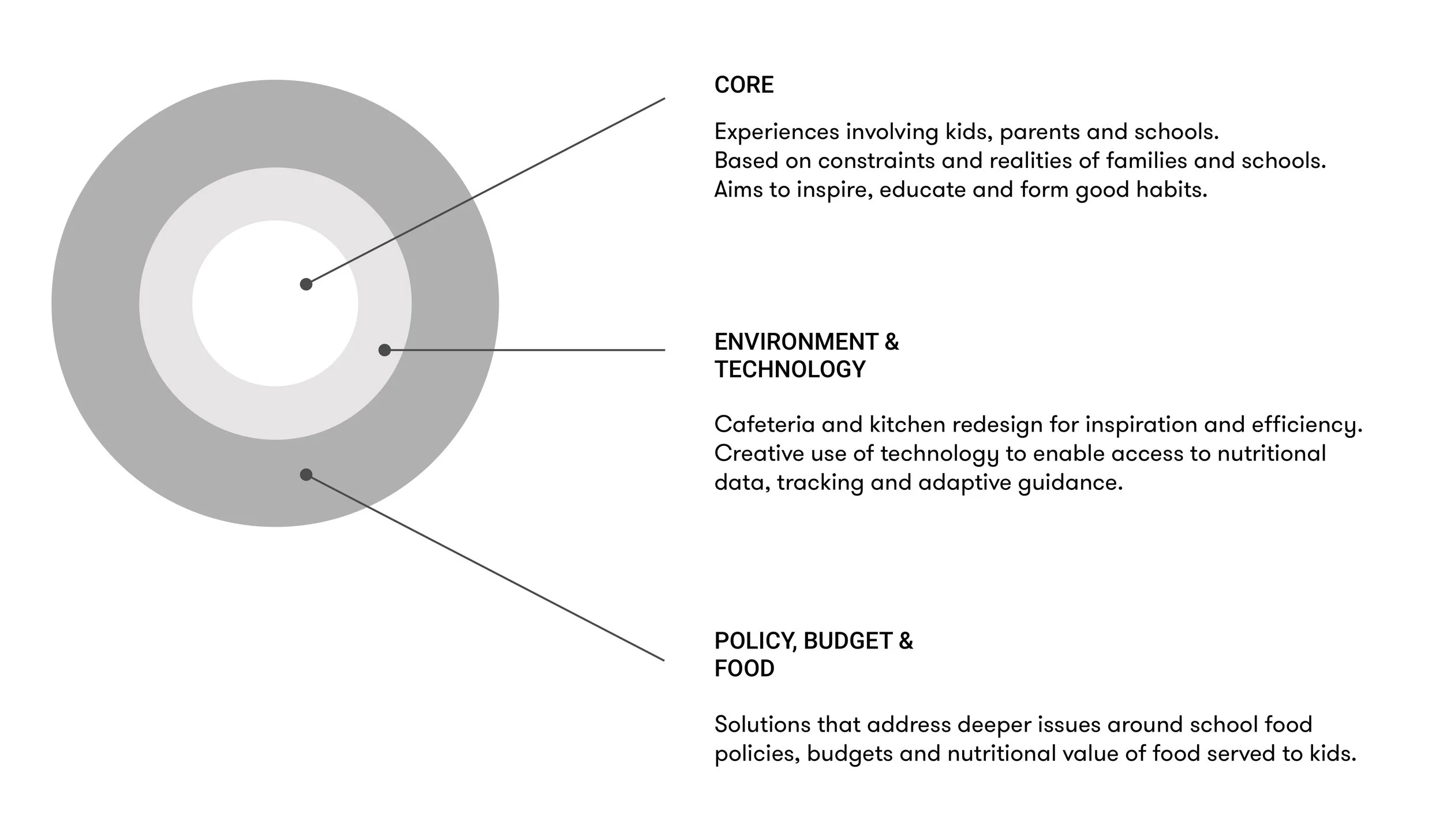
Starting to ideate, I realized solution space could be broken down to 3 layers:
Core is the first layer which involves humans and their behaviors. For the rest of this exercise I will be focusing on the core layer as it is the most realistic and important one to address in the short term.
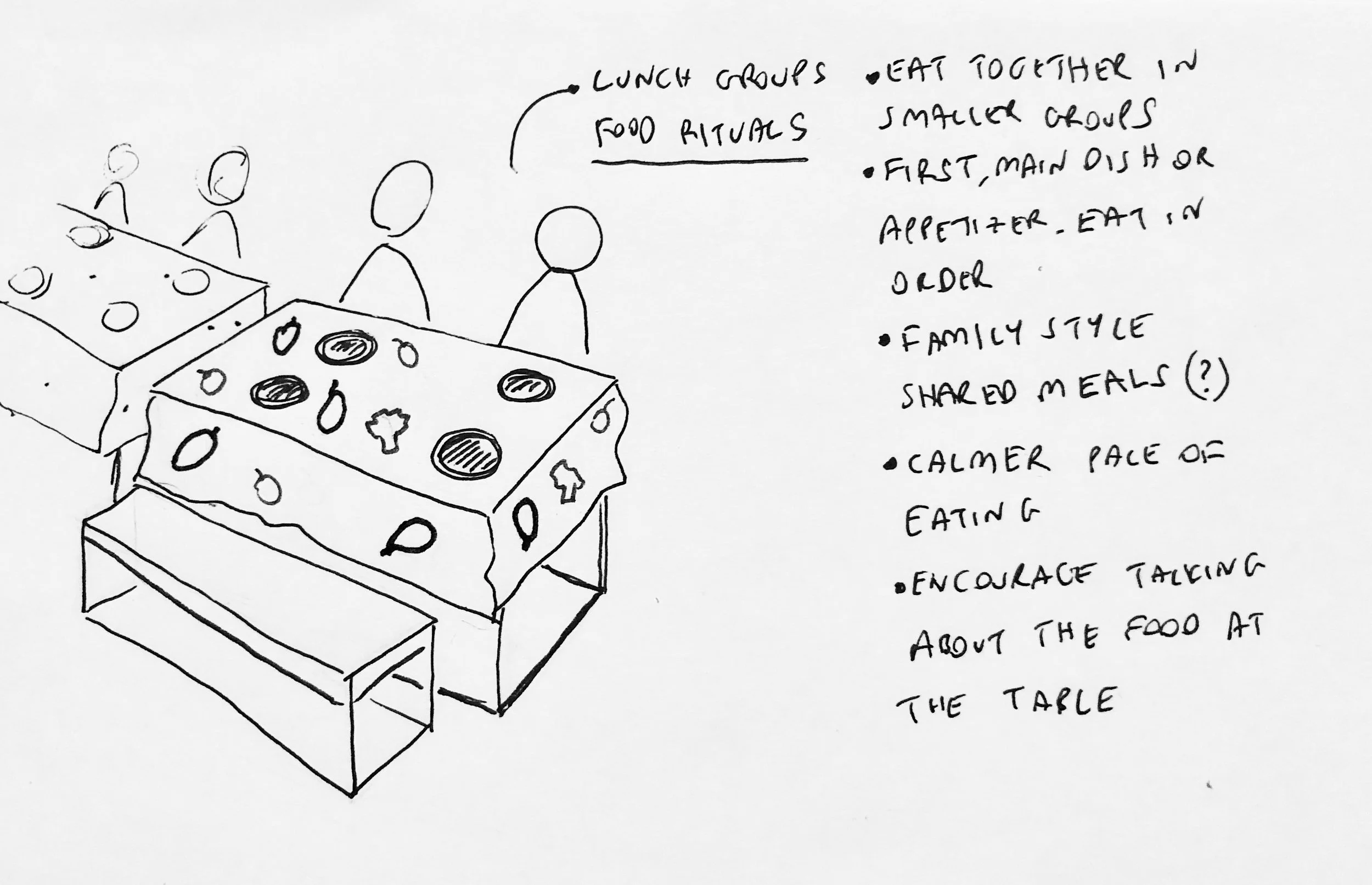
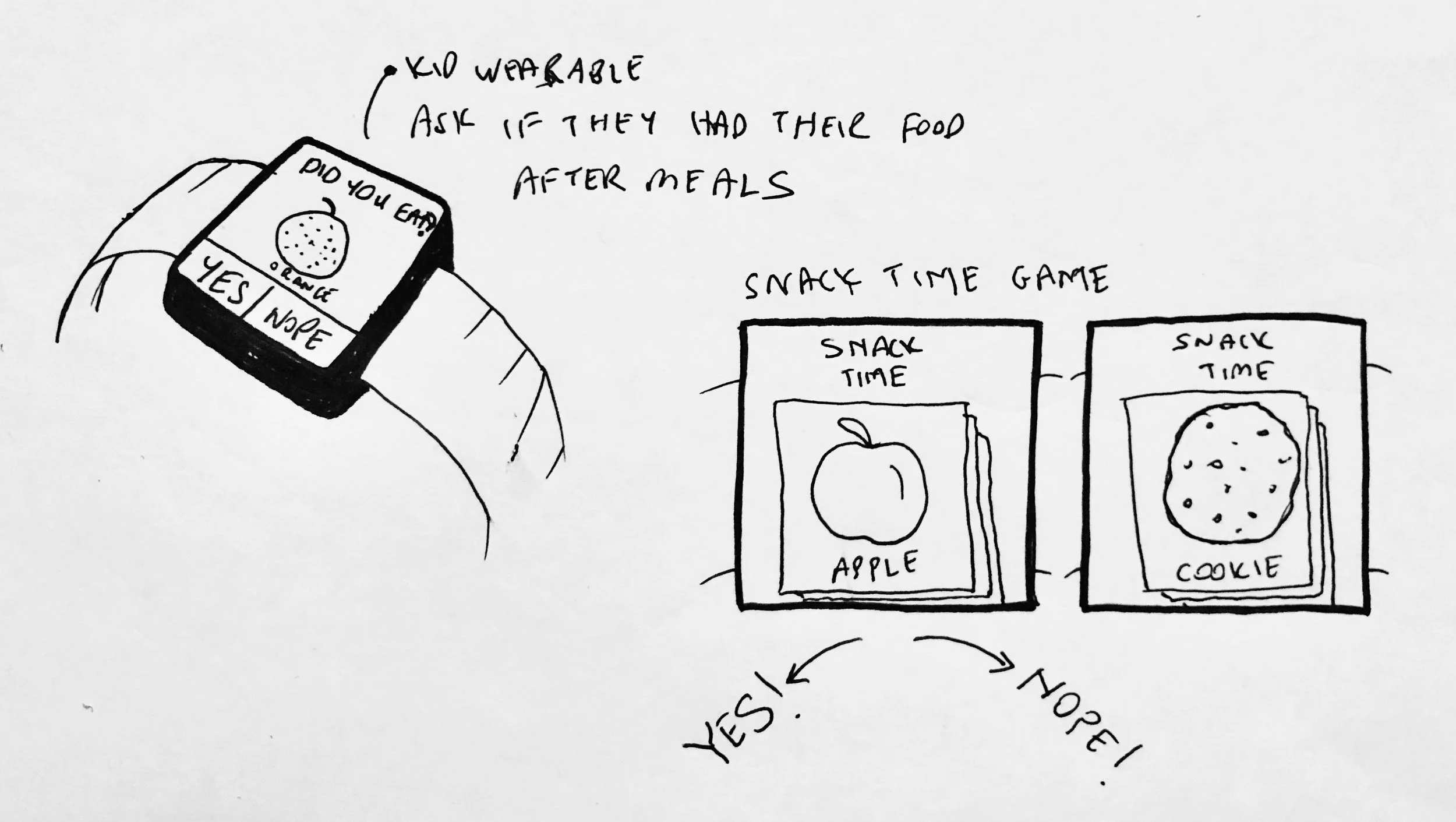
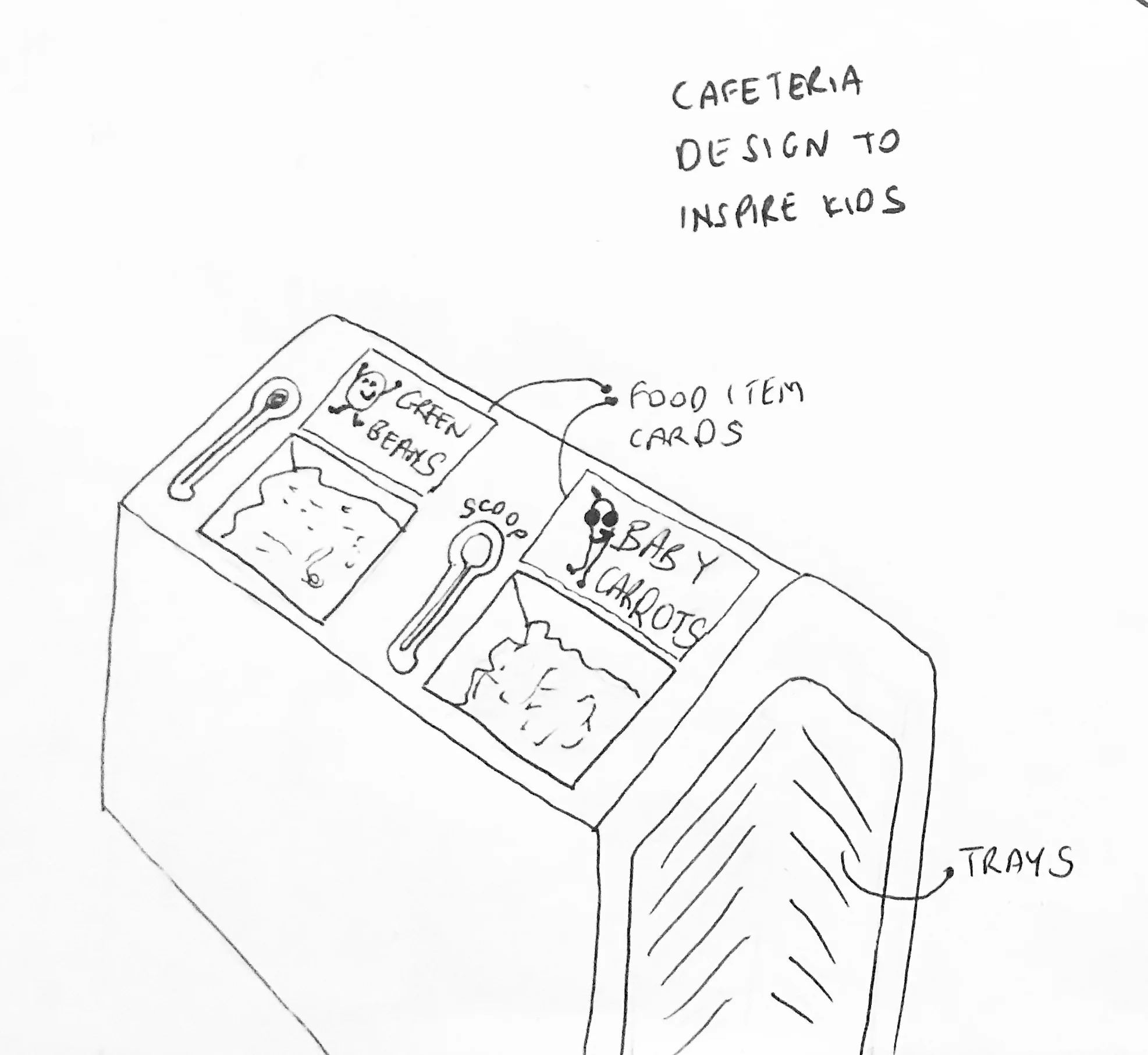
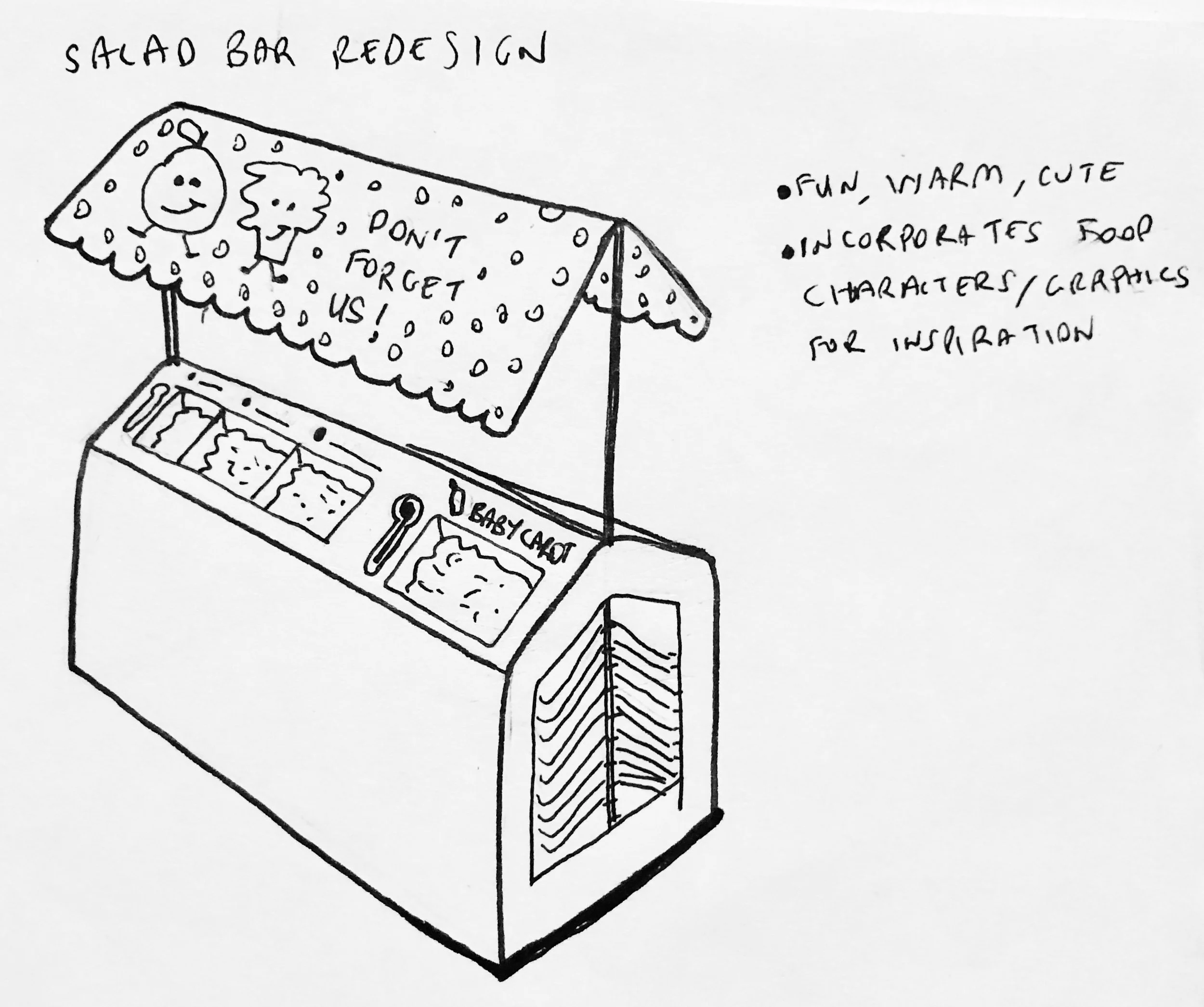
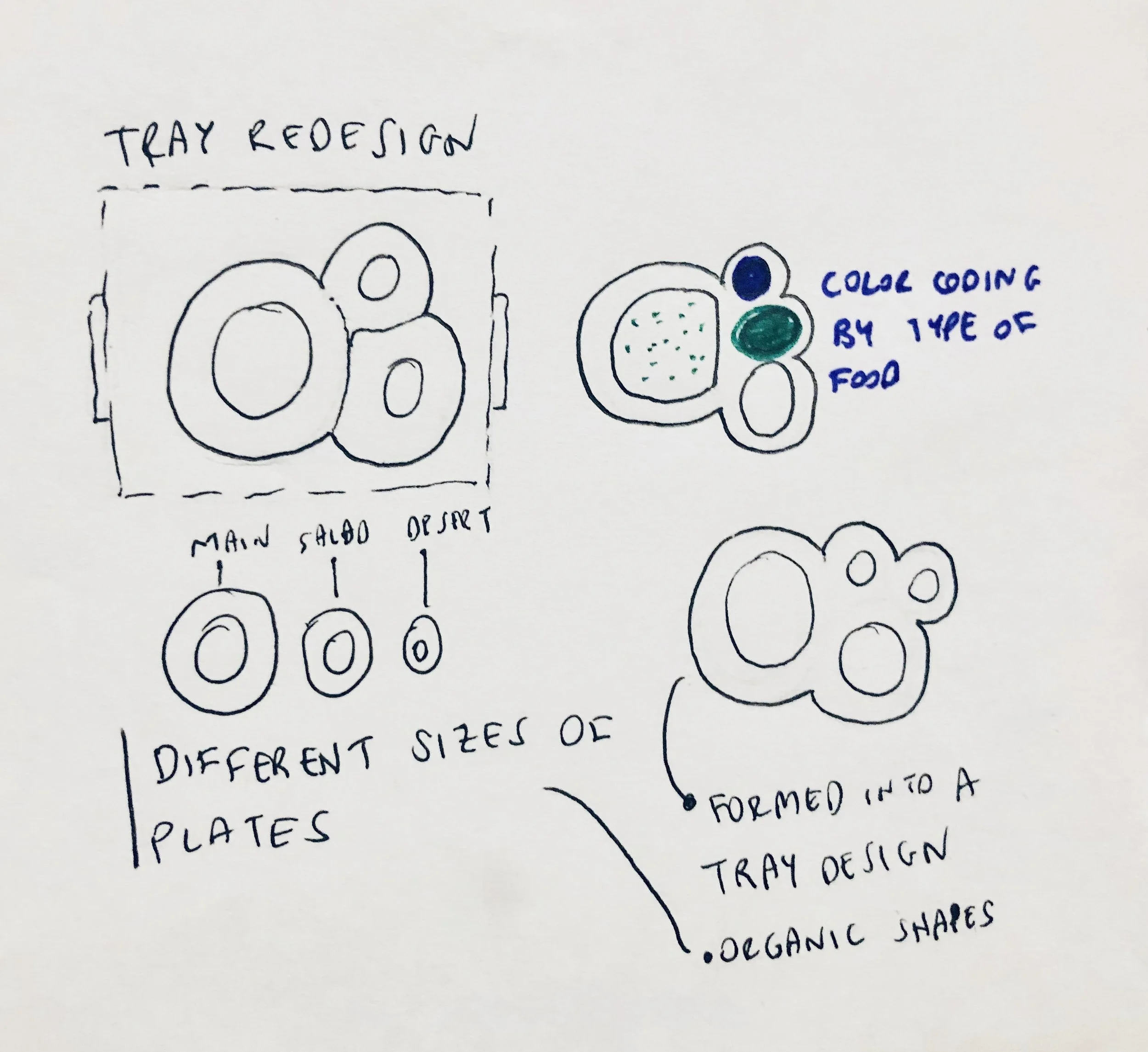
Environment and technology is the second layer. Cafeteria design and lunch time structure should be revisited for efficiency, inspiration and to enable better food habits. Use of technology could mean better tracking of nutrition and adaptive guidance. I did some quick sketches for the cafeteria space as it is an exciting area (see below).
Policy, budget and food is the final and third layer. This layer address the deeper and hard to solve systemic problems around schools and nutrition. I believe the issues around child obesity, unequal opportunities for many school districts and the major problems around the food itself can only be truly solved when this layer is addressed by politicians, policy makers, food and farming industry, and local communities.
Some quick sketches for the second layer:
My hypothesis for concept design
Problems to address:
Food is a choice based on kids’ limited palette and experience. They seem to select foods that they know they will enjoy and shy away from new ones.
Parents have very little transparency to what kids eat at school with their newly gained sense of control and this makes it hard to balance their nutrition.
Schools are key to guide and inspire kids to make better choices but the realities of public school resources make it hard. Schools also need to address not just food itself but rituals around lunch time by making it an enjoyable, calm, food-focused experience.
To solve for these:
Make food a part of kids’ education (at school and at home) so they can make more informed decisions as they grow up.
There is a lot to learn… Break things down to tangible small goals that parents and kids can track against. Celebrate small wins and show children outcomes as they develop habits.
Schools need to inspire good rituals around food. Make kids talk about food, improve conditions to enjoy food experience in the cafeteria. Reward good behaviors.
Design implications, some feature area ideation:
Simple self-reporting and food tracking, providing a holistic view of kid’s nutrition and activity to parents
Teacher/school communication to kids when out of school.
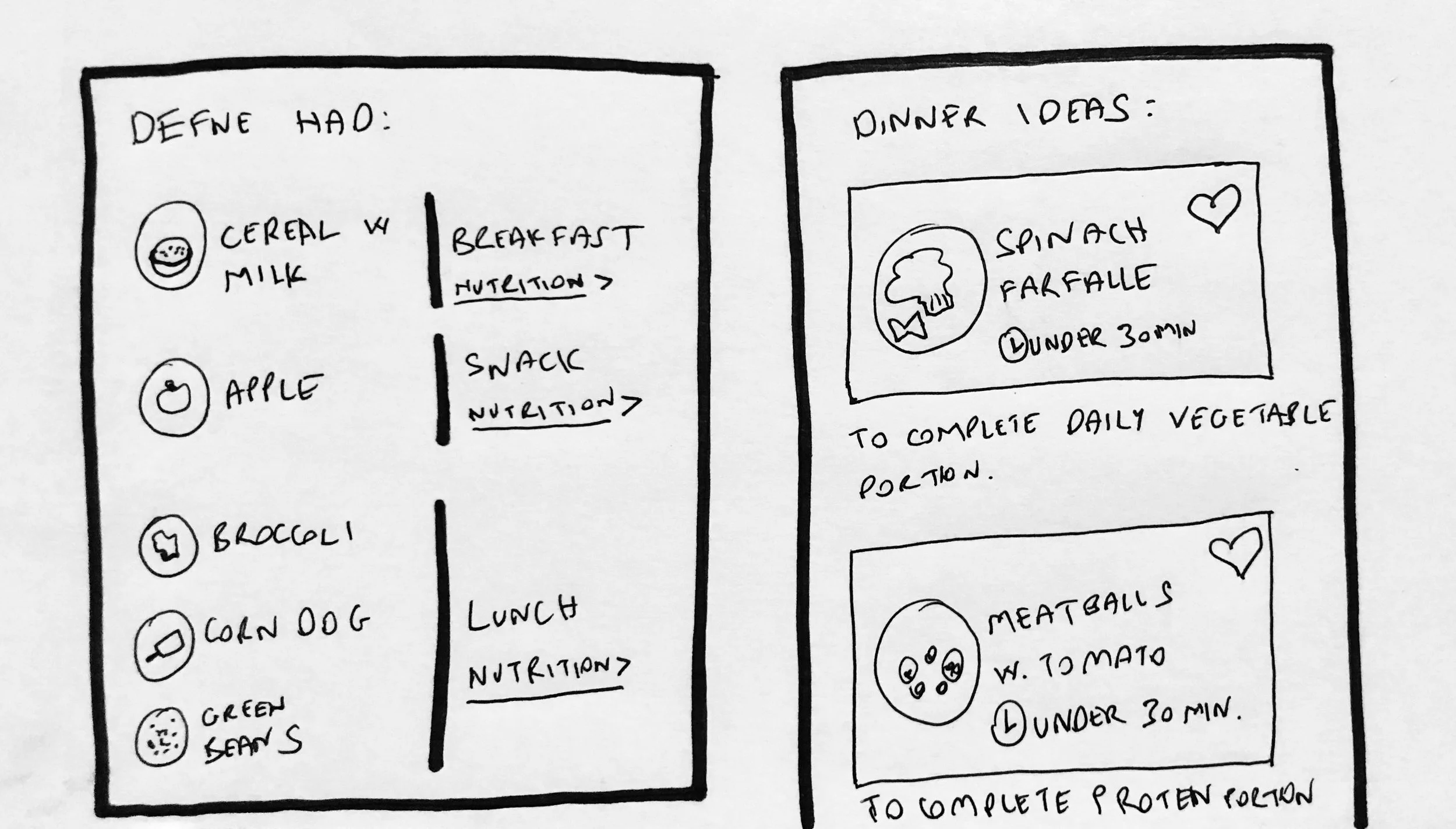
Food suggestions based on kid’s own taste. Provide parents ideas for their kid’s nutrition based on kid’s food preferences and new food explorations they did.
Parent communities, let parents share tips and tricks based on similarities such as kids’ age, family needs etc. This is aimed at providing real life and relevant guidance.
Goal setting and celebration of achievements. Send progress summary to parents.
Collaborative setup of the experience by kid and parent.
Design principles and objectives
Before i jump into solutions I set up some principles and objectives rooted in my research. These helped me frame the upcoming thinking.
The experience should be:
Supportive & reassuring, respond to emotional needs of kids, parents and teachers.
Simple & realistic, relate to family and school constraints and daily struggles. Provide a simple system that gets adopted which could evolve over time.
Educational, always provide meaningful bits of information to kids.
Fun fun fun, be playful. Kids will lose interest if it feels like a chore.
Colorful & active, kids are constantly moving and their whole world has patterns and bright colors. Entice them with motion and appropriate use of color.
Kid-driven, for adoption, kids need to be driving the experience, not adults. Get to know them and guide them, lightly.
Not rule based nor authoritative, target habit forming for longevity. Do not enforce rules that can be broken at the first chance. Talk to kids as a peer, not as another authority figure.
final concept

Yummy is a kid driven experience. It is a habit forming and food education tablet app for late kindergarten and elementary school kids. In yummy: Kids learn about food, have the option to track their school food, they get to pick and accomplish tiny weekly goals while getting rewarded.
Yummy learns from kids as every kid has a different taste and personality. They might not know much about nutritional guidelines but they for sure know they want pasta, all the time... As they use the app over time, suggestions are made to the kid and parents that are based on kid’s taste.
Schools get to inspire kids even before the cafeteria. Lunch items are surfaced via the colorful and simple UI, kids select their food, learn about unfamiliar foods and get to track preferences. Being realistic about daily food tracking, yummy starts with breakfast and lunch, optionally the after lunch snack. School food tracking is also a major benefit to parents, who do not have transparency to what kids are having at school.
Yummy food is not only about nutritional content. Food is comforting, it is enjoyable, it has rituals and it is a part of social life. Yummy starts to support these aspects of food and food education. It has kid selected goals and school selected challenges around food rituals.
User types:
I imagine having 3 users on the yummy platform: Kids, parents and teachers.
Here, I am exploring the kid tablet app as they are the primary user out of the 3 users.
3 main sections of the kid app and their objectives
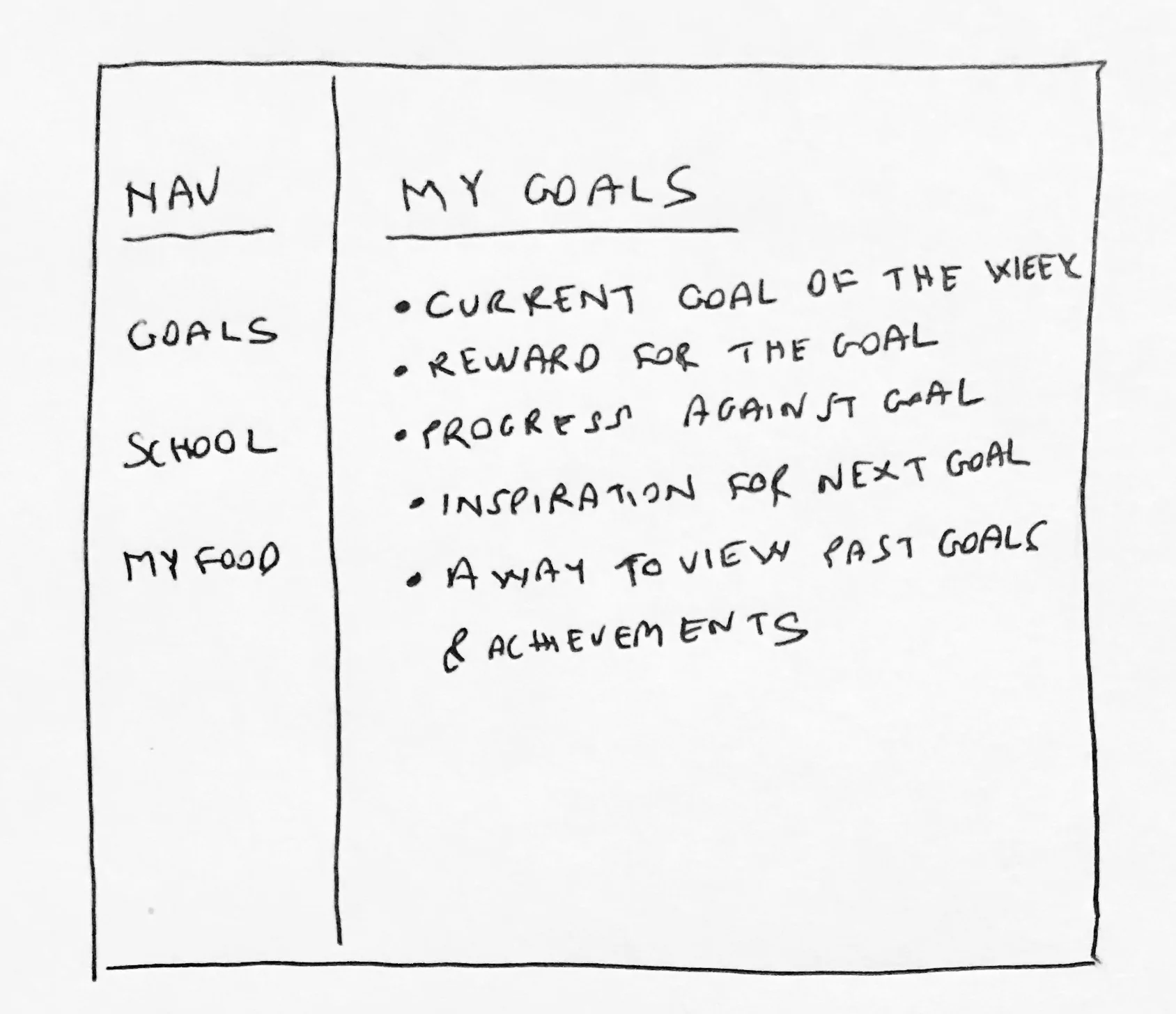
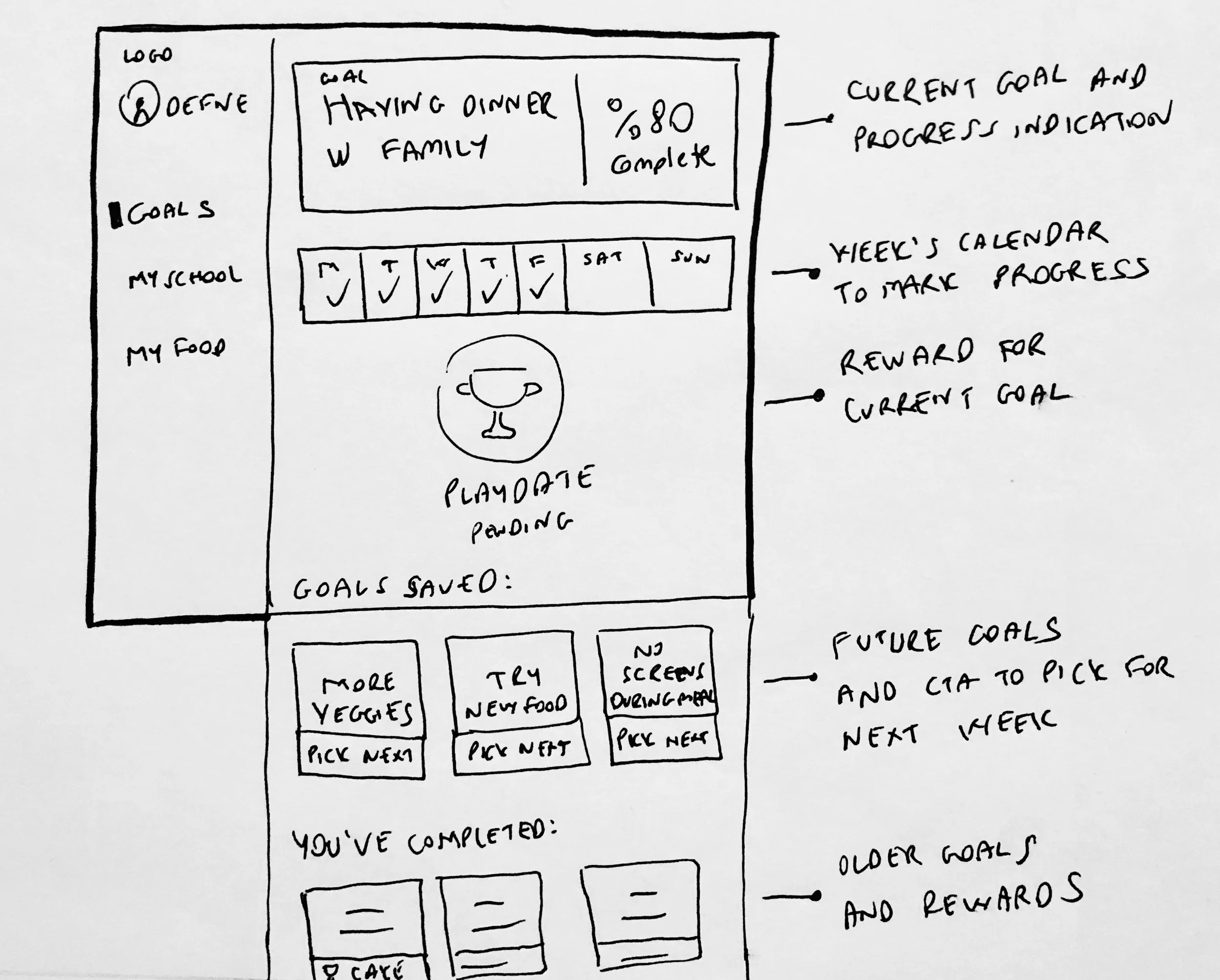
Goals: Habit forming through weekly goals and rewards. Goal selection is a shared moment between a kid and a parent. This section aims to build good habits around food and its rituals. It creates short term goals that are achievable for the kid and easy to monitor for parents. When kid achieves the goal their small win is rewarded. Rewards are encouraged to be non-material, mostly social, active and family-oriented.
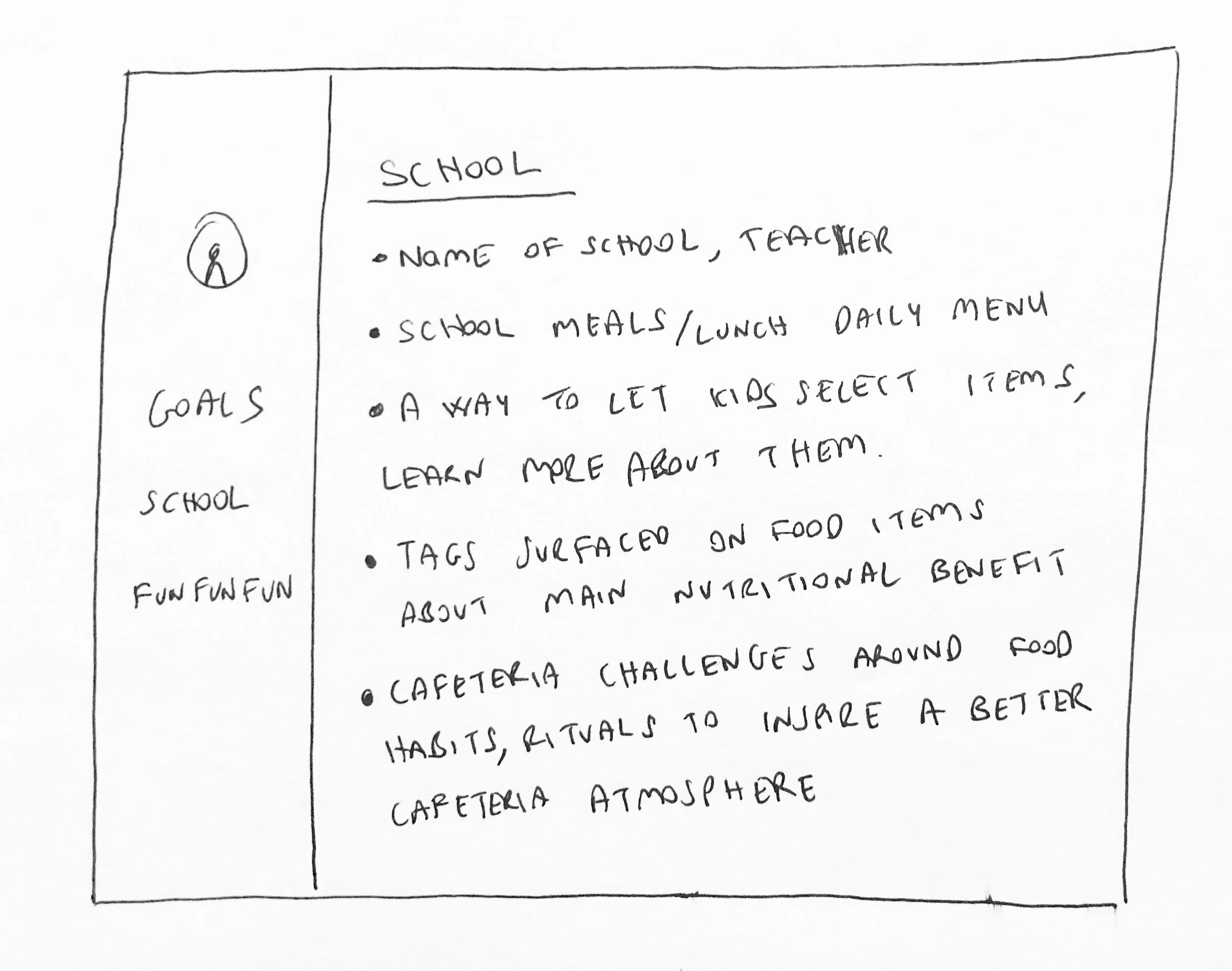
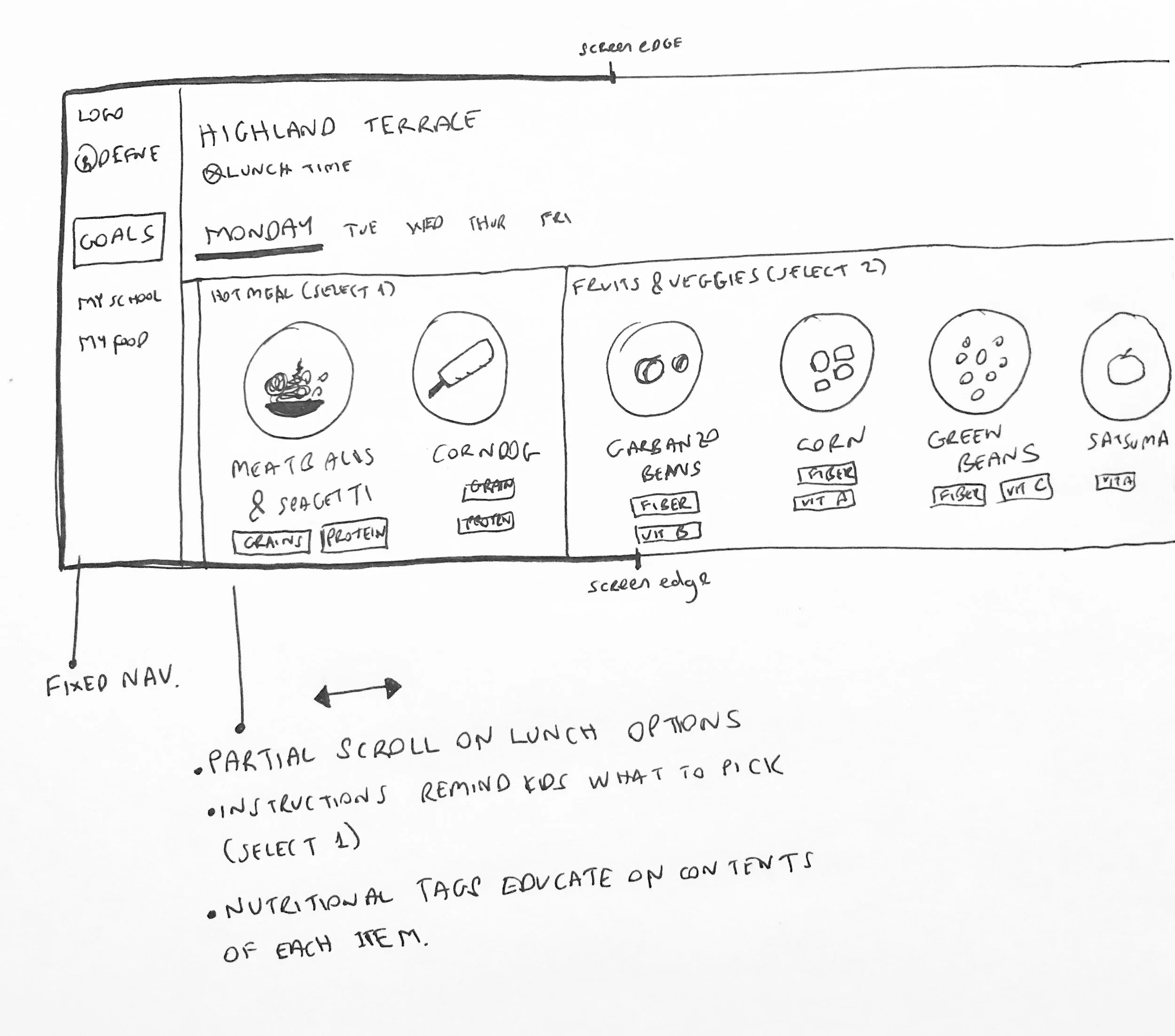
My school: This is the section for schools to inspire kids to make thoughtful choices during school meals and snacks, and get to know their food preferences better. Light and fun education is embedded in every step.
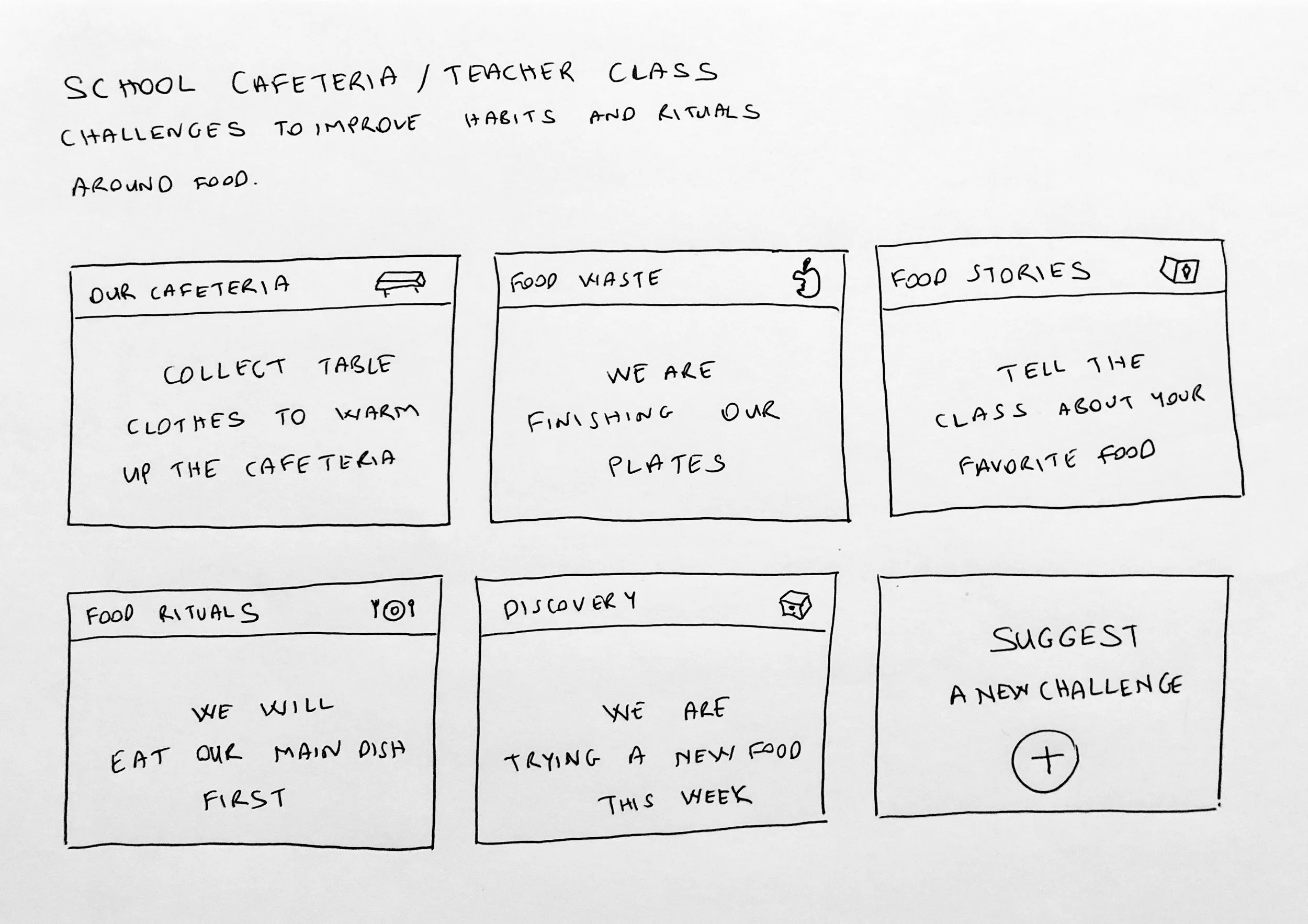
Schools also provide weekly challenges that are held during lunch. These are around social food rituals and mean to improve habits and behavior around food consumption at school.
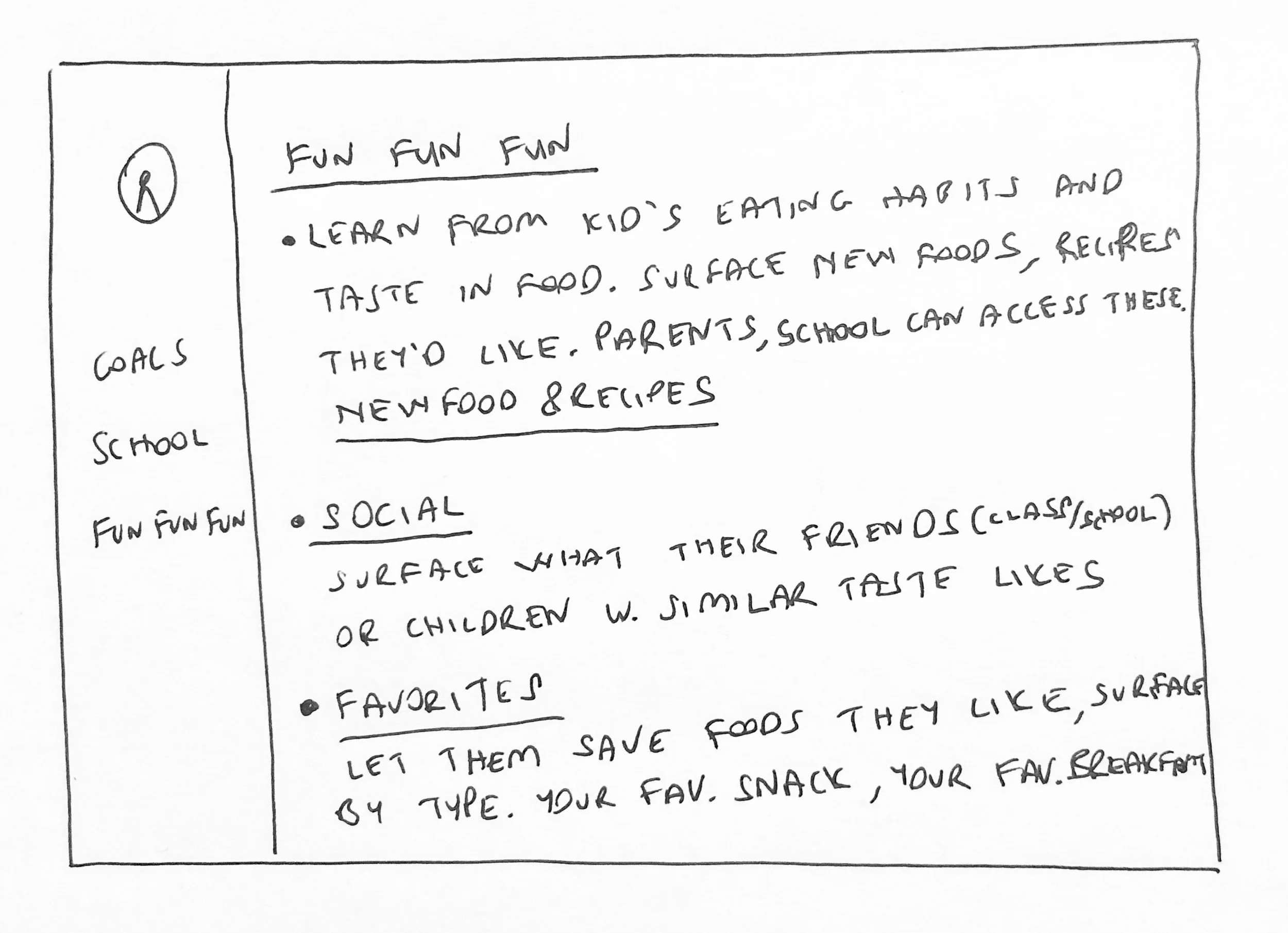
Fun fun fun: This section includes the kid’s favorite foods collected from their interaction with yummy. As they view new foods and favorite them, or select them for lunch, yummy learns the kid’s taste and habits. The social features surface what other kids love to eat or have discovered recently (direct friends or kids with similar taste). This section also could include recipes a kid collects to cook with parents.
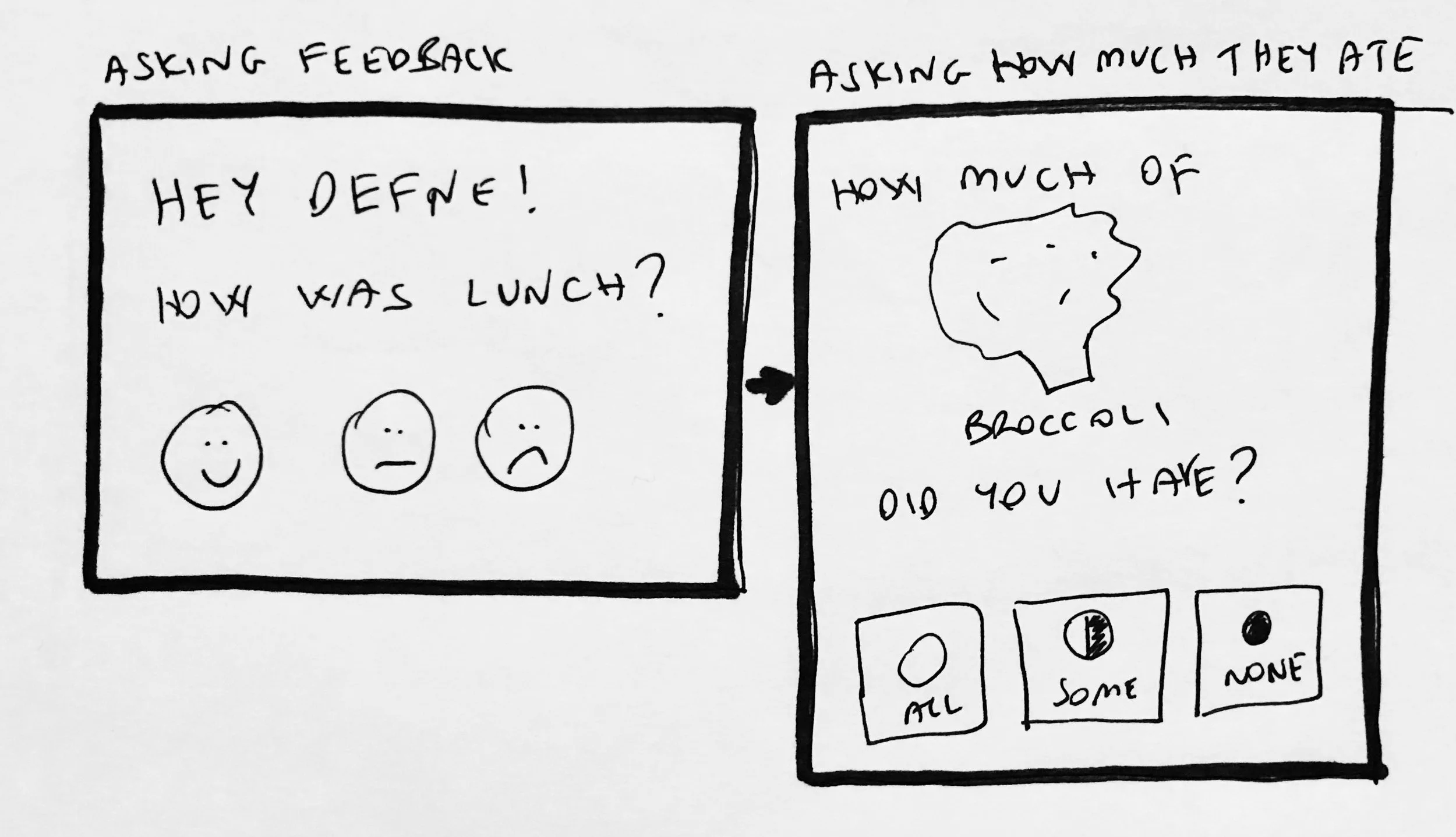
Sketching
I started sketching the main sections of the app by making a list of content/functionality a user would need in order to achieve their goals. No UI yet just copy… Next, I sketched different ways to interact with the app. I realized I was creating different interactions on My school section (a partial horizontal scroll) and on Goals section (a vertical scroll). Wanting to simplify and systematize how kids use the interface, I decided to use horizontal scroll in all 3 main sections.
NOTE: I did not do UI explorations for the 3rd section, Fun fun fun.
Interaction model
I used a simple structure:
3 main sections of the app make up the base layer
Detail views are presented on the modal layer
The 3 main sections are scrolled horizontally to view the content, an interaction kids seem to be familiar with (example, Youtube kids app).
On the base layer, navigation bar is fixed as I wanted to make sure kids could wayfind with ease.
Modal views are used for selection and educational moments, letting kids focus on the task. These slide up on top of base layers, surface content vertically - differentiating from the base layer. They close and return kids back to their starting point. Modals also have the advantage of being independent of the base layer structure, the same modal view can be activated from any section of the app.
Intro & flow 1
Say hi to Defne, a 6,5 year old kindergarten student at Highland Terrace elementary in Seattle.
And Firat, dad of two young kids, works full-time and is looking for opportunities to spend quality time with the kids.
This is the first flow where Defne and her dad are setting up Defne’s yummy by answering questions and selecting her first weekly goal together.
flow 2
This is the second flow where Defne opens her yummy and taps on My School to pre-select her lunch. She will explore a new food as well. After school yummy wants to know if Defne enjoyed her food.
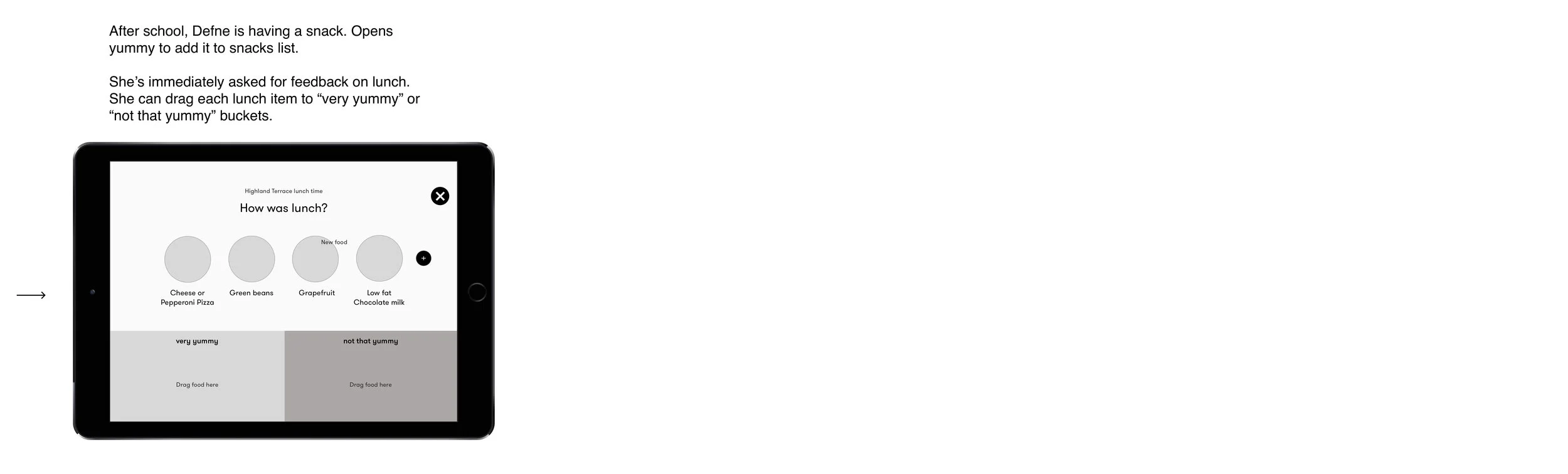
InVision flow
visual design explorations
Here are my explorations for starting a visual design system of the yummy kid interface.
Considering the age range, 6-9 year olds, I kept the UI chunky, simple and colorful. Kids are not as efficient readers and only have experience with gaming, video, content apps at this age. UI and copy has to be light but expressive enough.
To make yummy branding lovable and fun, I used organic and imperfect shapes to accompany the word mark. These imperfect shapes get used in the UI background to add visual interest, and loosely look like food items.
Word mark uses italics to indicate movement and being active, and it is lower case as it is friendly.
Playing with shapes, I identified main content types and gave each a unique shape to help kids recognize them even before reading the copy.