Palo
LQD and frog ventures
Interaction model and applications for a large, interactive public screen.
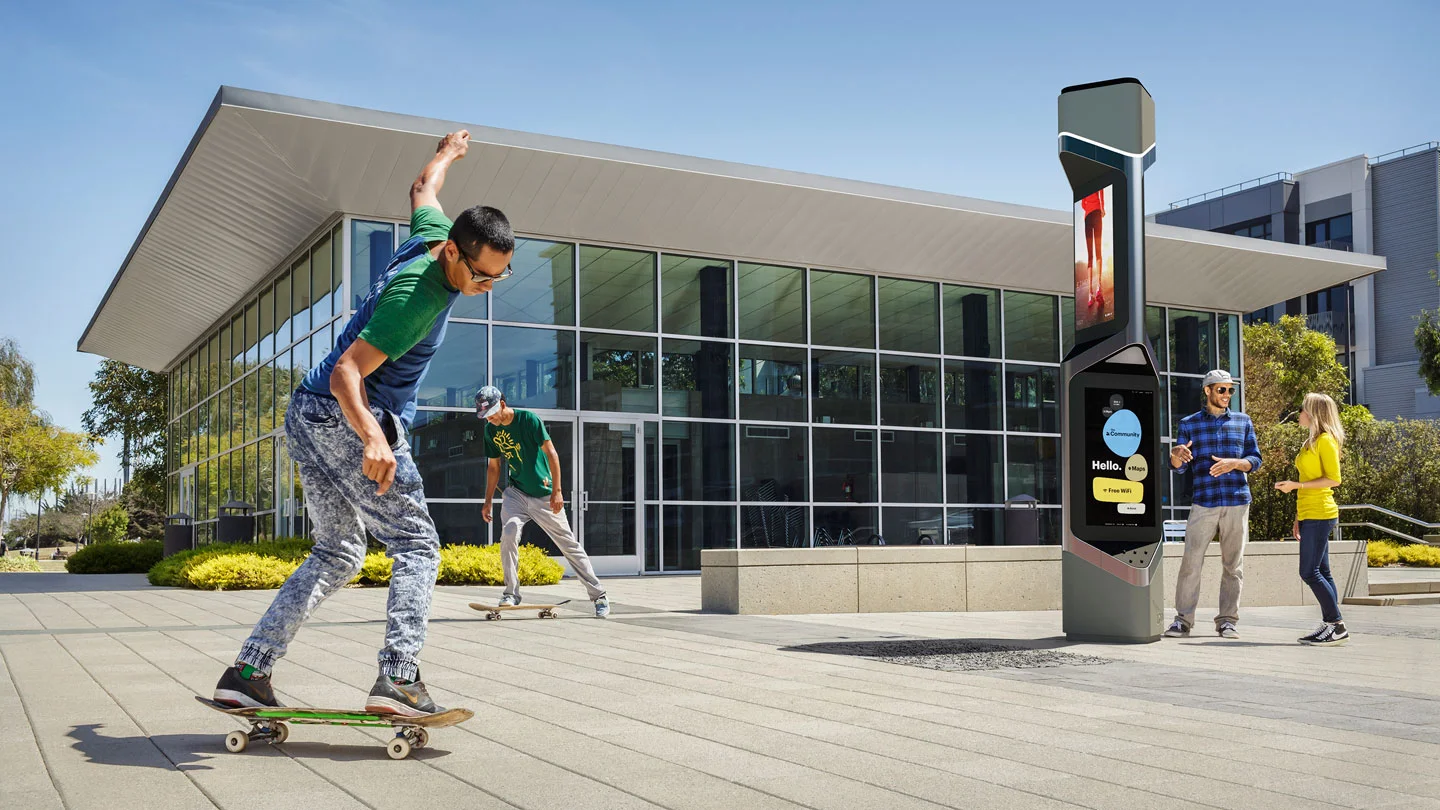
Project: frog’s original Beacon concept for NYC was acquired by LQD, a venture aimed at making the Connected City a reality. LQD and frog ventures designed the final product Palo, an evolved urban communications hub. This project was the interface design phase for the hardware.
My role and responsibilities: I was involved for 4 weeks at the beginning of the program, helped create the high-level architecture and interaction model. I also helped prep the team for the challenges of designing for public spaces and ergonomics for a wide variety of users. We quickly gathered research around ergonomics, environmental and hardware considerations/limitations, best practice examples etc. By introducing an ecosystem and multi-device design approach, I simplified the device experience and prioritized functionality around appropriate touchpoints such as mobile apps and web.
Designs have been incorporated into the physical product and launched. Later, LQD was bought by Verizon to extend their IoT capabilities.
Physical-digital
Interaction model
WIREFRAMING
Project highlight
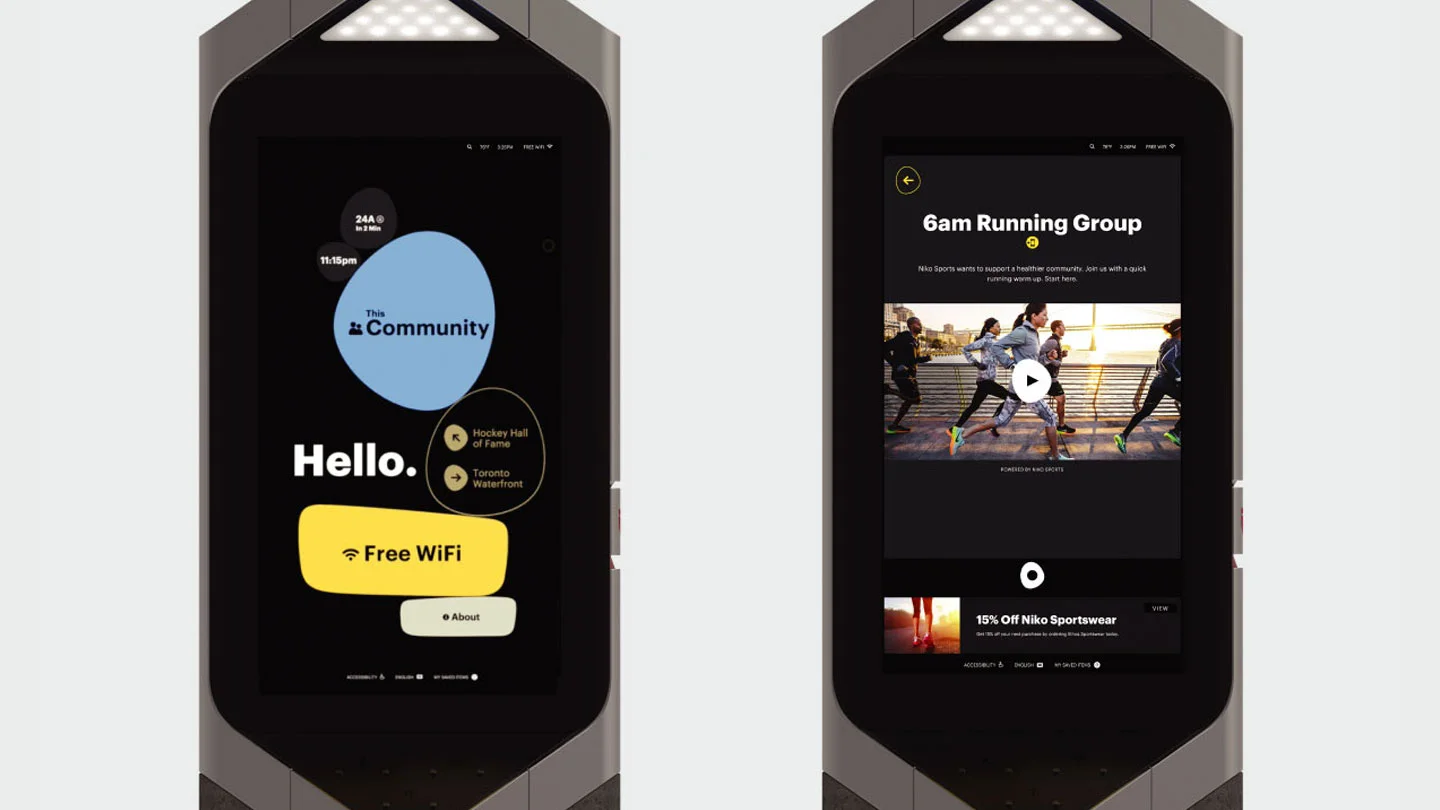
Some of my ideas that were incorporated into the final product:
Attract screen concept
I introduced the welcoming, simple, animated Attract screen concept (visualized and prototyped by the team later). This first screen in the experience was aimed at grabbing a user’s attention, letting them know some high-level capabilities such as free wifi and start a delightful interaction.
Meaningful advertising flows that meet business goals
The device contained three physical screens, two of which were placed on the second level and used for public emergency plus advertising purposes. To support revenue, LQD wanted to use full screen advertising on lower screen as well as the two top screens. As the lower screen was the main user interaction point, I proposed the modular and contextual advertising module approach. Idea was to place relevant advertising content in context of the different sections, such as featuring a fitness ad module under a community post for a local running club. Also to enhance visual rhythm of the whole system, I proposed to synch lower screen ads with the second level screens.
Dealing with user input on large touch screen
I worked on explorations for search interactions of the map view. Introduced quick actions with a mad lib pattern, minimizing and even avoiding the need to type on a large public touch keyboard.