Palo, an interactive community hub
LQD and frog ventures
Physical-digital
Interaction model
WIREFRAMING
Project: LQD is a venture aimed at making the Connected City a reality. Palo is the company’s evolved urban communications hub. This was the software design phase for the public device. View frog case study
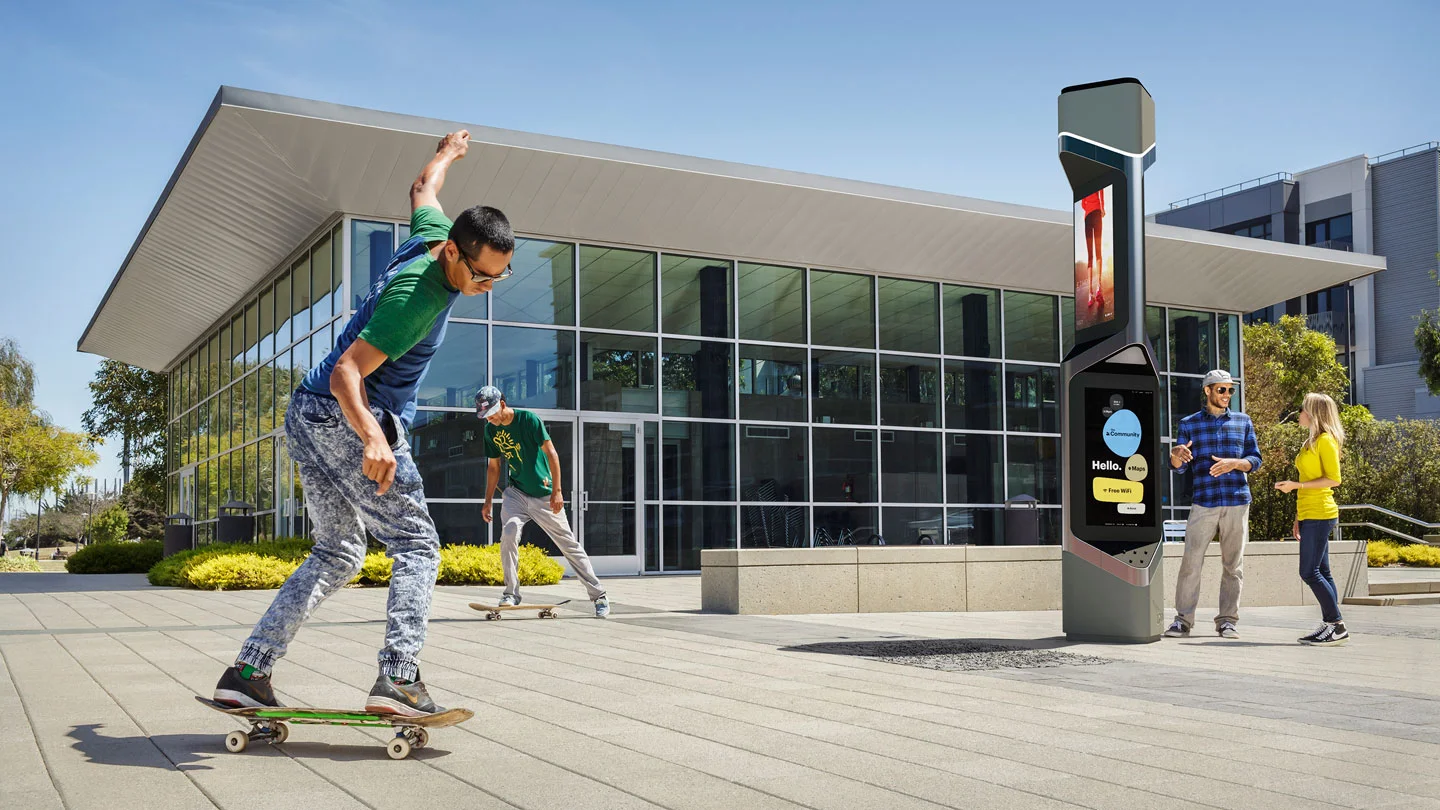
Problem and opportunity statement: We needed to create a public large screen for community engagement in urban environments. A community hub needed to serve a wide variety of users with a wide variety of needs. Vandalism and approachability of the device were major concerns.
My role and responsibilities: I was involved for 4 weeks at the interface design phase for the hardware. Created interaction model and various patterns for this large, interactive public screen. (Visual design was done by another designer after I left the program)
project highlight
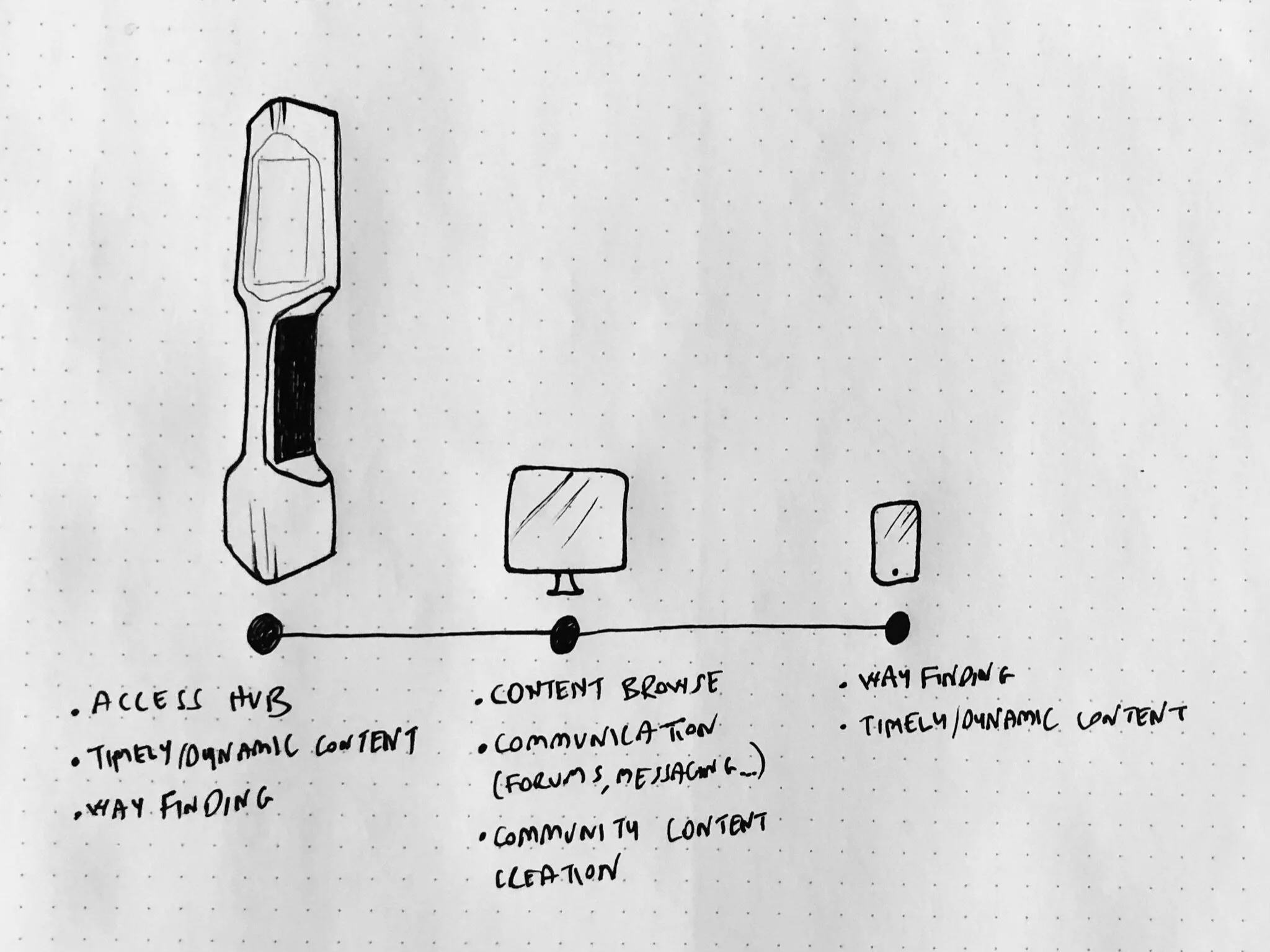
Originally Palo was imagined to be a one stop shop for all user needs (content creation, posting, messaging, browsing, wayfinding etc.). However, this meant overloading a large public device with various features it was not suited for. Such as interactions that needed user identification and longer sessions to interact with the device. I proposed a multi-device ecosystem approach where content and actions were divided between multiple touch points. This simplified the experience on the public screen, focusing it on featuring community content, way finding and internet access to everyone. Other complex content and actions, such as content creation and posting on neighborhood forums, were reserved for desktop and mobile web.
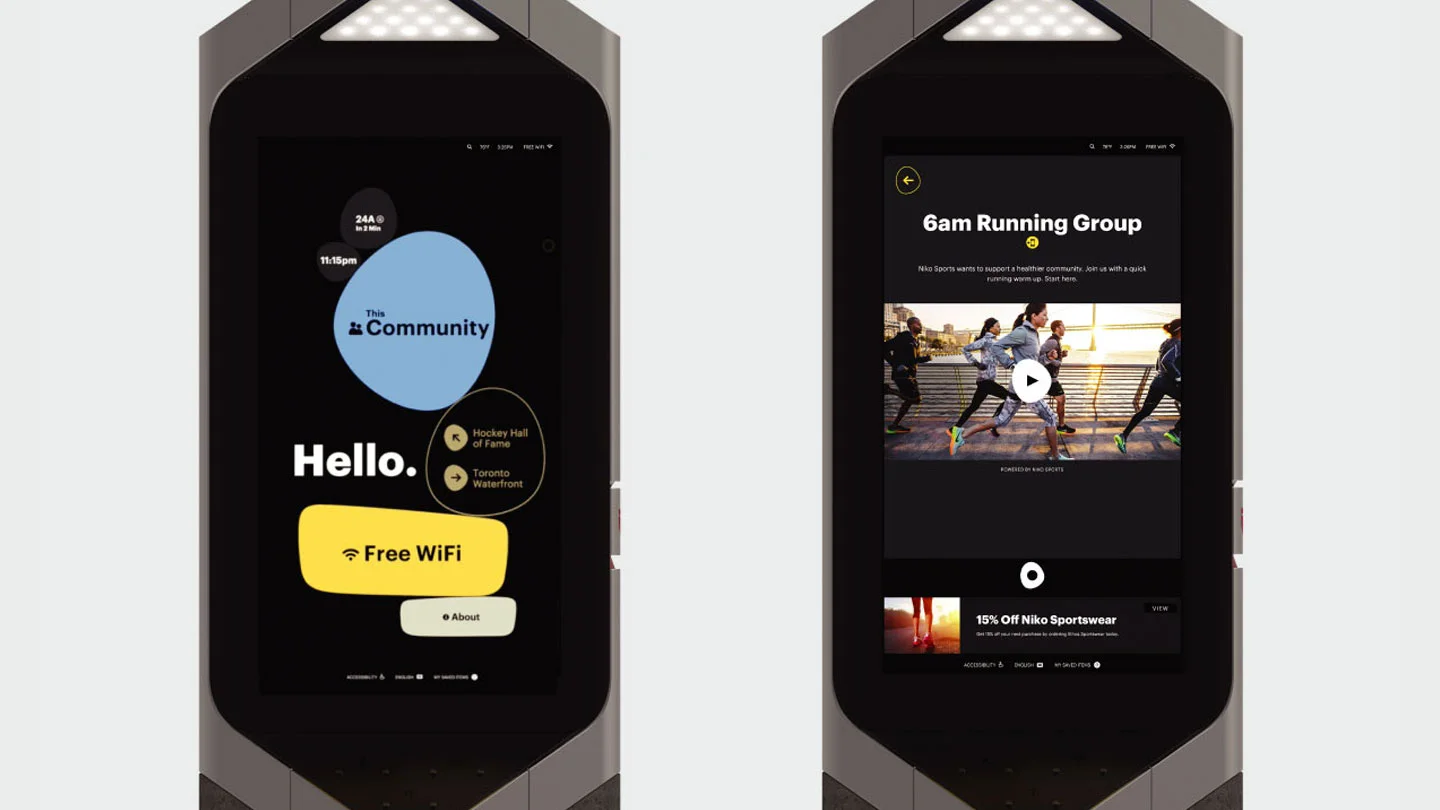
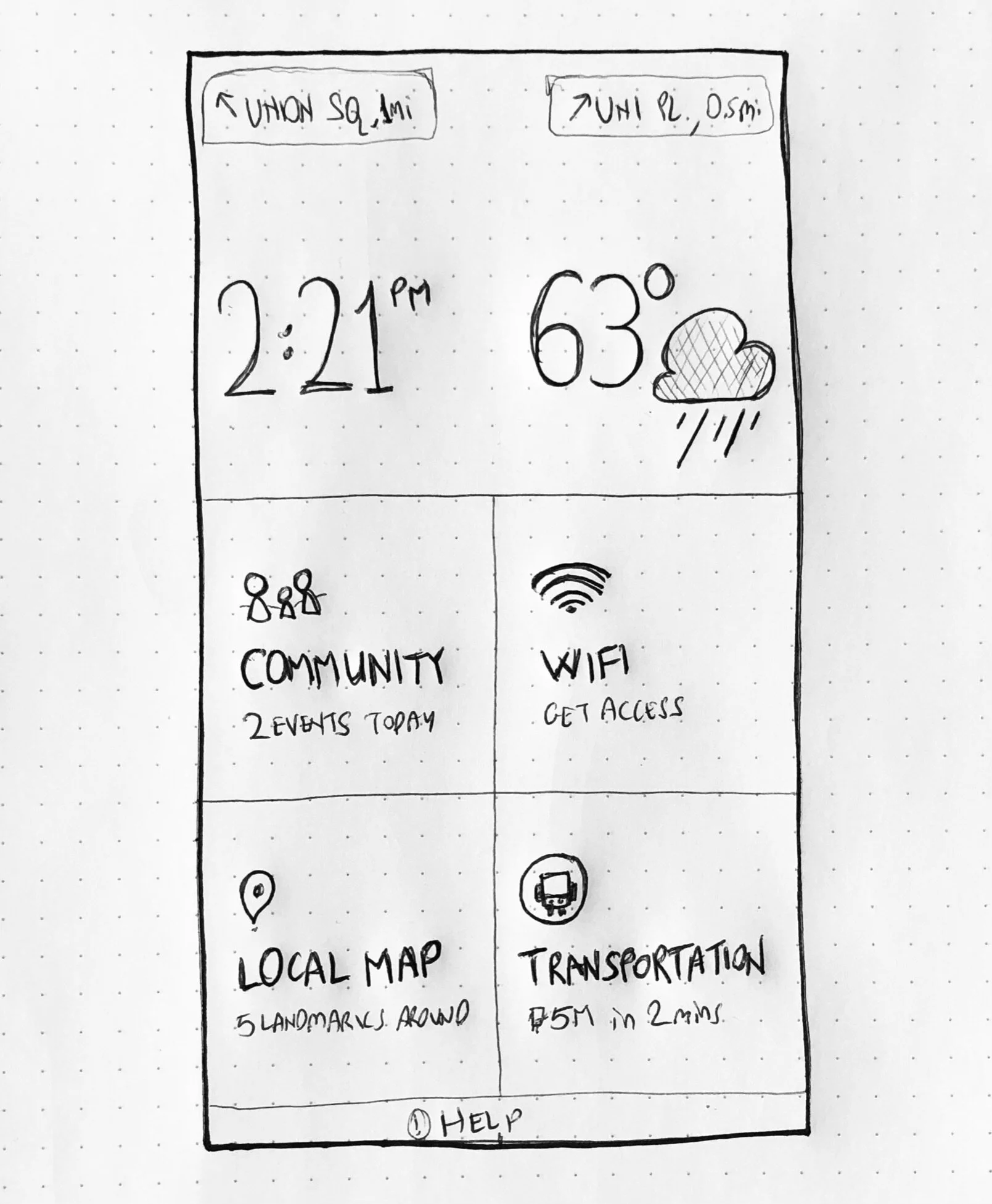
Original proposal for start screen was a web-like architecture with a high amount of content. I saw the need to make this giant device more approachable. I proposed the the idea of an attract screen that would grab peoples’ attention from a distance and give them simple starting points. It featured 4 prompts to start the experience for a variety of users:
Wifi (internet access for the local community members and for tourists),
The Community (to highlight relevant local news, events and promote communication for the local community members),
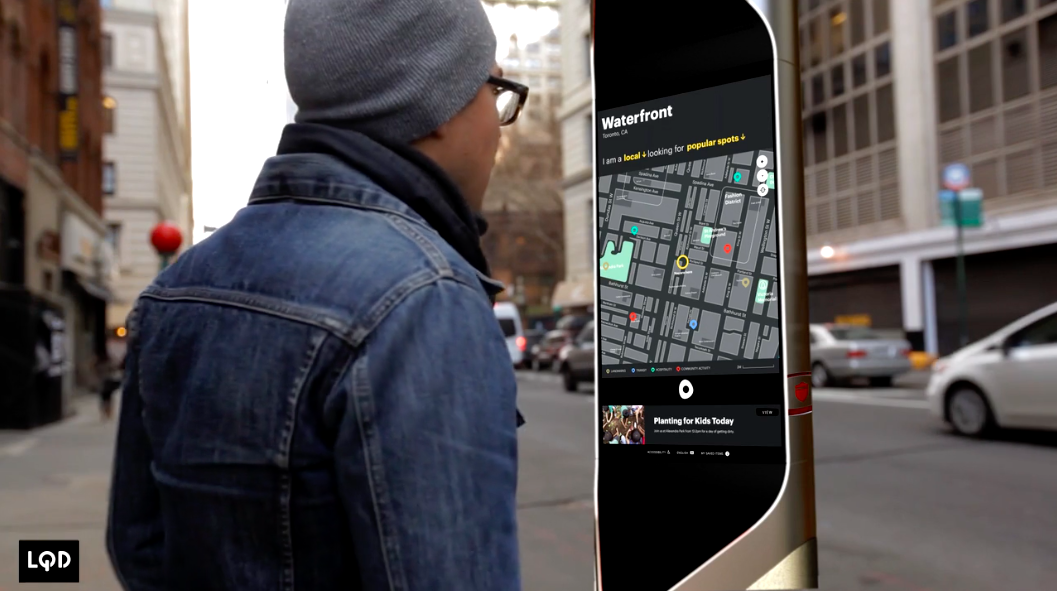
Map shortcuts to local attractions to enhance way finding (information primarily for tourists, secondary for local community to feature event locations)
Dynamic transportation info (for everyone)