Barilla:
experience strategy to promote a healthy mediterranean diet and enhance restaurant loyalty
for barilla, Italy & us
user research
customer experience strategy
journey mapping
mobile app concept
wireframing
Project: Customer experience strategy for Barilla’s US restaurant chain, with an emphasis on digital loyalty.
Goal and Problem statement: Barilla’s loyalty program was a traditional punch-card system. It was disconnected to the brand, and underutilized by the customers. Furthermore, Barilla’s heritage in mediterranean diet was found nowhere on the restaurant experience.
Hardest challenge in the project was convincing Barilla to shift from their original nutritional tracking app idea to new concepts rooted in user insights.
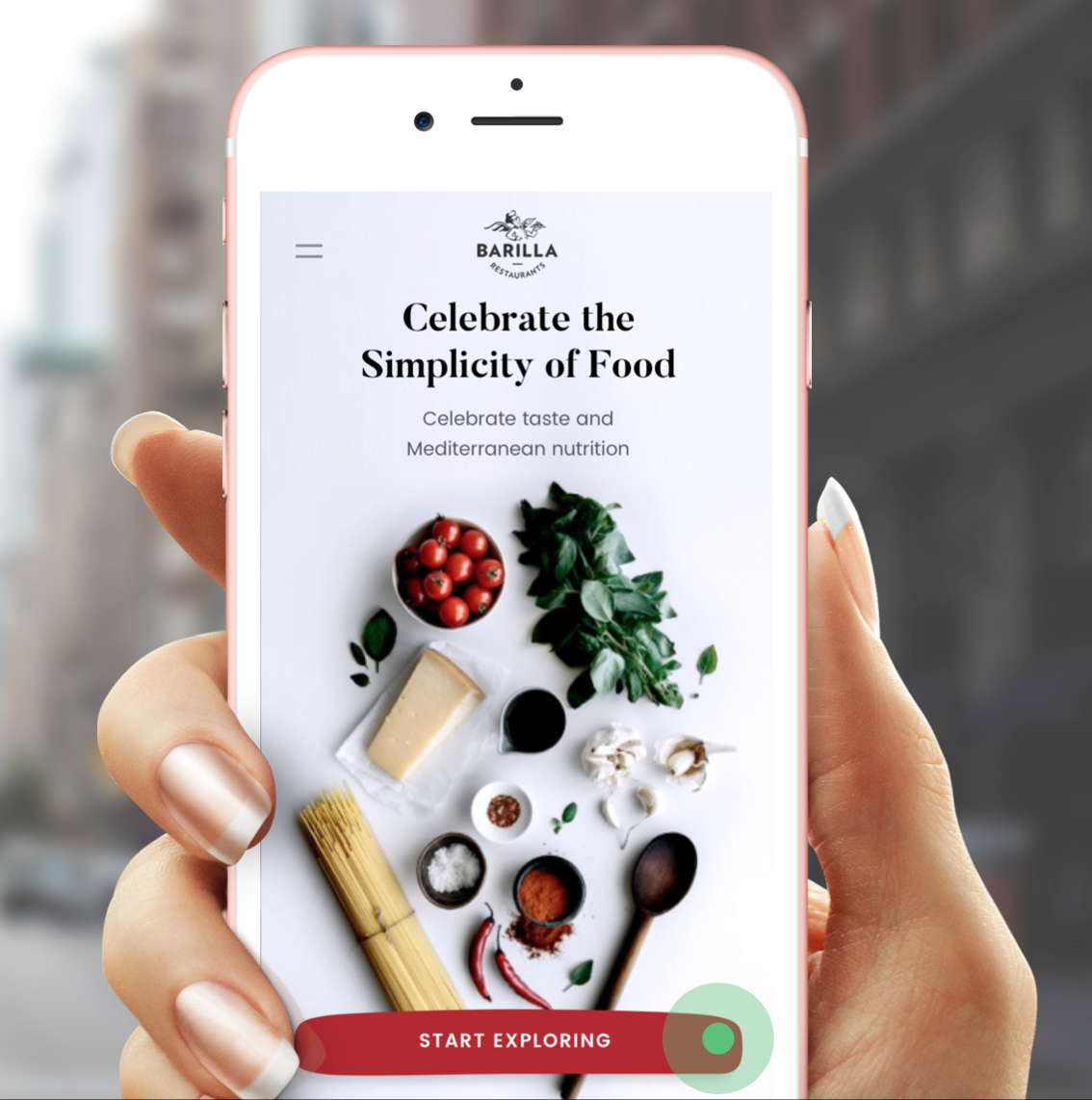
Process: To understand the current customer experience, we started the 7 week program by conducting customer and staff interviews. Participatory design exercises with customers provided insights which we used for fast concept iterations with clients. We delivered an ideabook to inspire various programs and a final concept design for a mobile app. Which featured practical tips and knowledge on mediterranean diet while nudging users to the loyalty program with inspiring and relevant content.
My role and responsibilities: I co-led this project with an Associate Director. I planned and conducted research in NY, then worked with the Milan team to run client workshops. I created the final concept interactions in collaboration with a visual designer and an interaction designer.
Project highlights
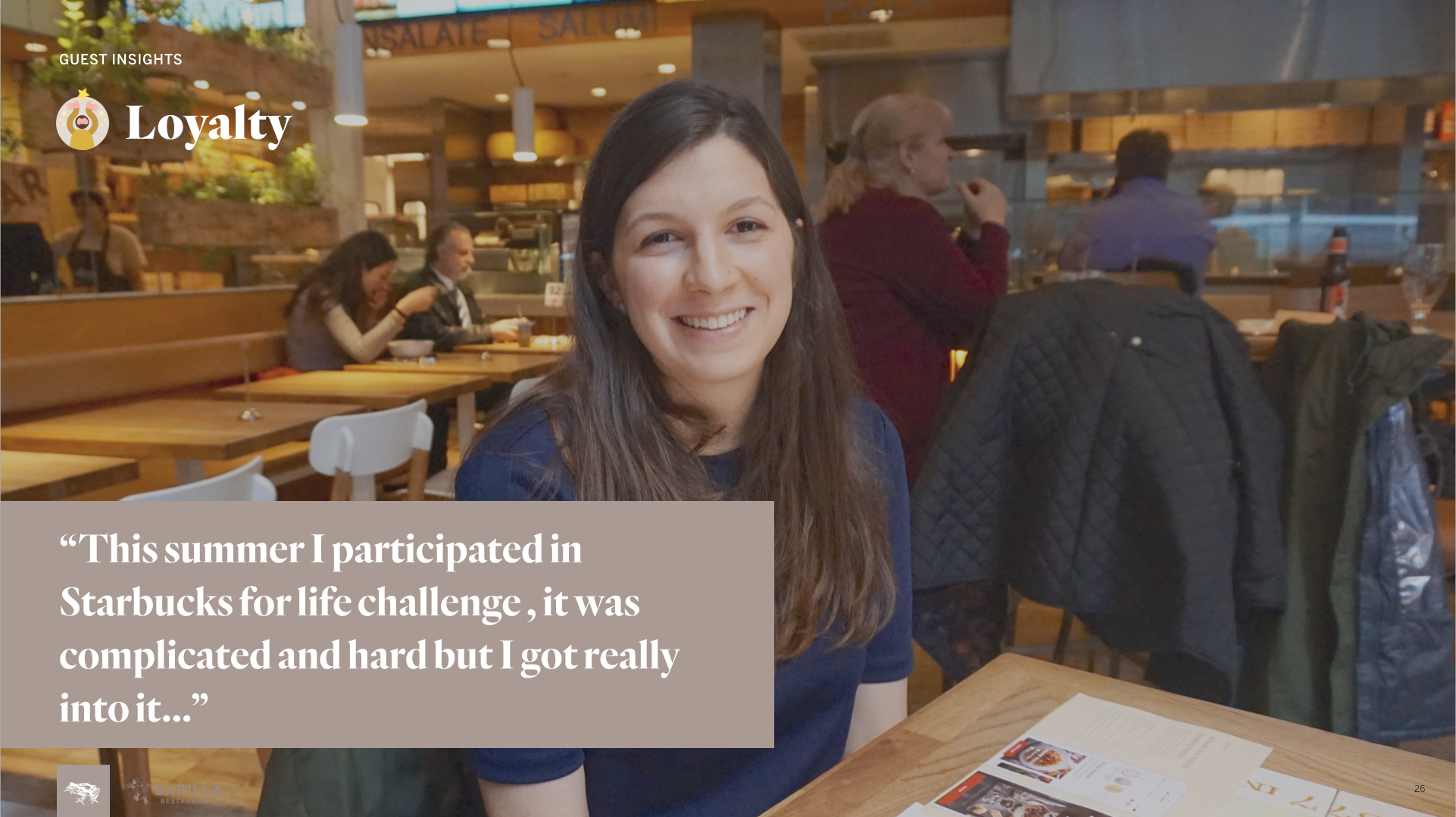
Research to understand food & restaurant related habits, and test initial concept
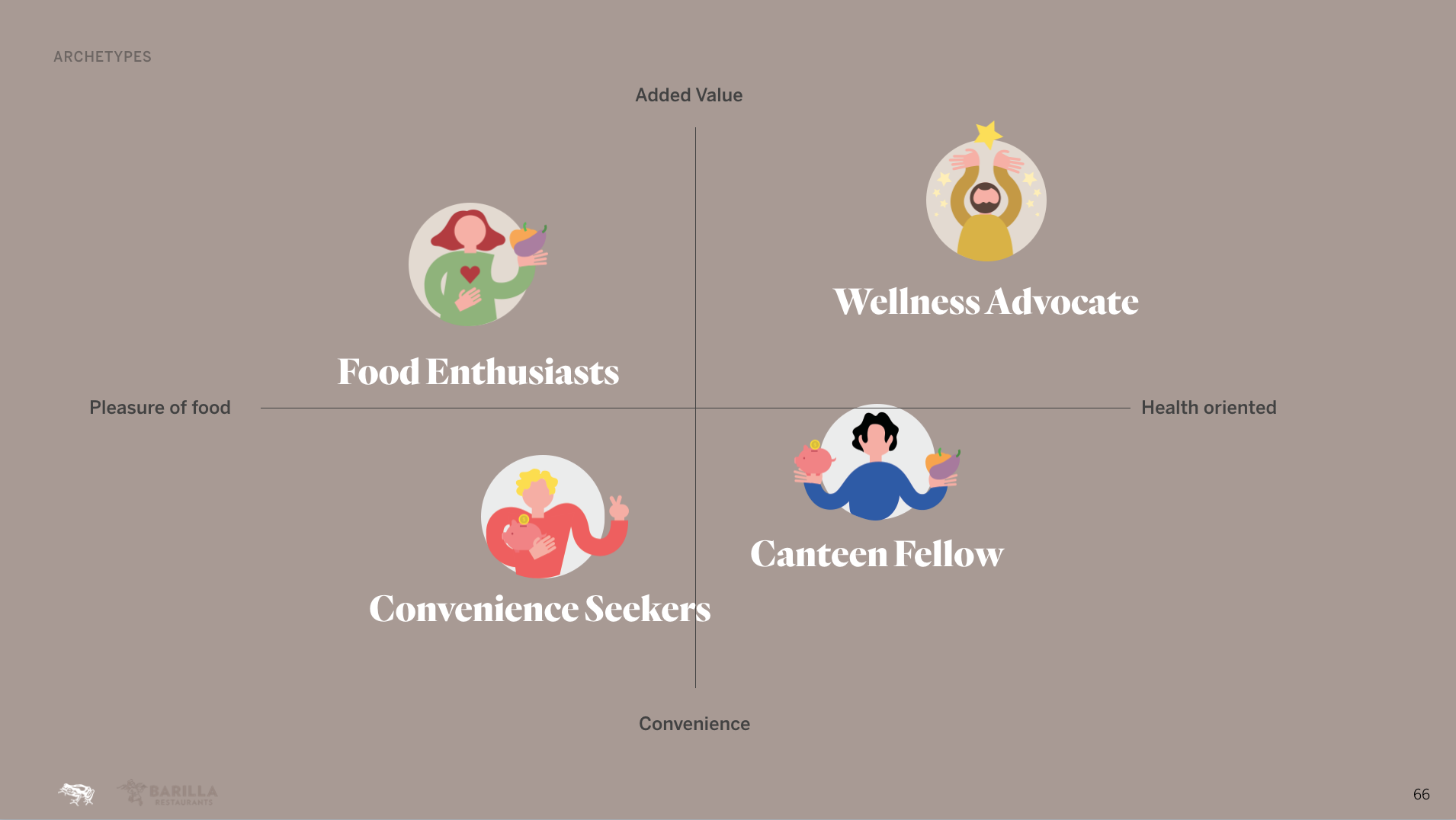
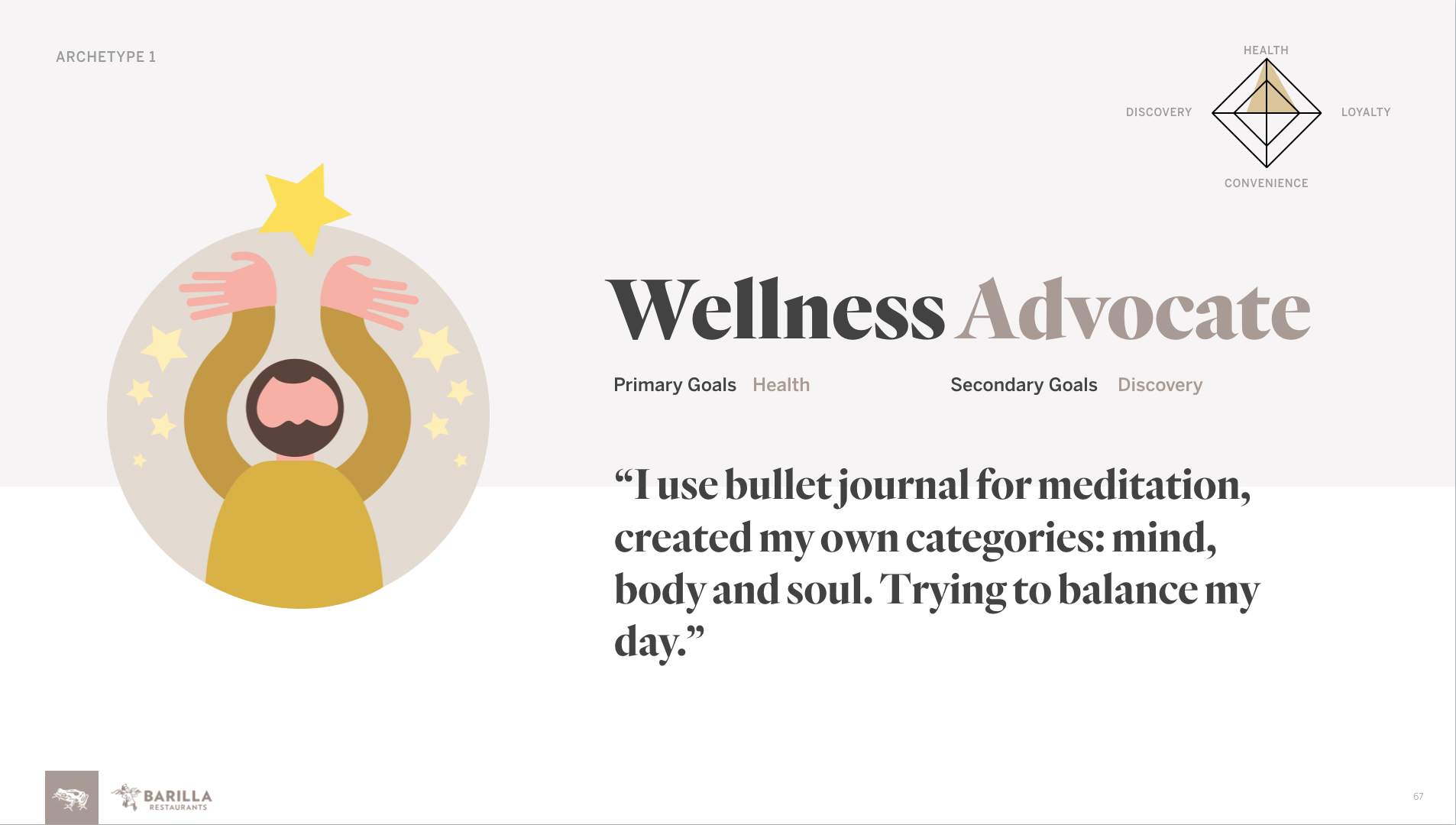
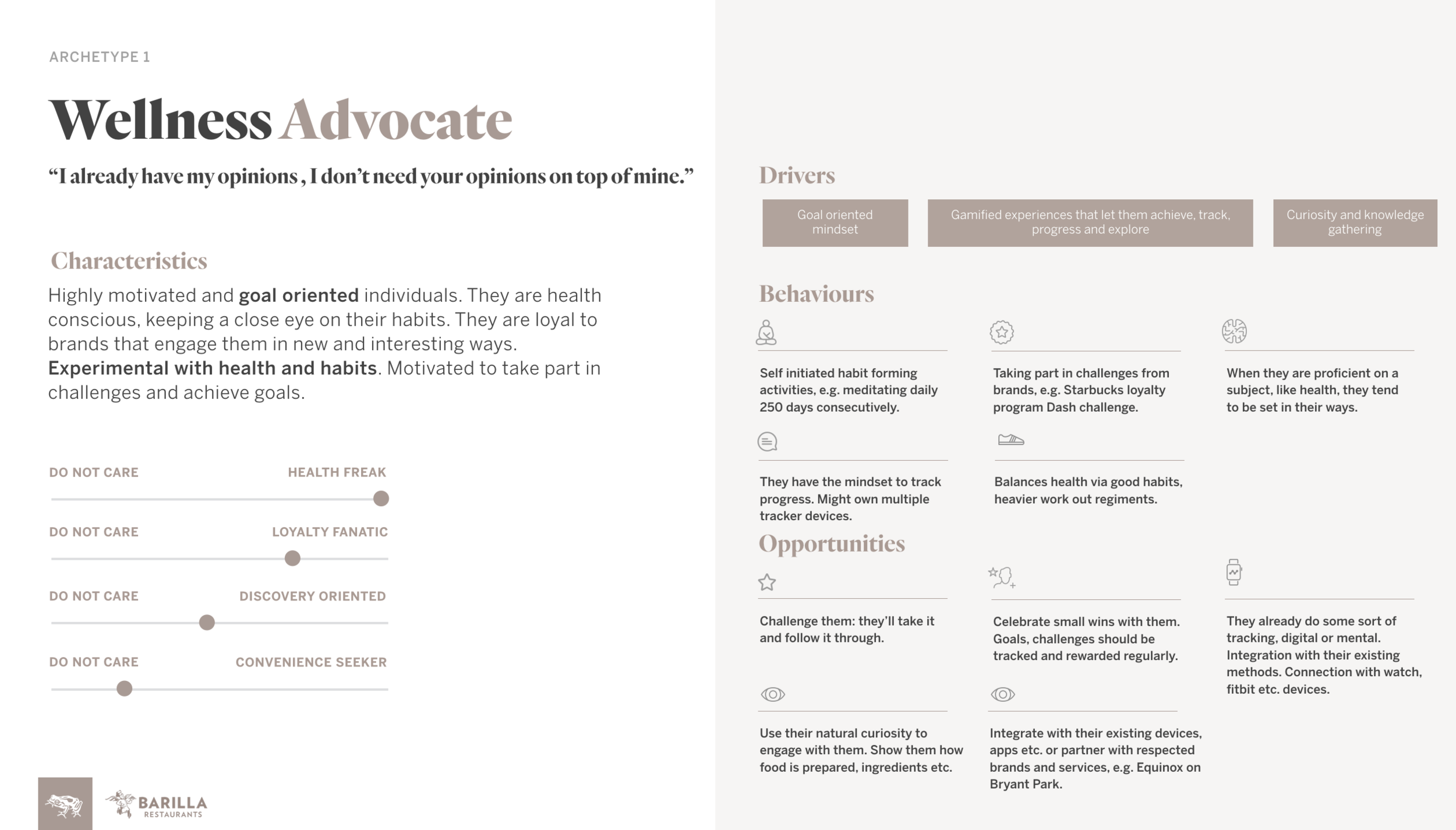
Client was solely focused on their initial idea for a nutritional tracking app with loyalty. When we ran this by users, it quickly became obvious that users did not see how a restaurant chain would be relevant for tracking their nutrition holistically. The visits to the restaurant were not frequent enough nor did users felt deep connection with the brand. Plus, nutritional tracking was meaningful only for a very specific user type (we called them wellness advocates), but did not appeal to everyday customer. it was clear that the initial concept would have low user acceptance if any at all.
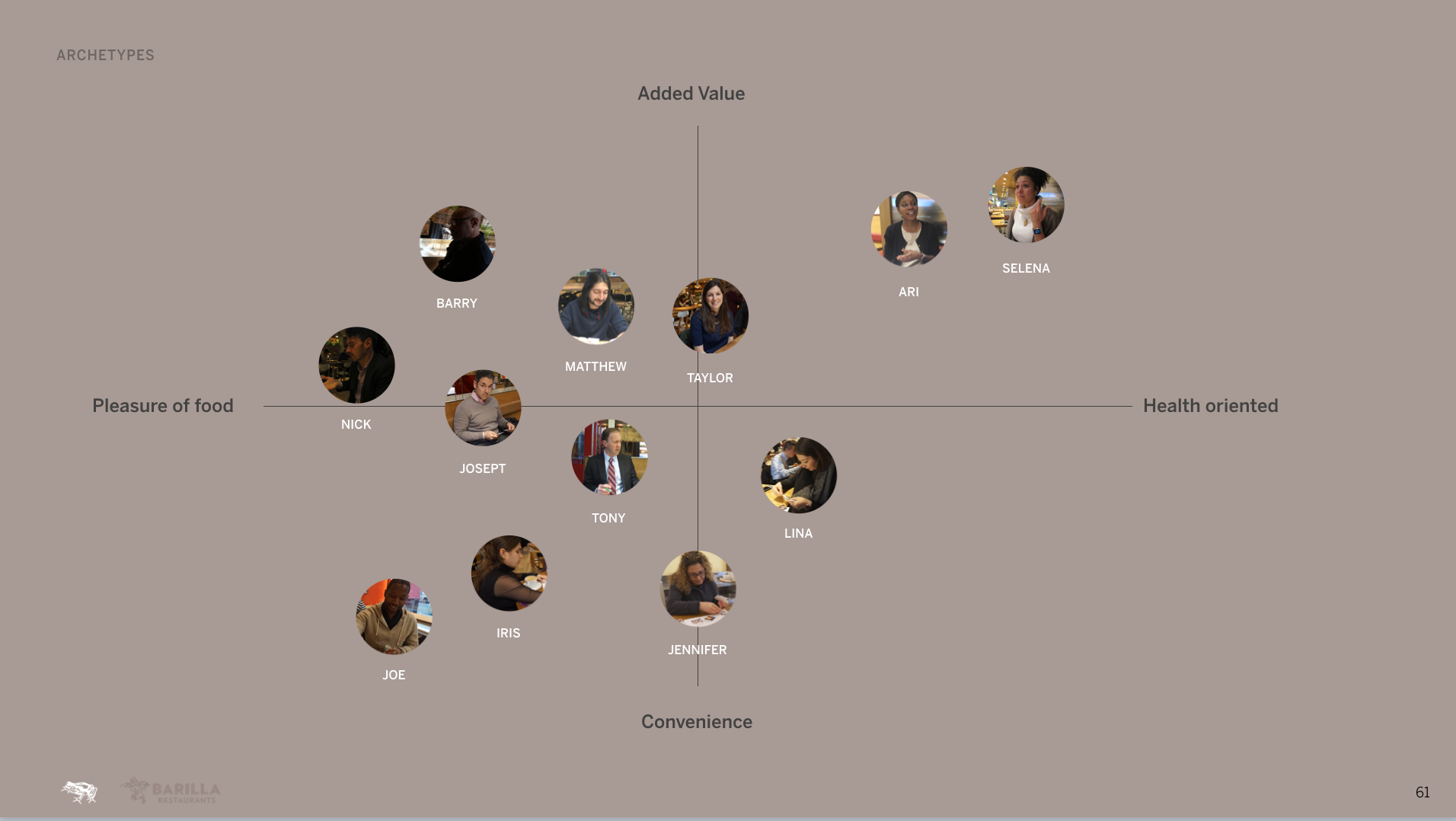
We also wanted to gather insights around food habits: what made people choose one type of meal or restaurant, were people more habitual during the week than the weekend, how does being at work affected food choices etc. These insights helped us create meaningful user archetypes and concepts to target each.
2. experience mapping and concept co-creation to bring along the client
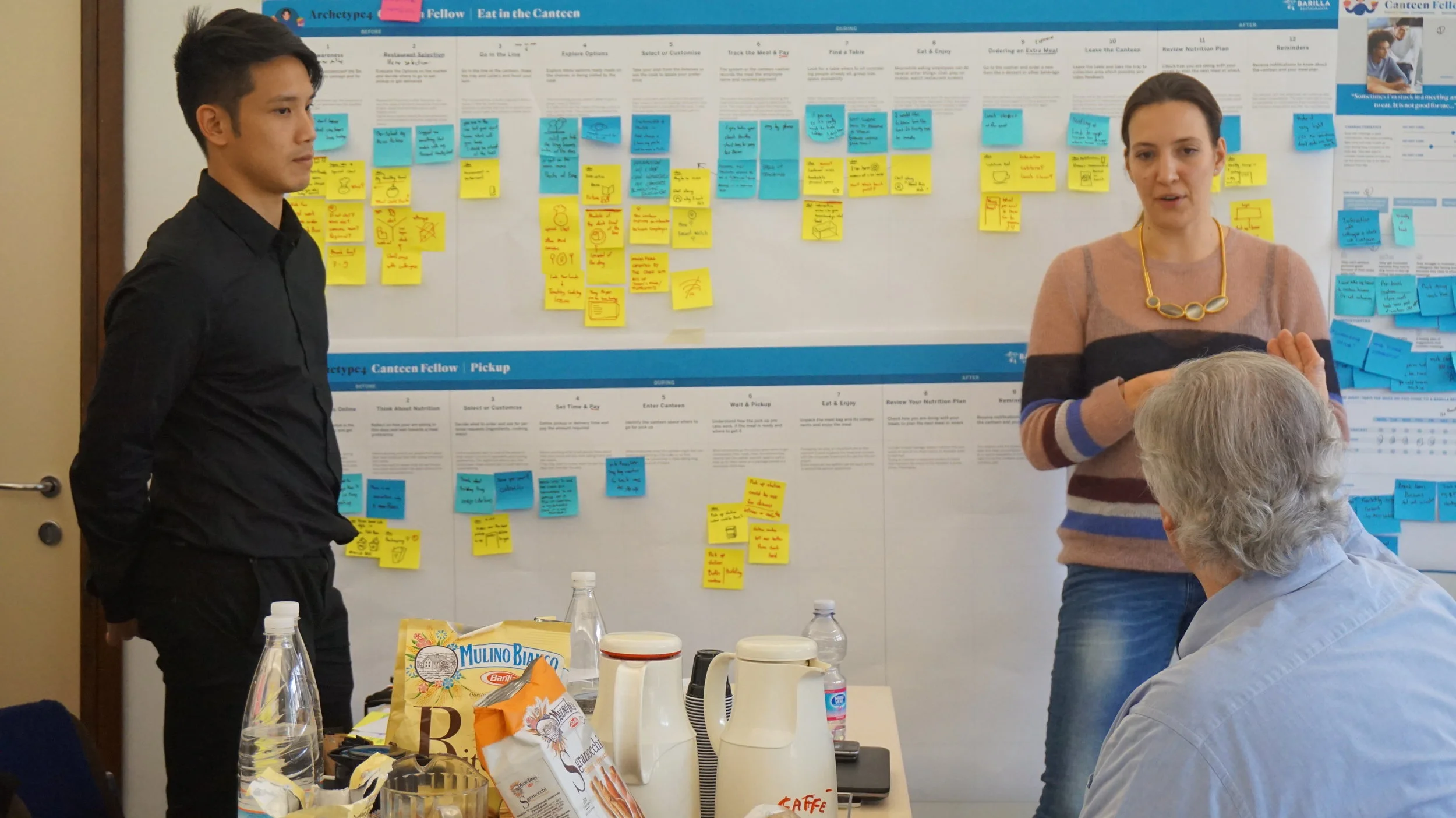
To make client fully embrace the findings, we conducted co-creation sessions using 4 user archetypes all based on field research.
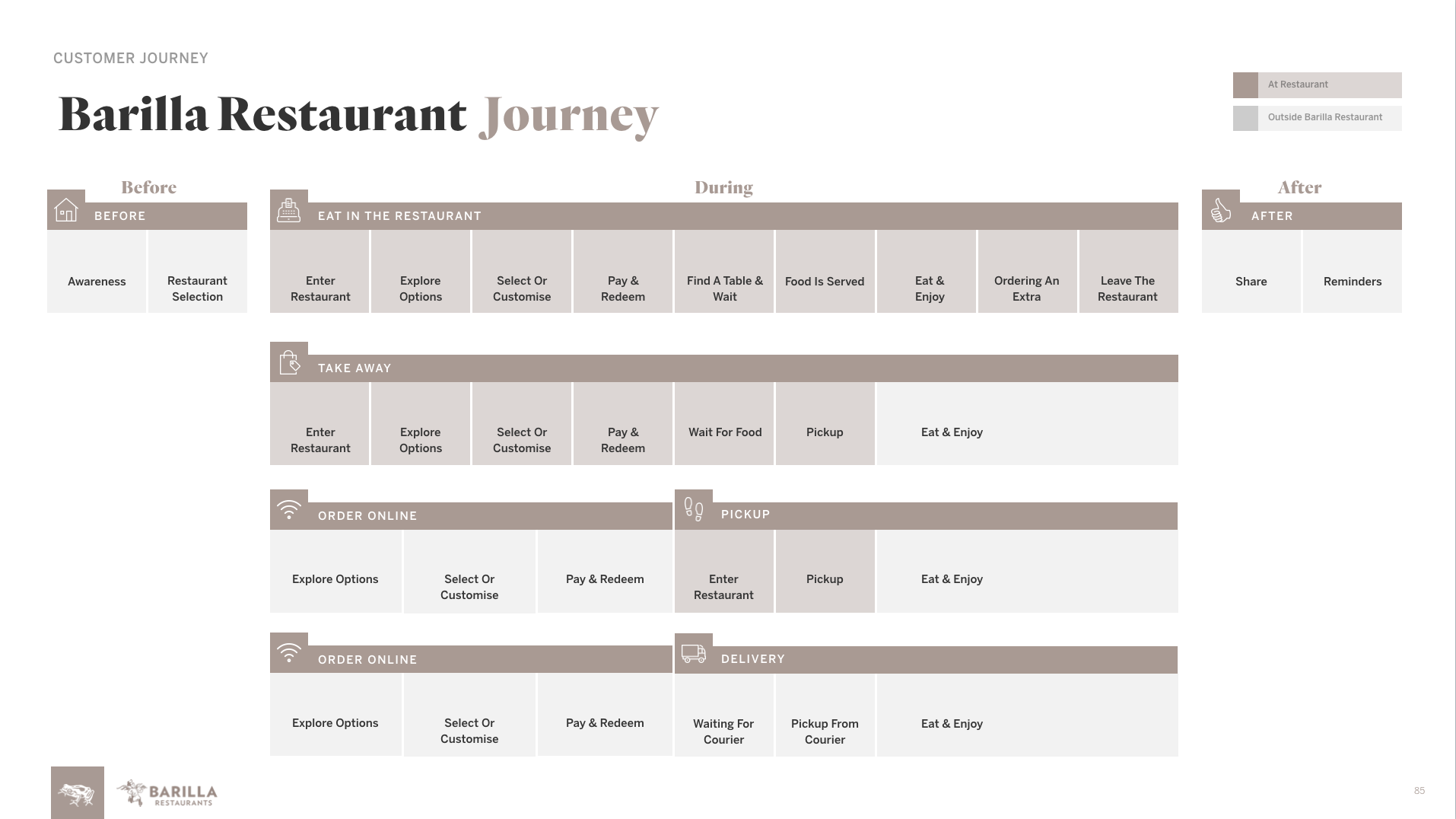
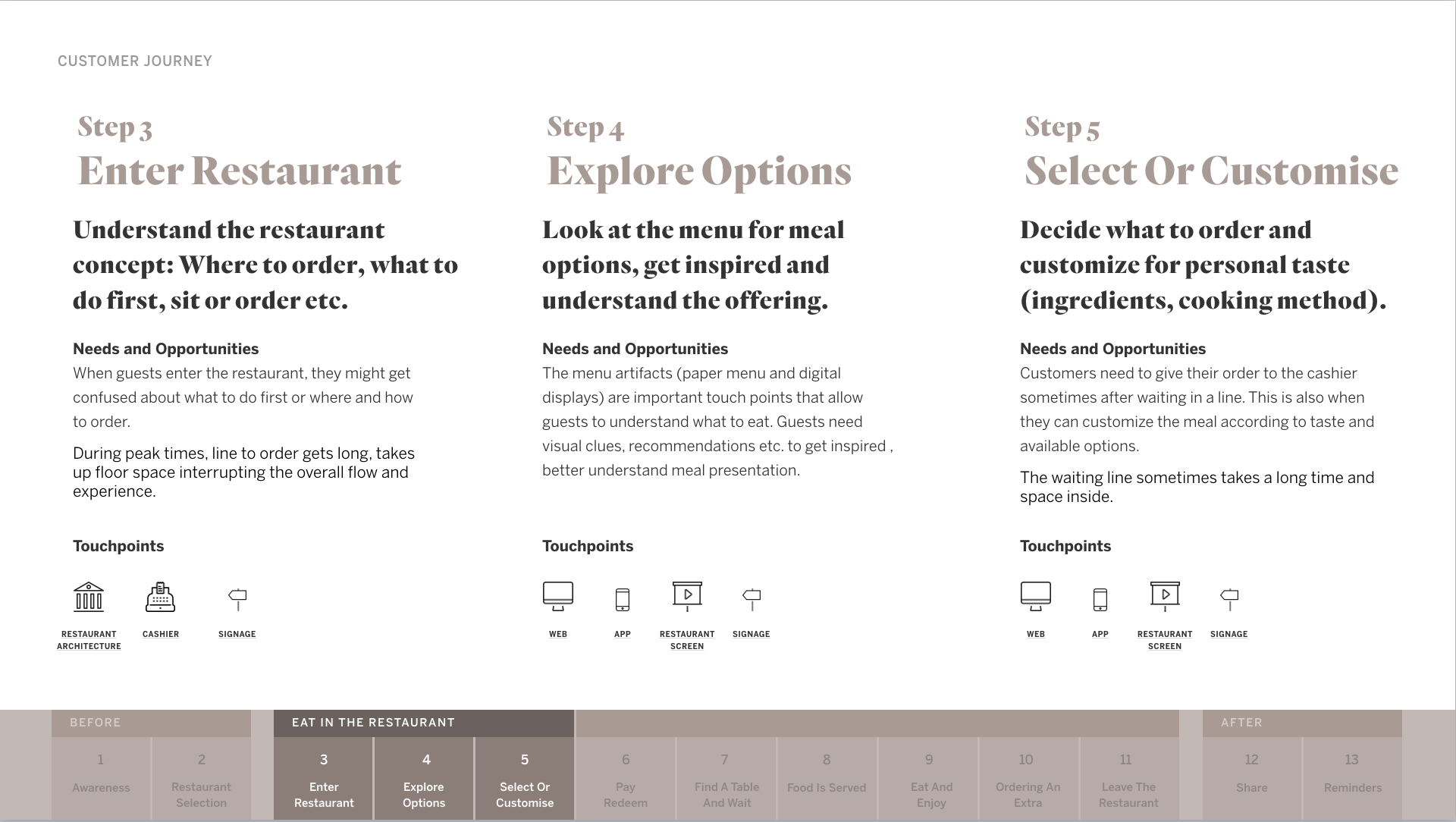
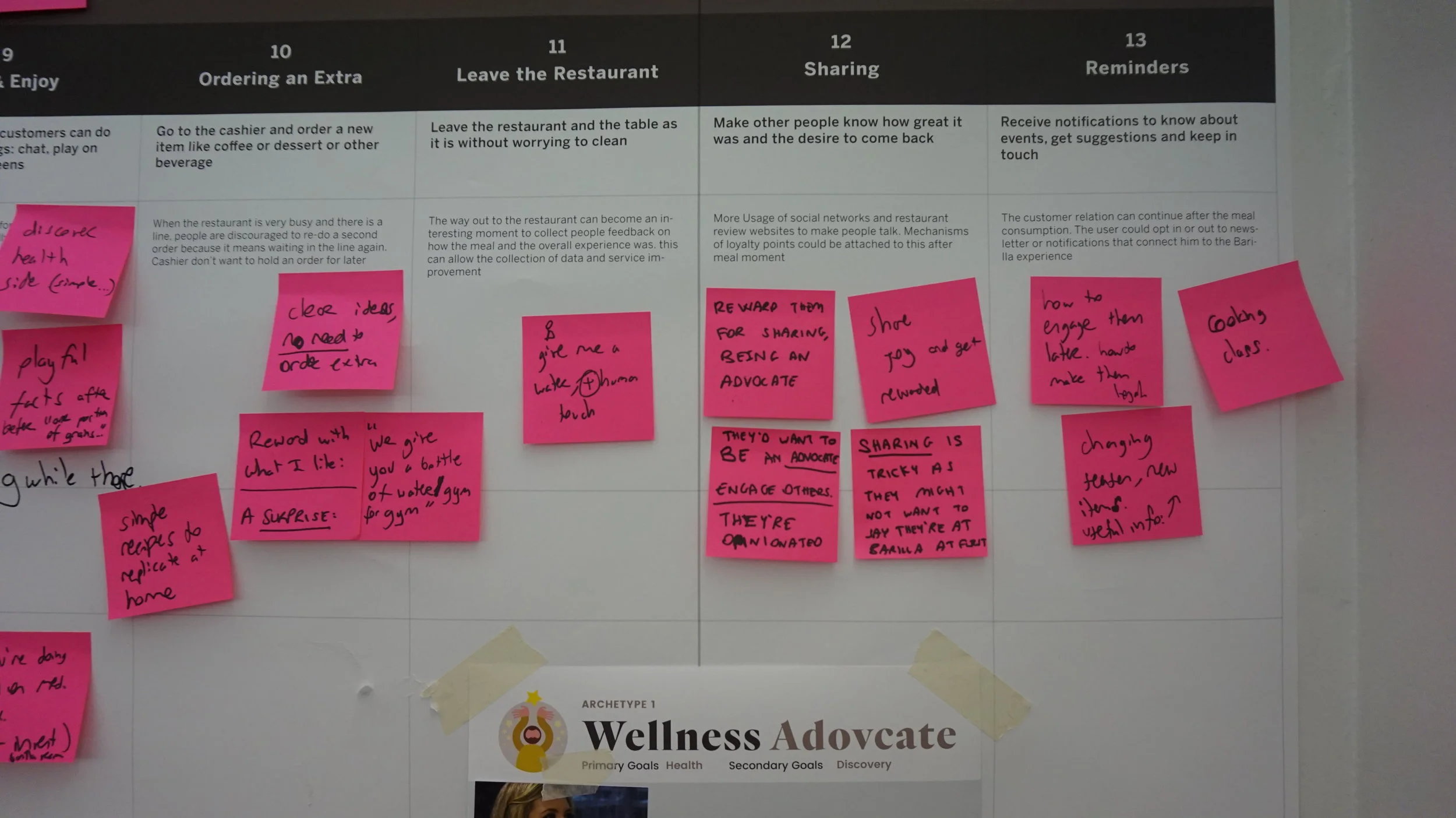
We used experience maps to create empathy for the in-restaurant user journey. We focused on 4 types of visits (Eat-in, pick up, order ahead with pick up and order ahead with eat-in) and picked only the key moments of the service to ideate around.
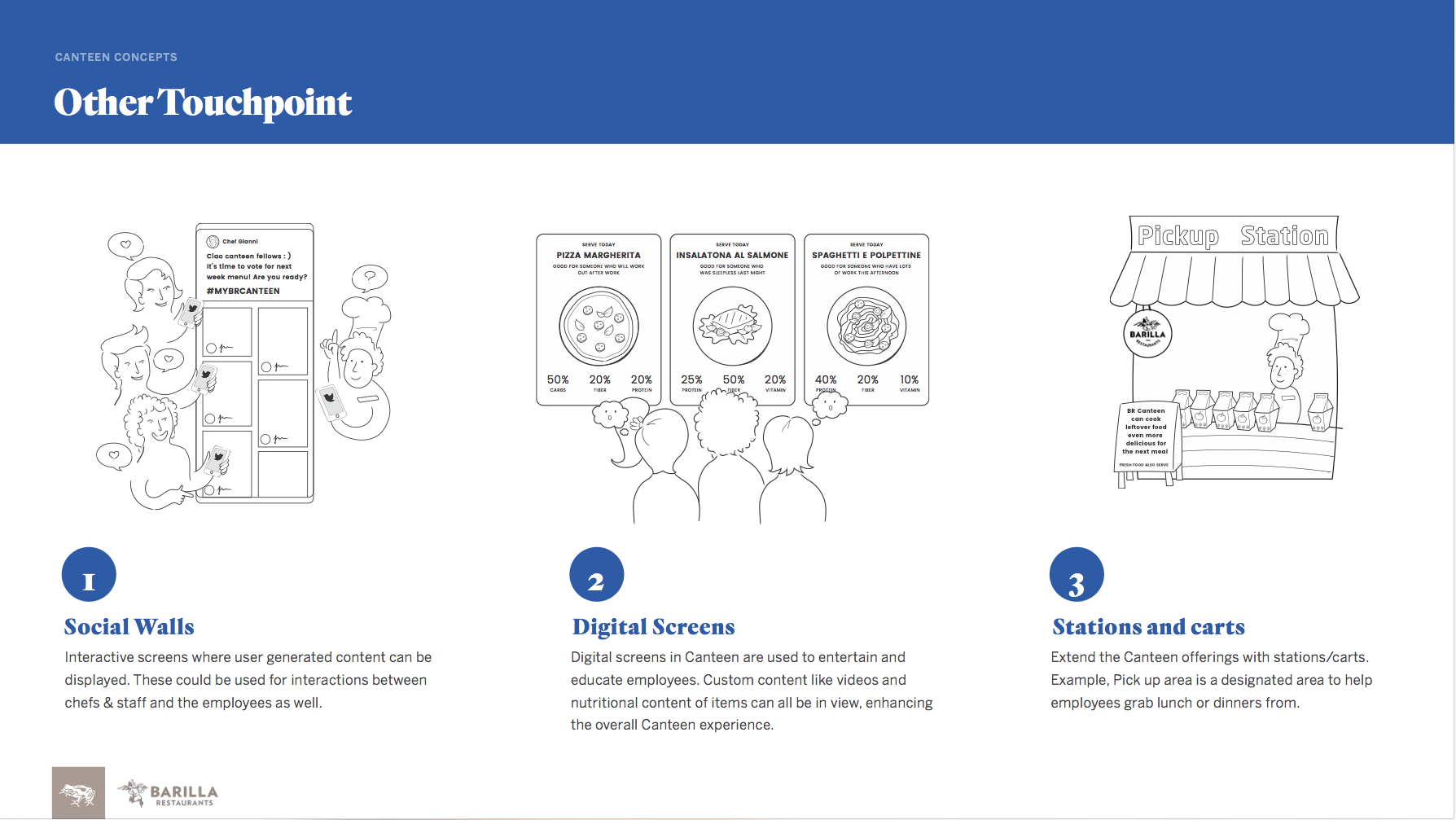
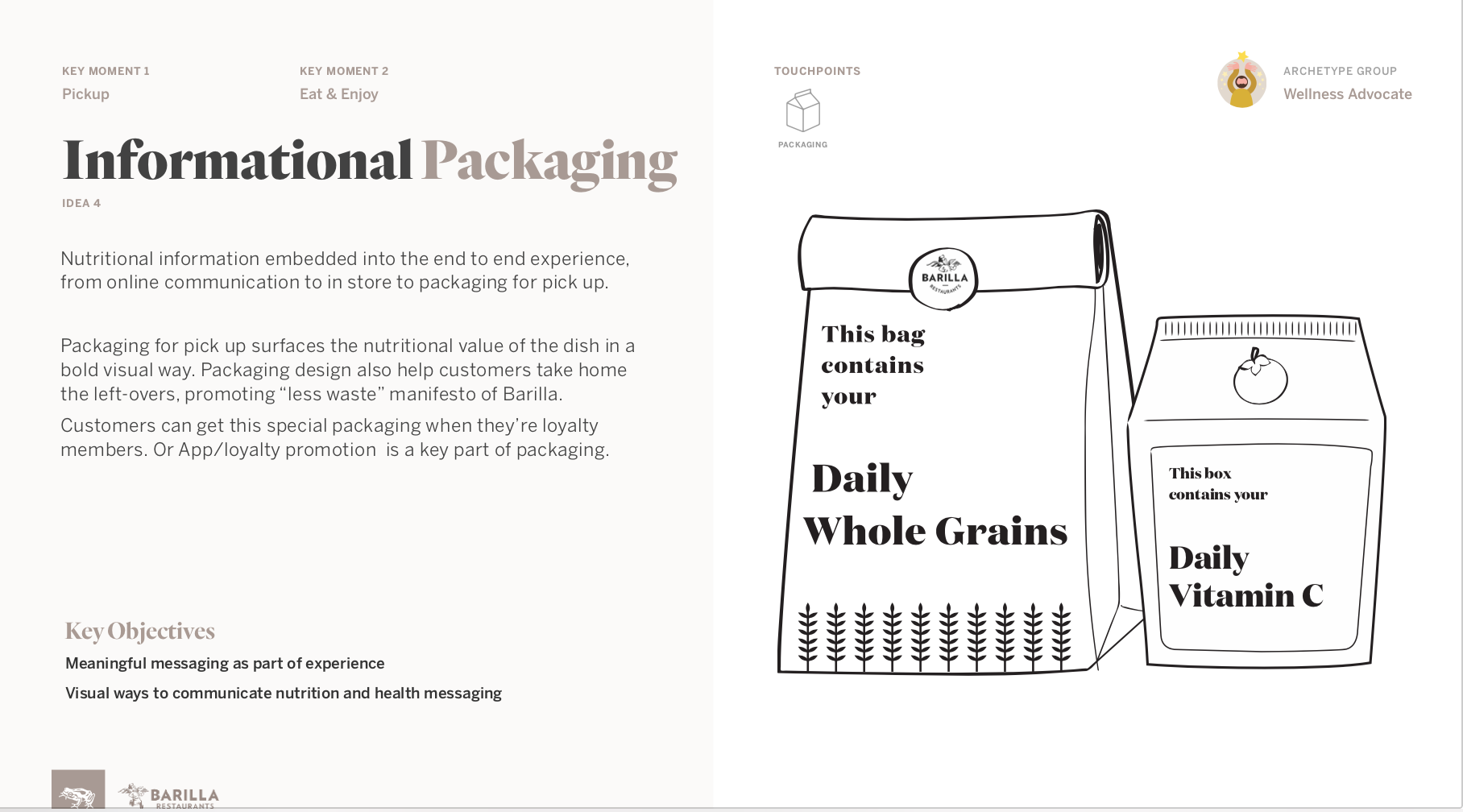
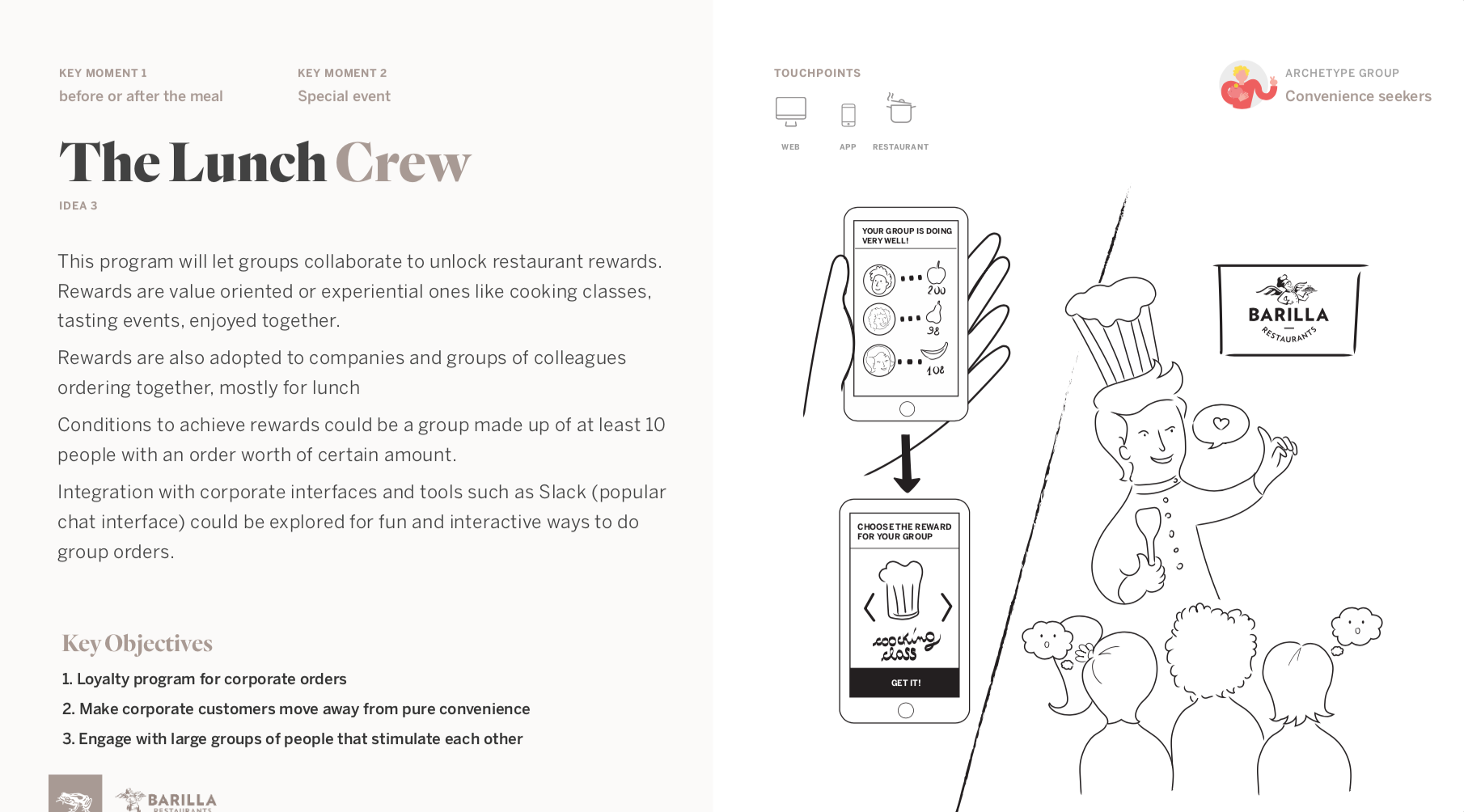
Insights from the field infused in user archetypes, as well as ideation around key moments of the user journey helped client put themselves in users’ shoes. 50 ideas expanding several touchpoints and various types of experiences (from mobile app to in-store augmented furniture) were captured.
Final concept
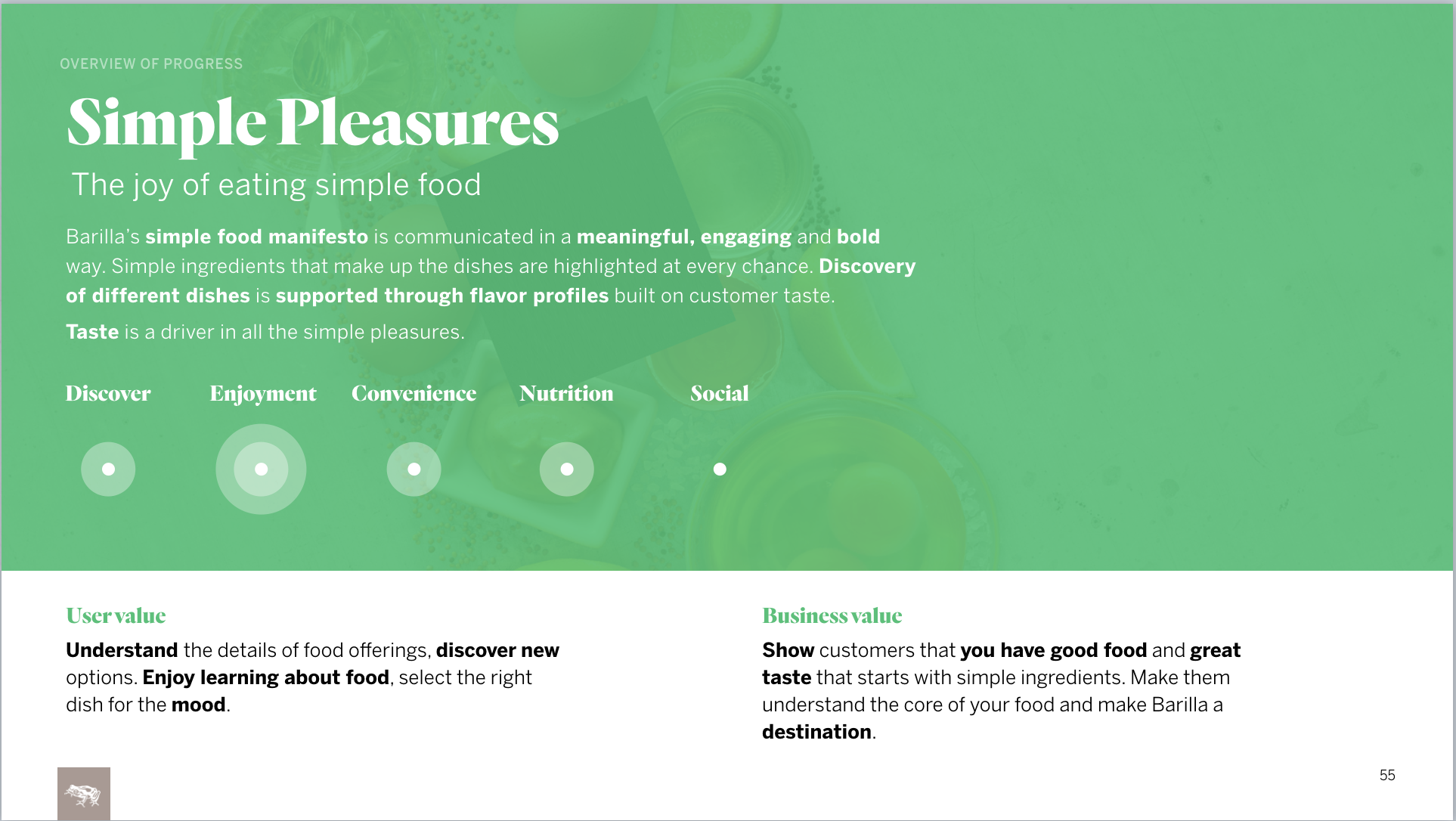
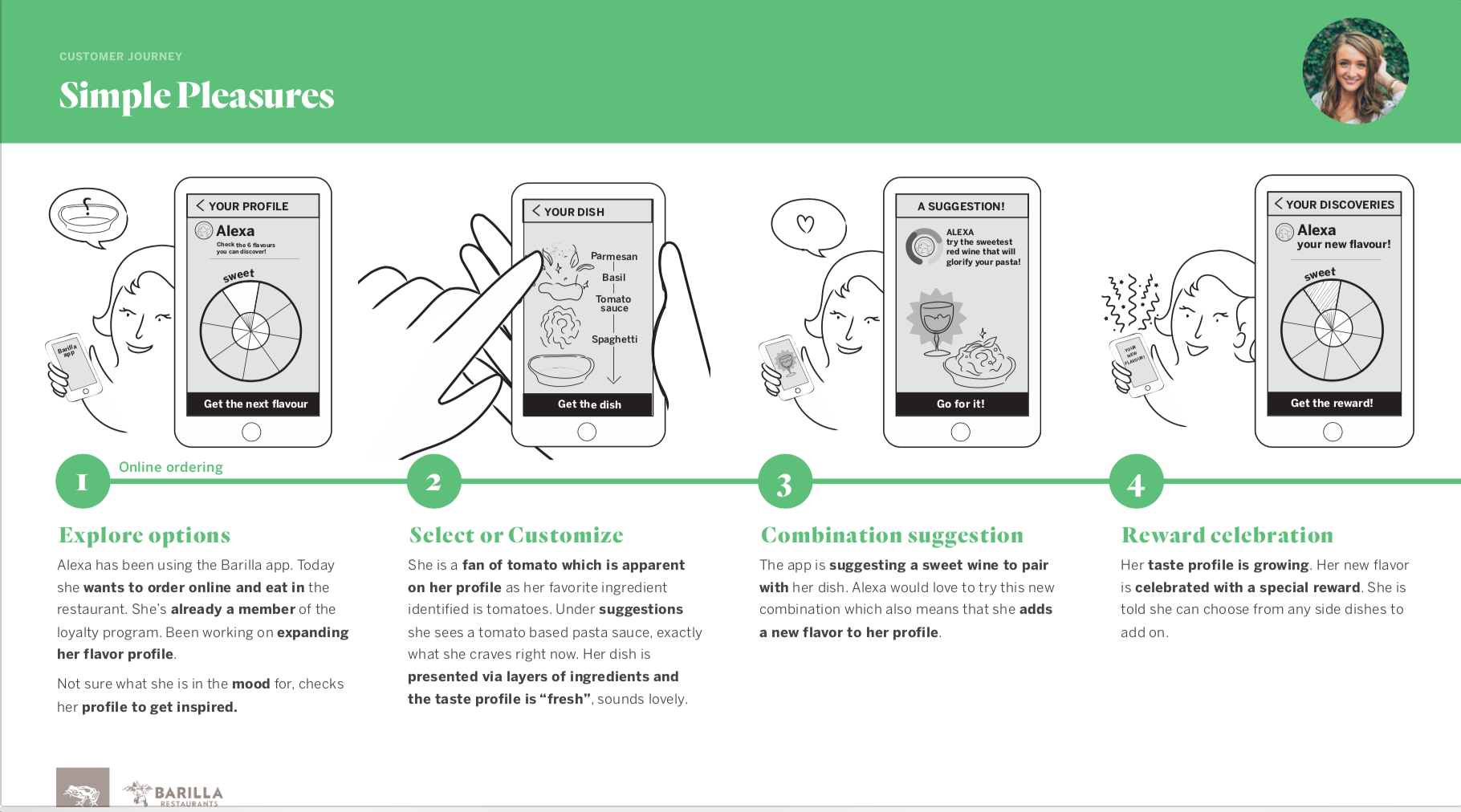
We decided to focus on a mobile app concept that highlighted Mediterranean nutrition and taste profile (using flavors).
It inspired users to health challenges, which ended up boosting their loyalty points alongside traditional restaurant visits.